Daniel Davis Deep Dive
@danieldavisdeepdive·442K subscribers·4.9K videos
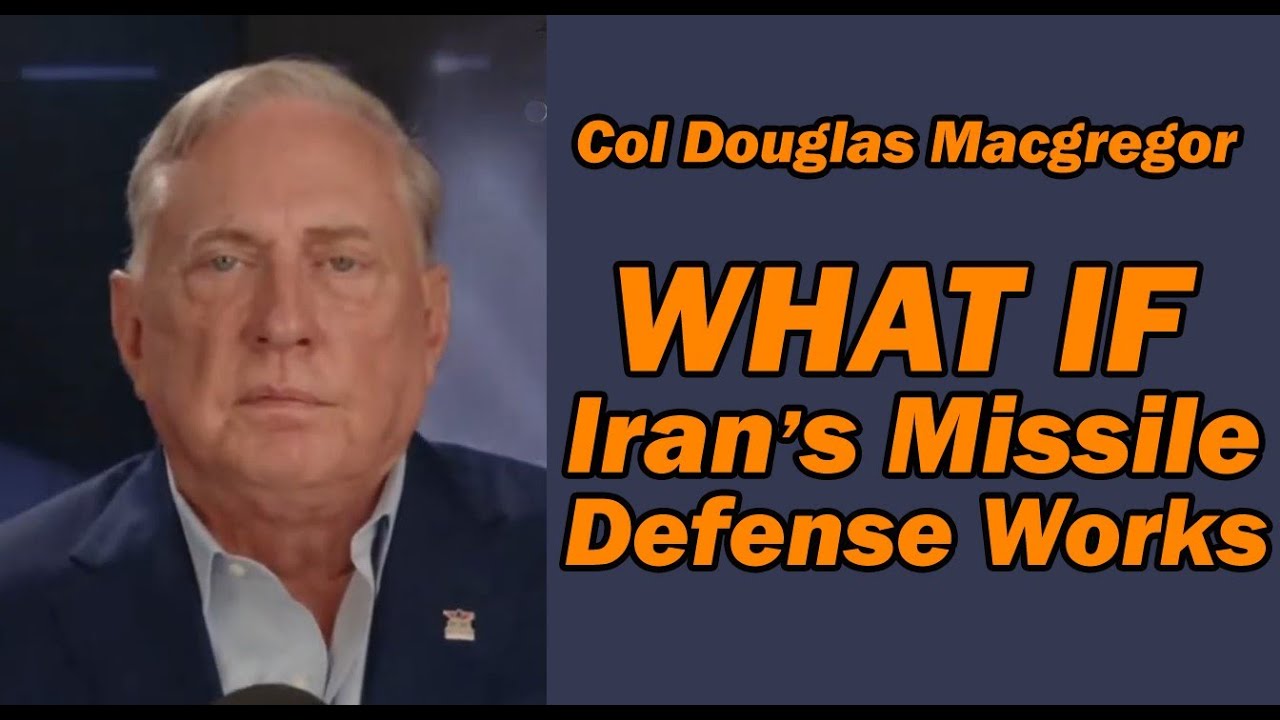
Col Douglas Macgregor: What if IRAN's MISSILE DEFENSE WORKS?
Posted
February 10, 2026
Views
250,753
Likes
9,949
Comments
1,678
Engagement
February 10, 2026
250,753
9,949
1,678
4.64%
Every word spoken in this episode is indexed. Type any phrase to jump straight to the moment it was said.
Type any word or phrase that may have been spoken. Click a result to seek the player to that exact moment.
Try a name, a topic, or a quoted line
 1:04:31Now Playing
** NEW MERCH ** Jackets & Sweatshirts, Thermo Mugs!!
Daniel Davis Deep Dive Merch: Etsy store
The discussion examines a potential U.S.–Israel military campaign against Iran, emphasizing that this scenario is fundamentally different from past limited strikes. From the Iranian perspective, previous attacks were framed as narrow and restrained; this time, signals suggest a broader campaign aimed at regime collapse or even state disintegration. That shift would dramatically change Iran’s calculations and response.
The speaker argues that air campaigns alone rarely achieve decisive political outcomes. Historical examples—World War II bombing, Kosovo in 1999, and Serbia’s resilient air defenses—show that even prolonged, intensive air operations struggle to neutralize defenses or force capitulation without political or diplomatic leverage. Applied to Iran, this raises serious doubts about expectations of a short or clean operation.
Iran’s defensive capabilities are now significantly stronger than in the past. In addition to Russian systems like the S-300, Iran has integrated advanced Chinese HQ-9B long-range air defense systems, reportedly capable of engaging stealth aircraft and resisting electronic countermeasures. Even if these systems are only 70–80% effective, they could impose meaningful losses on attacking forces.
More importantly, Iran now has substantial offensive capabilities. Unlike Serbia in 1999, Iran can strike back with a large ballistic missile arsenal. If attacked, Iranian leaders have clearly stated they would respond without restraint—targeting U.S. bases, radar sites, command-and-control hubs, ships at sea, and Israel. Aircraft carriers and naval assets do not need to be sunk to be neutralized; even limited damage could render them ineffective and politically shocking.
The discussion stresses that what some planners assume would be a brief 10–14 day operation could stretch much longer, while the U.S. and its allies may face serious constraints on missile inventories and resupply. Precision missiles are complex and slow to produce, and current stockpiles may be closer to depletion than publicly acknowledged.
Although some military and political figures publicly advocate the military option as the “best” path to regime collapse, the speaker argues that this view understates the risks. A sustained campaign would likely involve massive strikes in the first 24 hours, followed by prolonged escalation in which Iran may outlast Western missile supplies.
The conclusion is stark: this would be a high-risk operation with unpredictable consequences, likely involving widespread regional damage, heavy retaliation, and escalation across all conventional means short of nuclear weapons. Historical caution—such as Eisenhower’s rejection of escalation in Korea—is offered as a reminder that wars intended to be decisive and controlled often become long, costly, and uncontrollable.
Sentinel Indexing in Progress
Metadata and chapters are available. Claim extraction for this episode is pending.
All video content is delivered via YouTube embedded players in accordance with the YouTube Terms of Service. Sentinel provides research tools that promote discovery and accountability across political media.