Darryl Cooper Scott Horton Provoked
@provoked_show·43.6K subscribers·532 videos
EP:8 Hidden Price of Empire - Endless War Is Changing Who We Are
Posted
August 16, 2025
Views
18,158
Likes
1,088
Comments
187
August 16, 2025
18,158
1,088
187
7.02%
Every word spoken in this episode is indexed. Type any phrase to jump straight to the moment it was said.
Type any word or phrase that may have been spoken. Click a result to seek the player to that exact moment.
Try a name, a topic, or a quoted line
 1:33:38Now Playing
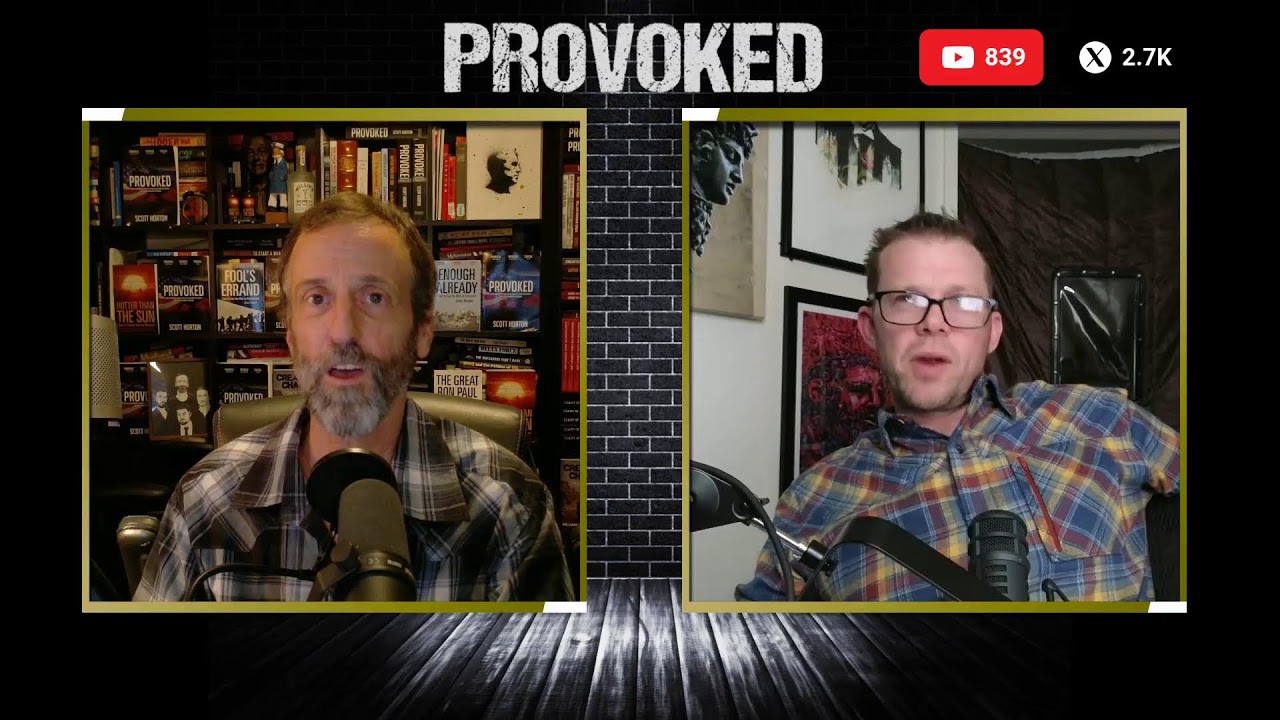
What happens to a country that fights war after war, year after year? The price goes far beyond the money spent and the lives lost overseas. In this candid and unflinching conversation, Scott Horton and Daryl Cooper dig into the less visible ways America’s global military machine eats away at our economy, our politics, and even our national character.
Scott begins with the financial side of the story. He explains how the government’s control over interest rates creates fake boom-and-bust cycles that hammer working Americans while keeping the war machine running. “They tax what they can, then they borrow more, and then they print the rest,” he says. This, he argues, quietly shifts wealth upward while ordinary people bear the pain through inflation and instability. Federal Reserve policy and military spending feed into each other, creating a loop where war looks “affordable” on paper, but its real costs are hidden.
Daryl takes the discussion into darker territory: the spiritual and psychological toll of perpetual war. Drawing on his time in the military, he describes how two decades of nonstop conflict have dulled our ability to feel outrage at atrocities. From Abu Ghraib to Gaza, repeated exposure to violence has numbed the nation’s conscience. “You’re a different kind of person once you’re inured to that kind of thing,” Daryl says. “And it’s not an improvement.” That numbness, he warns, reaches well beyond the battlefield—affecting civilians, too.
They also walk through striking examples from history and current events. Declassified documents on Russiagate reveal how manufactured narratives can shape public opinion for years. Scott revisits the atomic bombings of Hiroshima and Nagasaki, pointing out that top American generals—Eisenhower, MacArthur, Nimitz, and even Curtis LeMay—believed the bomb was unnecessary and immoral. For many, learning that challenges a lifetime of accepted history, sparking deeper questions about what else we’ve been told.
This is more than a discussion about foreign policy. It’s a reckoning with what decades of war have done to us as a nation. The most dangerous cost may not be measured in dollars or body counts—it might be losing the ability to recognize ourselves in the mirror.
👉 Subscribe for more honest, unfiltered conversations that push past the noise.
🔹 No safe spaces.
🔹 No corporate filters.
🔹 Just raw, informed, and fearless conversation.
Provoked show website:
Darryl's links:
X: @martyrmade
Scott's links:
X: @scotthortonshow
Sentinel Indexing in Progress
Metadata and chapters are available. Claim extraction for this episode is pending.
All video content is delivered via YouTube embedded players in accordance with the YouTube Terms of Service. Sentinel provides research tools that promote discovery and accountability across political media.