Defense Diaries Podcast
@defensediariespod·68.2K subscribers·980 videos
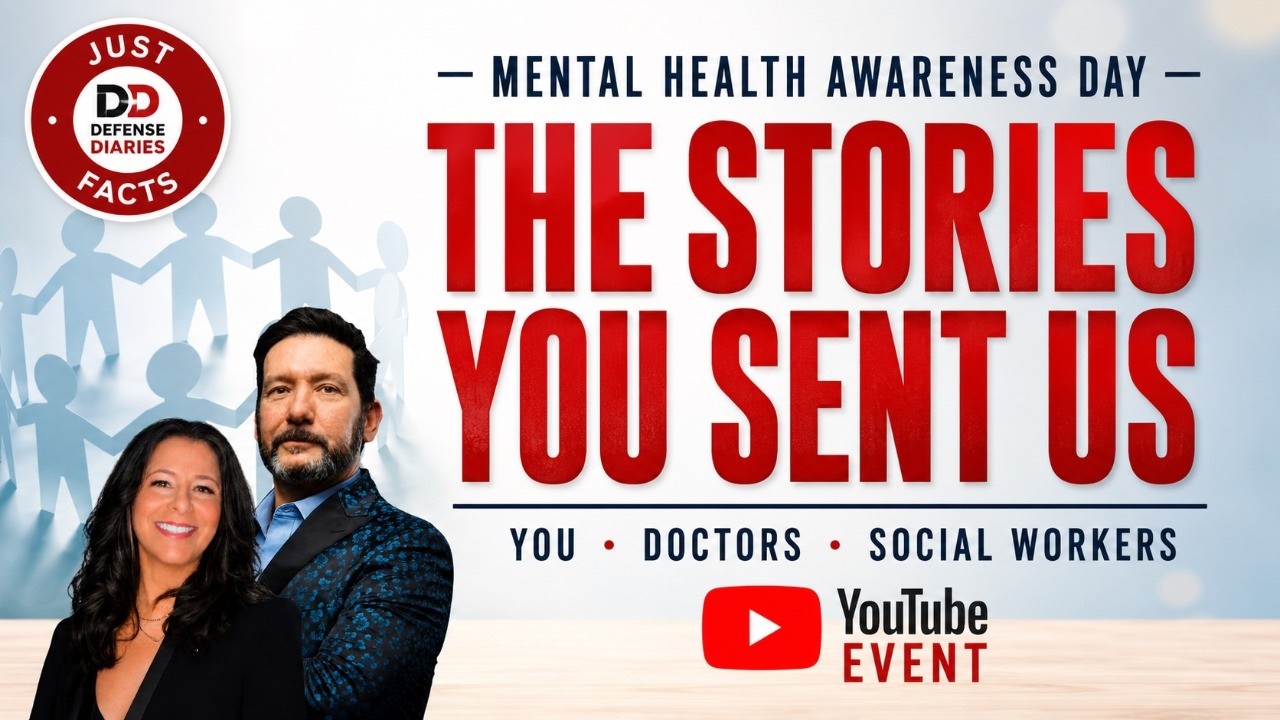
Mental Health Awareness Day: Your Stories, Your Time To Share
Posted
August 16, 2026
Views
20,359
Likes
2,081
Comments
147
Engagement
August 16, 2026
20,359
2,081
147
10.94%
Every word spoken in this episode is indexed. Type any phrase to jump straight to the moment it was said.
Type any word or phrase that may have been spoken. Click a result to seek the player to that exact moment.
Try a name, a topic, or a quoted line
 7:54:34Now Playing
Tonight, we put the case files down.
For weeks, Defense Diaries has been in Plymouth Superior Court with you, covering Commonwealth v. Lindsay Clancy the only way we know how — balls and strikes. We've walked through the McHoul standard. We've talked about lack of criminal responsibility, about what the Commonwealth has to prove, about what the defense has put in front of that jury, and about the enormous distance between a legal verdict and a human explanation.
But underneath every exhibit and every witness in that courtroom is something far bigger than any one case. It's a disease. And it did not begin in Duxbury, and it will not end when that jury comes back.
Postpartum depression. Postpartum anxiety. Postpartum OCD. Postpartum psychosis. Real conditions. Diagnosable conditions. Treatable conditions. And still, in 2026, conditions that mothers are terrified to say out loud — because they have been taught that the second they do, someone takes the baby, someone writes "unstable" in a chart, someone decides they are dangerous.
That silence costs lives. So tonight, we're breaking it.
WHAT WE'RE DOING TONIGHT
We are handing the microphone over to you.
Our inbox and our voicemail have filled up with messages from people who have lived this. Mothers describing intrusive thoughts that terrified them. Partners who watched someone they love disappear behind their own eyes. Families who begged a system for help and got a waitlist and a pamphlet. Some of these are the hardest things we have ever read on this channel. Every single one was sent by someone who decided their story might be the thing that saves somebody else.
Tonight we read them. Tonight we play them. Tonight we take your calls and your comments live.
We'll also be joined by licensed mental health professionals who treat these illnesses for a living — to teach us what is actually happening in the brain, how postpartum psychosis differs from postpartum depression, why an intrusive thought is not the same thing as an intent, what real treatment looks like, and where the system is failing the people who walk in and ask for help.
We are not here to try the Clancy case tonight. We're not arguing a verdict. We're here to talk about the illness, the stigma, and the gap between them — because that gap is where people are dying.
WHAT WE'LL COVER
• Postpartum depression vs. postpartum anxiety vs. postpartum psychosis — what actually separates them
• Intrusive thoughts: what they are, how common they are, and why they terrify good parents
• The warning signs partners, parents, and friends need to know how to spot
• What happens when you tell a doctor the truth — and the fear that stops people from doing it
• Screening, access, insurance, waitlists: where the system breaks down
• How to help someone you love who is in it right now
HOW TO TAKE PART
• Live chat is open all stream — our team is moderating throughout
• Email your story: insider@defensediaries.com
• Leave a voicemail:
• Want it shared anonymously? Just say so. We'll read it with no name attached. Your privacy stays yours.
BEFORE YOU PRESS PLAY
This conversation will include frank discussion of suicide, self-harm, and the loss of children. If today is a fragile day for you, it is completely okay to sit this one out — or to watch later with someone sitting beside you. Protecting yourself isn't weakness. It's the whole point of the show.
RESOURCES — SAVE THESE
• 988 Suicide & Crisis Lifeline — call or text 988, 24/7
• National Maternal Mental Health Hotline — call or text 1-833-TLC-MAMA (1-833-852-6262), 24/7, free, confidential, English & Spanish
• Postpartum Support International HelpLine — 1-800-944-4773, or text "Help" to 800-944-4773 (English) / 971-203-7773 (Español) — postpartum.net
• Crisis Text Line — text HOME to 741741
• SAMHSA National Helpline — 1-800-662-4357, 24/7 treatment referral
• Outside the U.S.: findahelpline.com
These lines are answered by trained people. Calling one is not a confession. It's a step.
Sentinel Indexing in Progress
Metadata and chapters are available. Claim extraction for this episode is pending.
All video content is delivered via YouTube embedded players in accordance with the YouTube Terms of Service. Sentinel provides research tools that promote discovery and accountability across political media.