Dr John Campbell
@campbellteaching·3.3M subscribers·3.1K videos
Body fluids 2, Movement between fluid compartments
Posted
July 17, 2014
Views
151,094
Likes
2,311
Comments
86
Engagement
1.59%
July 17, 2014
151,094
2,311
86
1.59%
Every word spoken in this episode is indexed. Type any phrase to jump straight to the moment it was said.
Type any word or phrase that may have been spoken. Click a result to seek the player to that exact moment.
Try a name, a topic, or a quoted line
 8:36Now Playing
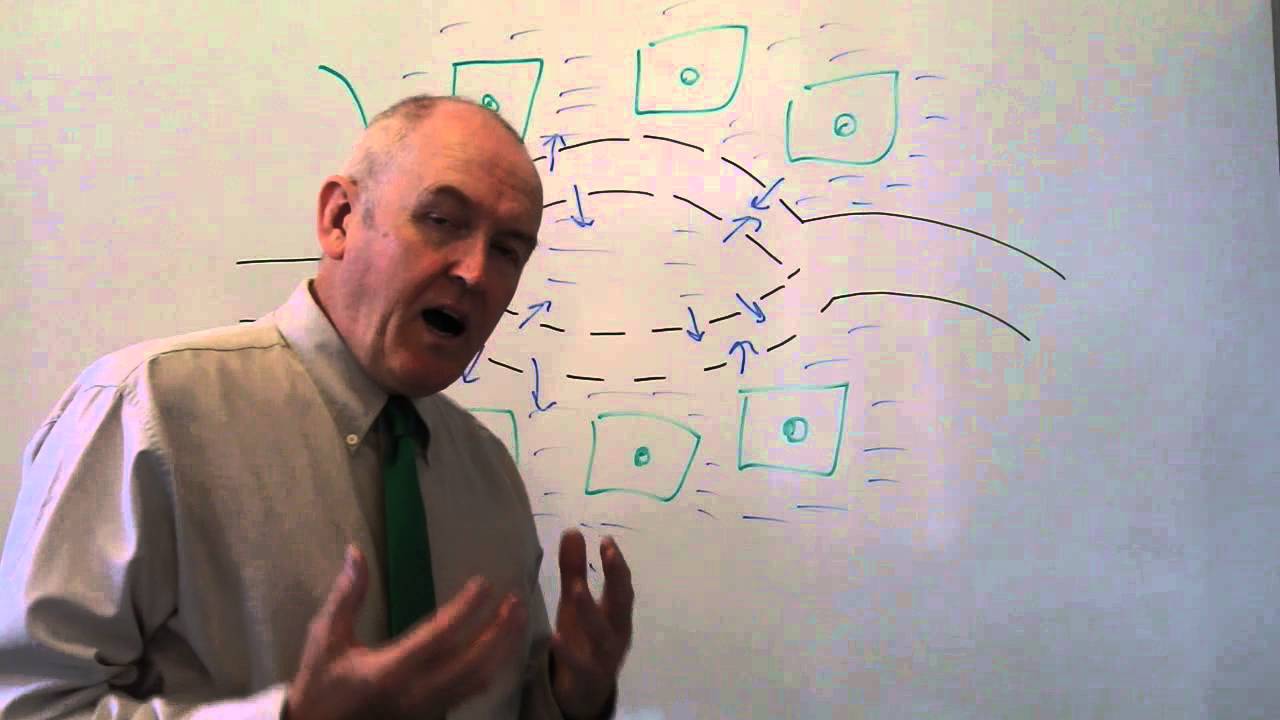
Cells of a tissue are bathed in tissue fluid.
This is essential to keep the cells moist and to prevent them drying out. In addition, tissue fluid is the essential medium for diffusion between the blood and capillaries. Substances diffuse from the blood, through the tissue fluid, before reaching and diffusing into cells. The same is true for substances the cells
excrete. These waste products must diffuse into the tissue fluid before they can diffuse through the capillary wall into the blood.
It is the capillaries which are responsible for the formation of the tissue fluid. At the arteriole end of the capillary, because the blood has recently left the arterial system, the blood pressure is still relatively high. Because the pressure in the capillary is greater than in the tissue fluid, water molecules, which are
small enough to fit through the capillary pores, are forced out from the capillary blood into the tissue spaces. Larger components of the blood such as cells and plasma proteins, which are big molecules, remain in the capillaries. Once formed,
tissue fluid bathes and flows over the individual tissue cells.
At the venous end of a capillary blood pressure is lower because the blood is nearing the lower pressure venous system. Because blood plasma contains large protein molecules, the plasma generates an osmotic potential which tends to draw in water. At the venous end of the capillary, the osmotic potential is
greater than the blood pressure which is trying to force water molecules out of the capillary. The net effect of this is that water molecules are osmotically drawnback into the blood at the venous end of the capillary. The overall result of this process of tissue fluid formation and reabsorption is that there is a flow of
fresh tissue fluid over the tissue cells, from the arterial to the venous end of the capillary. This flow helps keep tissue cells nourished and oxygenated as well as removing toxic waste products.
When the levels of protein in the blood are very low, such as in severe malnutrition, the plasma is no longer able to generate the osmotic potential required to reabsorb tissue fluid. This is why people with severe protein deficiencies develop oedema (the retention of fluid in the tissues).
Sentinel Indexing in Progress
Metadata and chapters are available. Claim extraction for this episode is pending.
All video content is delivered via YouTube embedded players in accordance with the YouTube Terms of Service. Sentinel provides research tools that promote discovery and accountability across political media.