Dr John Campbell
@campbellteaching·3.3M subscribers·3.1K videos
Plasma, constituents and functions
Posted
November 17, 2015
Views
72,943
Likes
1,719
Comments
46
Engagement
2.42%
November 17, 2015
72,943
1,719
46
2.42%
Every word spoken in this episode is indexed. Type any phrase to jump straight to the moment it was said.
Type any word or phrase that may have been spoken. Click a result to seek the player to that exact moment.
Try a name, a topic, or a quoted line
 16:40Now Playing
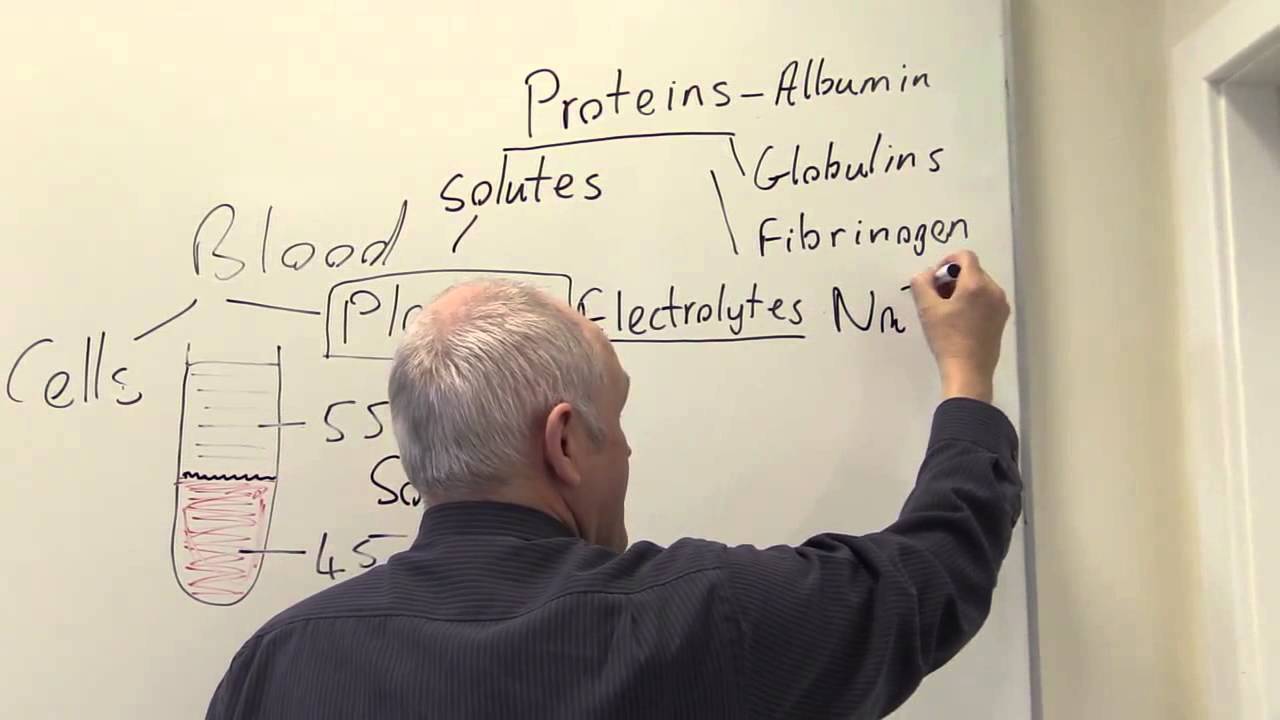
Plasma is a yellowish fluid which is about 91% water. This keeps the blood fluid, allowing it to circulate around the body. The rest of the plasma is made up of various substances in solution and suspension; these include plasma proteins, nutrients, dissolved gases and waste products.
Plasma proteins
Proteins are organic molecules made up of precise sequences of amino acids which are chemically bound together. There are three main plasma proteins; albumin, globulin and fibrinogen. Proteins are very large molecules and their presence is vital to generate plasma osmotic potential. Without this osmotic property the blood would be unable to reabsorb tissue fluid into the venous ends of the capillaries. Albumin is the most common plasma protein and also generates most of the osmotic potential of plasma. The globulin proteins include the immunoglobulins, also called antibodies, which allow the body to fight off infections. Without these immune proteins we would probably die from the next viral or bacterial infection we pick up. Other globulin proteins act as carrier molecules which transport some hormones and minerals around the body. Fibrinogen is a plasma protein which is essential for the process of normal blood clotting.
As fats are not soluble in water they are transported around the body bound to plasma proteins. These combinations of fat and protein are termed lipoproteins and are soluble in water.
Nutrients and waste products
Plasma carries absorbed nutrients from the gut to all of the tissues of the body which need them. These include glucose, amino acids and vitamins. It also transports waste substances such as ammonia from the tissues to the liver, where this poisonous waste is converted into urea, which is much less toxic. Once formed, the urea is transported in solution from the liver to the kidneys for excretion.
Other plasma components and functions
Plasma is a carrying vehicle for a range of dissolved salts in ionic form. These include sodium, chloride, bicarbonate, potassium, phosphate, magnesium and calcium. Plasma also carries some dissolved gases such as carbon dioxide, nitrogen and some oxygen. Most of the carbon dioxide transported by the blood is carried by the plasma. Plasma also transports endocrine hormones from glands to their target tissues.
Collectively the blood is important in transferring heat around the body, helping to regulate body temperature. Heat from warm, metabolically active areas, such as the muscles and liver must be transported away to prevent localised overheating. This warm blood can then be used to warm cooler areas such as the feet.
Blood is slightly alkaline. Arterial blood has a pH of 7.35-7.45, but venous blood is slightly more acidic with a normal pH of 7.35. This difference is caused by the increased volumes of carbon dioxide carried in the venous blood, some of which is carried as carbonic acid.
Sentinel Indexing in Progress
Metadata and chapters are available. Claim extraction for this episode is pending.
All video content is delivered via YouTube embedded players in accordance with the YouTube Terms of Service. Sentinel provides research tools that promote discovery and accountability across political media.