Dw News
@dwnews·6.3M subscribers·48.6K videos
Quadriga: The International Talk Show | Quadriga
Posted
September 26, 2011
Views
1,263
Likes
1
Engagement
0.08%
September 26, 2011
1,263
1
0.08%
Every word spoken in this episode is indexed. Type any phrase to jump straight to the moment it was said.
Type any word or phrase that may have been spoken. Click a result to seek the player to that exact moment.
Try a name, a topic, or a quoted line
See what was published immediately before and after this episode.
 26:29Now Playing
The Euro Crisis - Stress Test for Angela Merkel's Coalition
Greece is facing a possible default. Italy has just seen its credit rating downgraded. The euro is in deeper trouble than ever. Europe is looking to Germany for leadership. But is it up to Germany to churn out ideas for rescuing the euro? Is it up to Germany to front billions to help bail out indebted EU members like Greece? Such great expectations may well be pushing Germany headfirst into a political crisis. The coalition government of Christian Democrats, Bavarian CSU and liberal Free Democrats can't seem to agree on a common strategy for saving the euro.Free Democrat party chairman Philipp Rössler's attempt to rally support for his troubled party with anti-euro populism was an epic failure. Now the FDP is down and out of many state parliaments, and cracks are showing in the coalition. Now fellow junior coalition partner, the conservative CSU, says it can no longer rule out Greece's default. Add to that criticism from the new Bundesbank president Jens Weidmann of both German government and European Central Bank policies.
So what's to be done? Greece needs ever more billions of euros in bail-out loans to head off the looming default but doesn't have much to show for its austerity efforts so far. Hard-hitting reforms are only the first step toward winning Europe's solidarity. Now, other European lender nations are getting the jitters, as well. But nowhere else is the political situation as shaky as in the European Union's biggest economic power and largest country, Germany.
What do you think? Is the Euro crisis also a crisis for Angela Merkel's government?
Write to us at: Quadriga@dw-world.de
Our guests:
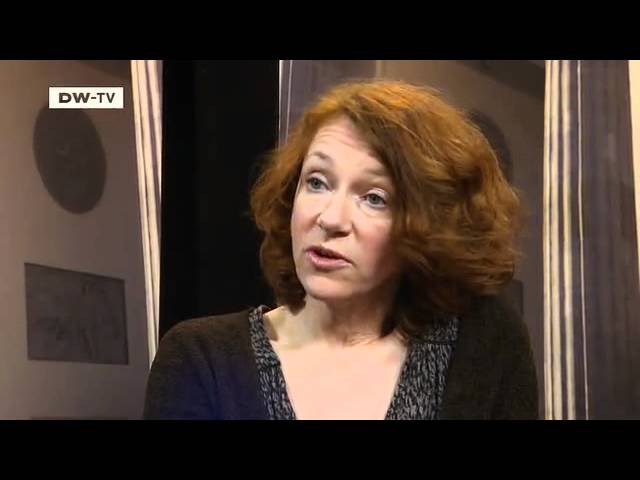
Ulrike Herrmann -- started her career in banking before taking up journalism at the Henri Nannen School afterwards studying history and philosophy at Berlin's Free University. She then worked as a research assistant at the Körber Foundation and was the press officer for Hamburg's Equal Opportunities minister, Krista Sager. In 2000 she became a political correspondent and business editor at the Berlin daily"taz". These days she is the responsible editor for the opinion page of this newspaper.
Friedrich Thelen - After earning his doctorate in law, in 1975 he took on the post of director at the German Development Service. Friedrich Thelen then worked as a journalist for the leading weekly newspaper"Die Zeit". In 1978 he switched to the business weekly"Wirtschaftswoche", where he began his career as the magazine's Bonn correspondent and bureau chief. Later he became the bureau chief of Wirtschaftswoche's Berlin office.
Ulrike Guérot - After graduating in political science, Ulrike Guérot worked initially as a junior professor in the European Studies faculty of Johns Hopkins University in the United States. Later she became a researcher at the Organisation Notre Europe in Paris and was a staff member of the foreign policy working group of the CDU/CSU parliamentary group in the German Bundestag. She moved to Berlin to head the Europe research group at the German Council on Foreign Relations (DGAP), where her specialties include the European integration process. European institutions, German-French ties and German-American relations. Currently she is focussing on Germany's role in Europe.
Sentinel Indexing in Progress
Metadata and chapters are available. Claim extraction for this episode is pending.
All video content is delivered via YouTube embedded players in accordance with the YouTube Terms of Service. Sentinel provides research tools that promote discovery and accountability across political media.