
German authorities investigate Syria’s chemical warfare | DW News
November 27, 2020
32,228
482
189
2.08%
Search the Record
IndexedEvery word spoken in this episode is indexed. Type any phrase to jump straight to the moment it was said.
Type any word or phrase that may have been spoken. Click a result to seek the player to that exact moment.
Try a name, a topic, or a quoted line
Dw News Episodes Around November 27, 2020
See what was published immediately before and after this episode.




 8:56Now Playing
German authorities investigate Syria’s chemical warfare | DW News


YouTube Description
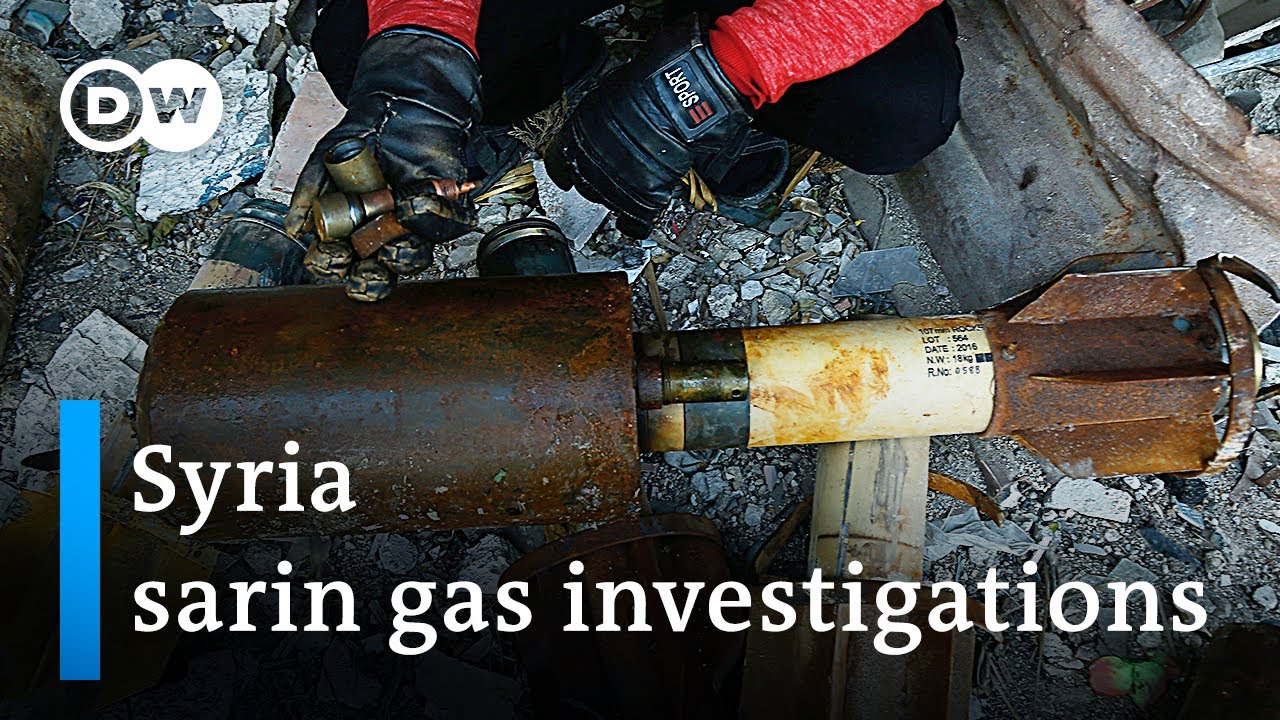
as posted by the channelGerman federal prosecutors are investigating evidence of chemical warfare in Syria. DW and Der Spiegel gained exclusive access to witnesses and documents that form part of the landmark inquiry.
On August 21, 2013, rockets loaded with sarin warheads were launched into eastern Ghouta. Cooler weather allowed the nerve gas to permeate into lower levels of buildings as it spread across parts of the rebel stronghold. Sarin's odorless presence only made itself known after it had already begun to paralyze the body's respiratory system. In most cases, those who did not survive died of asphyxia. Survivors blamed the Syrian regime for the attack.
At least 1,000 people were killed in the attack, including more than 400 children, according to several independent sources. Targeting civilians with the use of chemical weapons constitutes a war crime under international law.
The brutal attack shocked much of the world and nearly triggered military interventions from France, the UK and the US. When plans for Western operations against the Syrian regime collapsed, international efforts turned toward the International Criminal Court (ICC). However, Russia and China, veto-wielding members of the UN Security Council, blocked all attempts to refer the case to the ICC. Instead, they pressured Syria into joining the Chemical Weapons Convention, effectively forcing the regime to destroy its chemical weapons stockpile in the process. Damascus has repeatedly denied involvement in chemical weapons attacks on Syrian soil. However, documentation obtained by DW suggests that the Syrian regime did not comply with its obligations to dismantle its chemical weapons program in its entirety. The Syrian embassy in Berlin did not respond to a request for comment.
In early October, a consortium of three non-government organizations filed a criminal complaint with the Federal Prosecutor's Office in Germany against unnamed persons with regards to apparent sarin gas attacks in Ghouta in 2013 and Khan Sheikhoun in 2017. In 2002, Germany enacted the principle of universal jurisdiction for international crimes, such as war crimes and genocide. It effectively brought German domestic law into accordance with the Rome Statute, a treaty that established the ICC that year. Key to the criminal complaint filed in Germany is the diverse array of witness testimony. It includes high-ranking military personnel and scientists at Syria's Scientific Studies and Research Center (SSRC), which was responsible for developing and maintaining the country's chemical weapons program. Evidence suggests that President Assad's younger brother, Maher Assad, widely considered the second most powerful person in Syria, was the military commander who directly ordered the use of sarin gas in the Ghouta attack of August 2013. However, witness statements filed with the criminal complaint indicate that the deployment of strategic weapons, such as sarin nerve gas, could only be executed with President Assad's approval. According to documentation seen by DW, President Assad is believed to have authorized his brother to conduct the attack.
For more news go to
Follow DW on social media:
Für Videos in deutscher Sprache besuchen Sie
#Syria #ChemicalAttack #
Guests & Subjects Covered
Sentinel Indexing in Progress
Metadata and chapters are available. Claim extraction for this episode is pending.
All video content is delivered via YouTube embedded players in accordance with the YouTube Terms of Service. Sentinel provides research tools that promote discovery and accountability across political media.