East Idaho News
@eastidnews·585K subscribers·7.7K videos
Locally made fertilizer improves soil quality. Meet the company owner and see how it’s made
Posted
November 5, 2023
Views
1,302
Likes
74
Comments
3
Engagement
November 5, 2023
1,302
74
3
5.91%
Every word spoken in this episode is indexed. Type any phrase to jump straight to the moment it was said.
Type any word or phrase that may have been spoken. Click a result to seek the player to that exact moment.
Try a name, a topic, or a quoted line
 1:57Now Playing
#eastidahonews #agriculture #outdoors
SUGAR CITY – For John Pocock, fertilizer is not just a way to help plants grow. It’s a lucrative business.
The Sugar City man is the face behind Pocock Trucking, which hauls fertilizer, feed, grain and other commodities throughout the U.S. and Canada. He’s also the owner of ProPEAT, a large plant at 250 Pro Peat Drive that makes carbon-based fertilizer.
In an interview with EastIdahoNews.com, Pocock explains what makes this type of fertilizer different from the traditional kind.
“Traditional fertilizer is just blended. You take nitrogen, phosphate, pot ash and blend it together, throw it in a bag. We take that and premix it, grind it into a powder, grind peat moss into a powder and then make a homogenous granule.”
Pocock says the precise mix of these elements and other micronutrients results in a much more effective fertilizer.
AmeriTurf, a Texas-based company that provides fertilizer and other plant products for vendors across the U.S., reports carbon is a vital part of healthy grass and plant production because it helps enhance soil structure, water-holding capacity, and nutrient retention.
ProPEAT fertilizer helps improve the quality of the soil, Pocock says. It binds the nutrients to carbon, which permeates the soil until the plant needs it.
“You get a nice even spread to the plants, plus it makes a nice even feed to the way the plant can pull the nutrients,” Pocock says.
Pocock says it’s also eco-friendly. He points to several studies in which ProPEAT was proven more effective than competing brands with two-thirds less nitrogen. The results of those studies are available here and here.
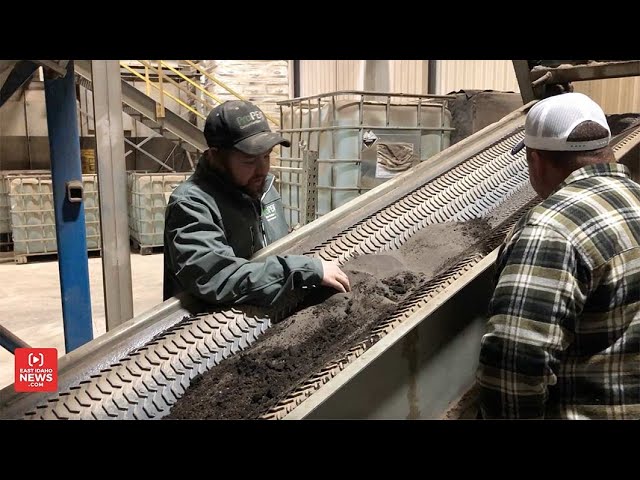
The Sugar City plant has the capacity to make about 72 tons of fertilizer in a nine-hour shift. It’s an 11-step process, and it takes about an hour to make 8 to 9 tons. Pocock explained how it worked during a tour of the plant Wednesday morning. Watch it in the video above.
READ THE FULL STORY HERE
► Subscribe to East Idaho News
► Download our free app
► Like us on Facebook
► Follow us on Twitter
► Follow us on Instagram
► Get East Idaho News merch
► Subscribe to our free newsletter
Sentinel Indexing in Progress
Metadata and chapters are available. Claim extraction for this episode is pending.
All video content is delivered via YouTube embedded players in accordance with the YouTube Terms of Service. Sentinel provides research tools that promote discovery and accountability across political media.