Faithful Politics Podcast
@faithfulpolitics·6.2K subscribers·1.9K videos
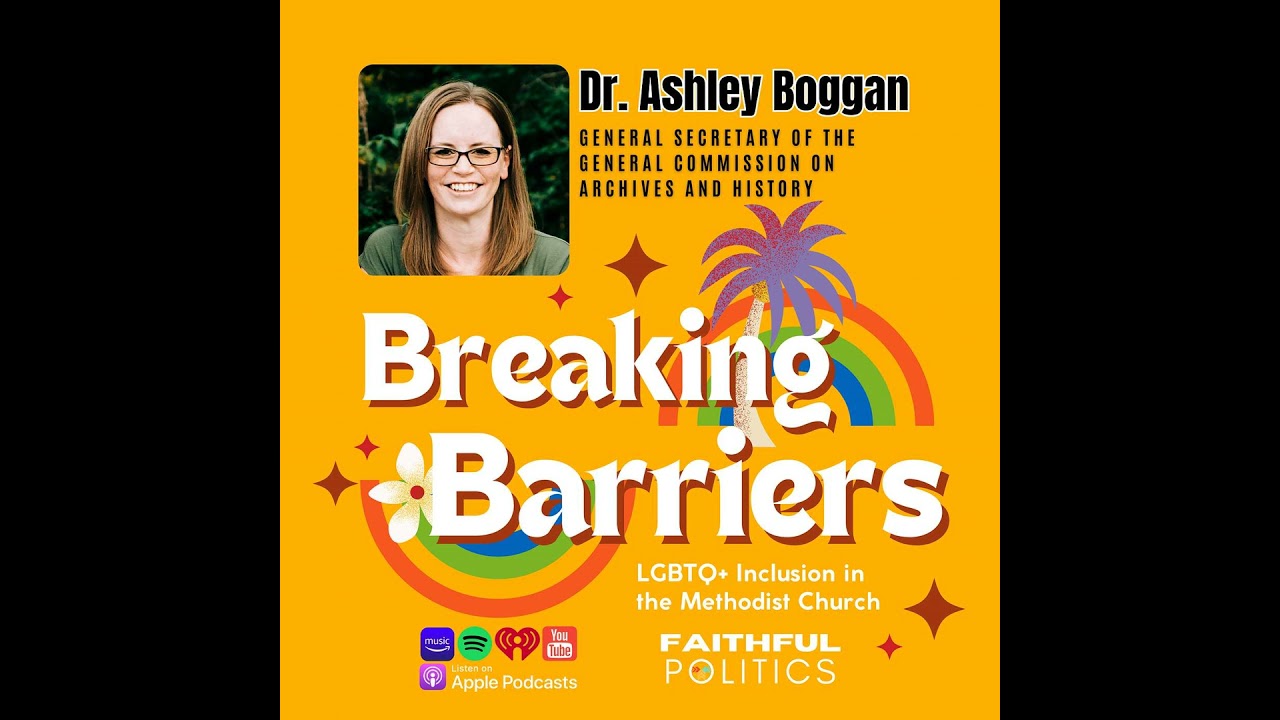
Breaking Barriers: LGBTQ+ Inclusion in the Methodist Church w/Dr. Ashley Boggan
Posted
June 8, 2024
Views
44
Likes
1
Engagement
2.27%
June 8, 2024
44
1
2.27%
Every word spoken in this episode is indexed. Type any phrase to jump straight to the moment it was said.
Type any word or phrase that may have been spoken. Click a result to seek the player to that exact moment.
Try a name, a topic, or a quoted line
 1:03:23Now Playing
Have a comment? Send us a text! (We read all of them but can't reply). Email usWill@faithfulpoliticspodcast.com ()
In this episode of Faithful Politics, hosts Will Wright and Pastor Josh Burtram welcome Dr. Ashley Boggan, the General Secretary of the General Commission on Archives and History for the United Methodist Church (UMC). Dr. Boggan shares her journey and passion for Methodist history, mentioning her role in ensuring the UMC understands its past to envision a more equitable future. She recounts the humorous anecdote of giving a John Wesley bobblehead to Pope Francis during an ecumenical meeting in Rome.
The discussion delves into the origins of Methodism, highlighting John Wesley's efforts to renew the Church of England by emphasizing mission and social acts, and explaining the methodical approach to faith that led to the church's name. Dr. Boggan provides a comprehensive overview of the UMC's historical stance on LGBTQ+ issues, including the 1972 incompatibility clause and subsequent bans on LGBTQ+ advocacy, ordination, and same-sex marriages. She highlights the recent General Conference's decision to remove prohibitive language against LGBTQ+ persons, marking a significant shift in the church's stance.
Dr. Boggan contrasts the emotional and spiritual atmosphere of this conference with past ones marked by tension and division. She explains the significance of removing prohibitive language while avoiding explicit affirming language to prevent alienating conservative members. Emphasizing the importance of historians in holding the church accountable, she discusses the need for continuous education and accountability regarding the church's past actions and policies.
Reflecting on her personal journey with faith and the Methodist Church's evolving stance on sexuality, Dr. Boggan expresses hope for the future. She notes that the immediate impacts of recent changes are not fully clear, but stresses the importance of focusing on the church's mission rather than membership numbers. The episode concludes with insights into the role of historians and the significance of creating a more inclusive environment within the UMC.
Guest Bio:
Dr. Ashley Boggan D. is the General Secretary of the General Commission on Archives and History. In this role, she ensures that the UMC understands its past in order to envision a more equitable future for all Methodists. Boggan earned her PhD from Drew Theological School’s Graduate Division of Religion, specializing in both Methodist/Wesleyan Studies and Women’s/Gender Studies. She earned an M.A. from the University of Chicago’s Divinity School, specializing in American Religious History.
Support Sarah Stankorb’s work and preorder Damned If She DoesWhy Women Quit Church and What It Means for the Future of Religion, Releases September 15, 2026. Bookshop.org
Support the show ()
Keep the conversation going.
Want to learn more about Faithful Politics, suggest a future guest, or connect with us directly?
Visit our website:
faithfulpoliticspodcast.com
Browse our bookstore, featuring books from many of our guests:
faithfulpoliticspodcast.com/bookstore
Support the show and help us keep these conversations going:
patreon.com/cw/FaithfulPolitics
Subscribe for behind-the-scenes content, reflections, and updates:
faithfulpolitics.substack.com
Contact the hosts:
Josh Burtram, Faithful Host: Josh@faithfulpolitics.com
Will Wright, Political Host: Will@faithfulpolitics.com
Follow Faithful Politics:
Instagram: faithful_politics
Facebook: FaithfulPoliticsPodcast
Sentinel Indexing in Progress
Metadata and chapters are available. Claim extraction for this episode is pending.
All video content is delivered via YouTube embedded players in accordance with the YouTube Terms of Service. Sentinel provides research tools that promote discovery and accountability across political media.