
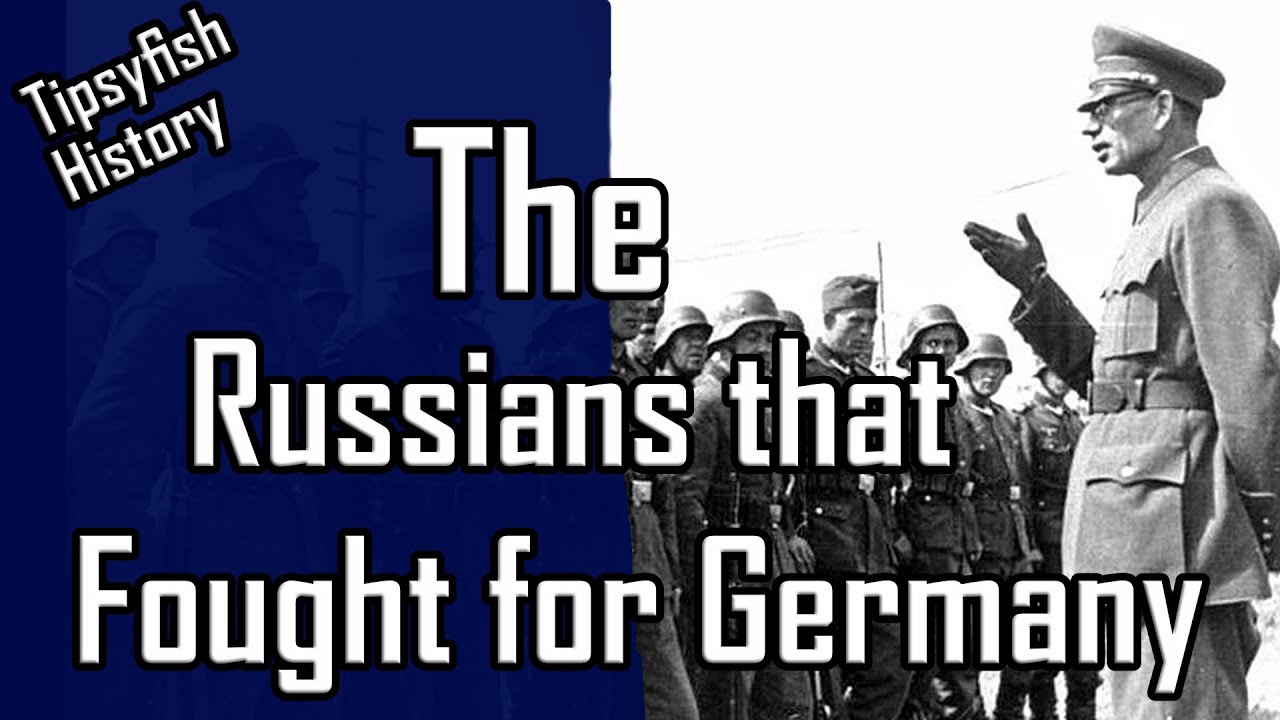
The Russian allies of the Wehrmacht: The Russian Liberation Army.
June 6, 2020
8,646
273
60
3.85%
Search the Record
IndexedEvery word spoken in this episode is indexed. Type any phrase to jump straight to the moment it was said.
Type any word or phrase that may have been spoken. Click a result to seek the player to that exact moment.
Try a name, a topic, or a quoted line
Helenasden Episodes Around June 6, 2020
See what was published immediately before and after this episode.


 9:36Now Playing
The Russian allies of the Wehrmacht: The Russian Liberation Army.



YouTube Description
as posted by the channelThe Russian Liberation Army (RLA) was one of the many national armies raised during WW2 to aid the Germans in their war against the Soviet Union. However, these forces were largely ineffective, but still played a major part in the re-telling of WW2.
Read more about the Legions:
Hitler's VikingsThe History of the Scandinavian WaffenSSThe Legions, the SSWiking and the SSNordland
SS Foreign Divisions & Volunteers of Lithuania, Latvia and Estonia, 19411945
Hitler's JihadisMuslim Volunteers of the WaffenSS (Hitler's Legions)
Hitler's Flemish LionsThe History of the SSFreiwilligan Grenadier Division Langemarck (Flamische Nr. I) (Hitler's Legions Book 2)
Belgian WaffenSS Legions & Brigades, 19411944Wallonie, Wallonien, Flandern & Langemarck
Norwegian WaffenSS Legion, 194143
SS Hitler's Foreign DivisionsForeign Volunteers in the Waffen SS 19401945
11th WaffenSS Freiwilligen Panzergrenadier Division “Nordland”An Illustrated History
*Disclaimer: This video or video description contains affiliate links. That means that I am awarded a small commission for purchases made through them, at no added cost for you.
______________________
Support The Channel:
Second Channel ►www.youtube.com/@HelenasDens?sub_confirmation=1
Have a topic you want to suggest? Say so in the comments below. Subscribe if you enjoyed the video as well, would be super appreciated
The Russian Liberation Movement, was based along much the same factors. However, it was largely made up of White Russian emegrets, and various Anti-Communist Russian individuals. This army, consisted of around 8,000 men, under the command of former Red Army general Andrey Vlasov, a man who defected after being captured during the siege of Leningrad. His men acted as a security force for the occupied regions, which were supposed to be supplied up to the standards of regular army units, but due to the fear of disloyalty, were always kept under-equipped. Around another half dozen major German allied, Russian units, would be formed during the war, largely acting as security forces, but some, engaging on the front-lines of combat as well.
Vlasov, had been trying to get German high command to allow him to create a large Russian army, loyal to Germany, to aid in their fight against the Soviets, However, Irrespective of his pleas, by mid-1943 several hundred thousand ex-Soviets were serving in the German forces, either as Hiwis or in Eastern volunteer units. These latter group were normally acting in a security role at the occupied territory. Where they constituted a major part of the German effort to counter the activity of Soviet partisans. The Germans were, however, always concerned about their reliability. Following German defeats in 1943, the reliability of these groups would become a liability, as increased desertions and mutinies occurred. So instead, a large section of these Eastern units, were transferred away from their homeland, and sent to the Western front, where they assumed that the men would behave better, no longer connected to their home. And while some did prove to be effective units, many others simply surrendered the first chance that they had.
Guests & Subjects Covered
Sentinel Indexing in Progress
Metadata and chapters are available. Claim extraction for this episode is pending.
All video content is delivered via YouTube embedded players in accordance with the YouTube Terms of Service. Sentinel provides research tools that promote discovery and accountability across political media.