History Hustle
@historyhustle·283K subscribers·928 videos
Brazil’s Fascist Building in Downtown Rio de Janeiro
Posted
August 6, 2026
Views
107
Likes
20
Comments
7
Engagement
25.23%
August 6, 2026
107
20
7
25.23%
Every word spoken in this episode is indexed. Type any phrase to jump straight to the moment it was said.
Type any word or phrase that may have been spoken. Click a result to seek the player to that exact moment.
Try a name, a topic, or a quoted line
Episode Timeline
Every episode in order around the one you’re watching — click any card and the page flips straight to it.
 1:18Now Playing
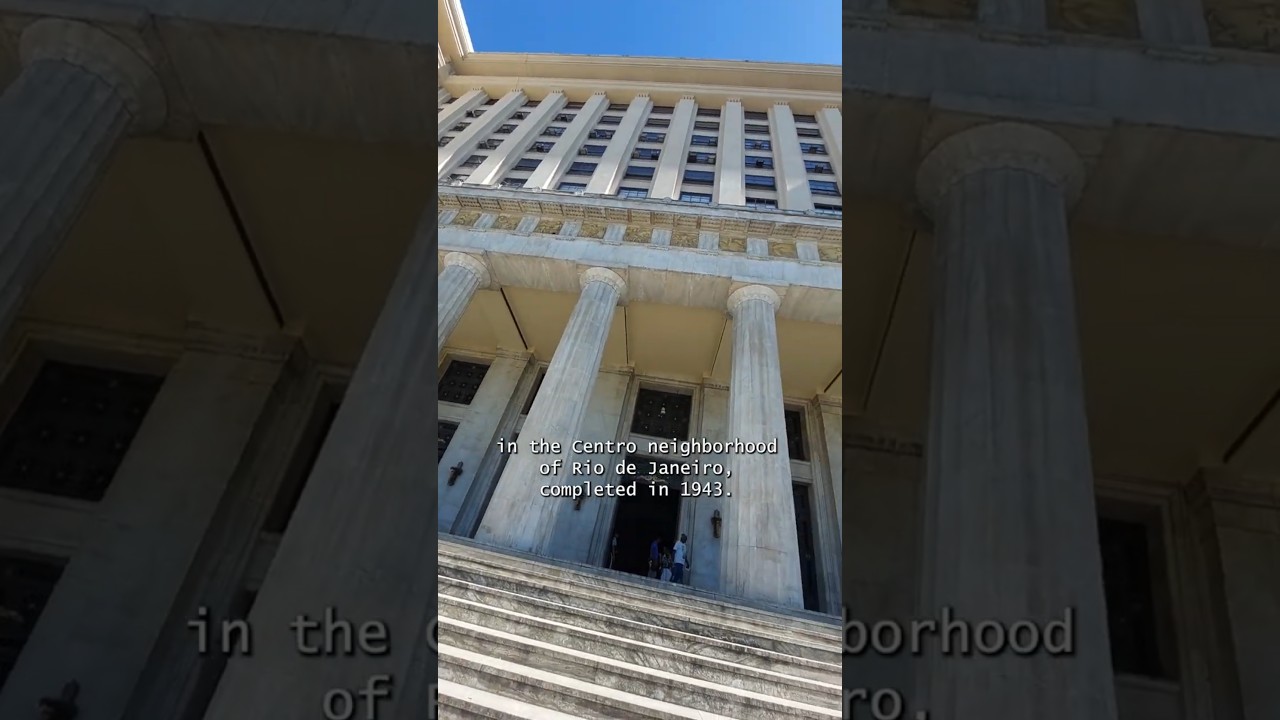
This is the Ministry of Finance Building, located in the Centro neighborhood of Rio de Janeiro. Completed in 1943, this monumental building is an excellent example of Art Deco and neoclassical monumental architecture that was popular during the Estado Novo era under President Getúlio Vargas. While it isn't an outright direct import of Italian Fascist architecture, it is heavily para-fascist and authoritarian-inspired.
During the Estado Novo from 1937 till 1946, Brazilian dictator Getúlio Vargas established a centralized, authoritarian regime deeply influenced by European para-fascism, particularly Mussolini’s Italy and Salazar’s Portugal. Vargas suppressed political opposition, censored the press, and implemented state-controlled labor unions to create a corporatist economy mirroring fascist structures. While Vargas eventually pivoted to ally with the United States during World War II, the period's political centralization and imposing national monuments left a lasting, fascist-inspired imprint on Brazil.
Sentinel Indexing in Progress
Metadata and chapters are available. Claim extraction for this episode is pending.
All video content is delivered via YouTube embedded players in accordance with the YouTube Terms of Service. Sentinel provides research tools that promote discovery and accountability across political media.