Jay Dyer
@jaydyer·209K subscribers·1.7K videos
The Non-Chalcedonian Heresy - Monastery of Gregoriou, Mount Athos
Posted
October 30, 2024
Views
8,241
Likes
342
Comments
249
Engagement
7.17%
October 30, 2024
8,241
342
249
7.17%
Every word spoken in this episode is indexed. Type any phrase to jump straight to the moment it was said.
Type any word or phrase that may have been spoken. Click a result to seek the player to that exact moment.
Try a name, a topic, or a quoted line
 1:19:53Now Playing
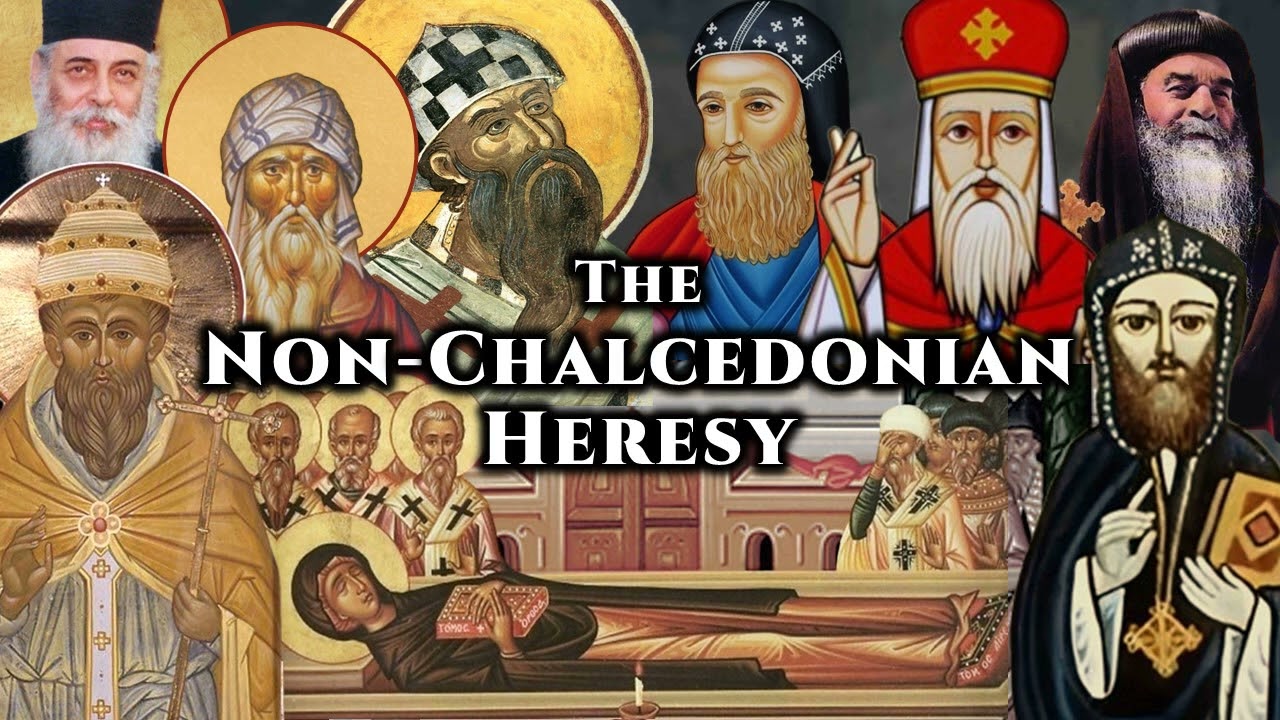
What separates the Orthodox Church and the various Non-Chalcedonian churches? Is it merely semantics and misunderstandings, as some today proclaim? The Holy Monastery of Gregoriou on Mount Athos, in this 1994 treatise, gives a detailed examination of the issues and offers much for anyone interested in the truth of Christ, His Church, and the Non-Chalcedonian heresy.
📖 This is a reading of _The Non-Chalcedonian Heretics_ by the Monastery of Gregoriou (Mount Athos) (originally published as _The Non-Chalcedonian Heresy_ in Orthodox Life (Jordanville)). Buy here:
Part I: Ecclesiological Presuppositions
Part II: The Historical Witness
Part III: Dogmatic Differences
*Primary Sources*
📖 _The Acts of the Council of Chalcedon_ translated and introduced by Fr. Richard Price (Roman Catholic)
📖 Letters 1-50 of St. Cyril of Alexandria
📖 Letters 51-110 of St. Cyril of Alexandria
📖 The "Tome" of Pope St. Leo of Rome
📖 _Exact Exposition of the Orthodox Faith_ by St. John of Damascus (see Book 3)
*Secondary Sources*
📖 _Saint Cyril of Alexandria and the Christological Controversy_ by Fr. John McGuckin
📖 The Political Subterfuge of Chalcedon by Patrick Craig Truglia
*Audio*
🎧 Oriental Orthodoxy Refuted (Playlist) by David Erhan
*From Non-Chalcedonians*
📖 From V.C. Samuel (a Copt), quoted in the text from Gregoriou: _The Council of Chalcedon Re-Examined_
_______
A good intention is not sufficient for an Orthodox formulation of dogma, but only a correct attitude, correct presuppositions, and clear formulation. How can one make a distinction between hypostasis and hypostasis, unless the one is called "hypostasis" and the other "person"? It is precisely on this point, however, that we find the other erroneous philosophical presupposition of the Non-Chalcedonians: the differentiation of hypostasis and person. Hence, their confusion as to the mystery of the hypostatic union.
St. John of Damascus: "Furthermore, Dioscoros and Severos and the multitudinous mobs of both accepted that there was one and the same hypostasis, defining in a similar way that there was one nature, 'not knowing what they say nor understanding what they assert.' The disease or deception in their mind lay in this, that they conceived nature and hypostasis to be the same."
At the very least, it would be naive for anyone to believe that the enormous subject of Christology could be exhausted in such a brief report. But it is not impossible to summarize the central points, which one absolutely must confess if his Faith is to be Orthodox. From an historical perspective, it should be said that the Holy Fathers knew well with whom they were conversing, and there is no possibility that they misconstrued and condemned the Non-Chalcedonians on account of a misinterpretation. It is neither theological terminology nor racial and cultural factors that played a decisive role in the separation of the Non-Chalcedonians from the communion of the Catholic [i.e., Orthodox] Church, but chiefly their erroneous conception, and consequently their formulation, of the manner of the union of the two Natures in Christ. The dogmatic differences between the two sides are so great that, if they were forgotten, salvation itself would be put at risk.
Sentinel Indexing in Progress
Metadata and chapters are available. Claim extraction for this episode is pending.
All video content is delivered via YouTube embedded players in accordance with the YouTube Terms of Service. Sentinel provides research tools that promote discovery and accountability across political media.