Jeremy Boreing
@jeremyboreing·40.4K subscribers·206 videos
The Russian Occultist Behind Tucker's Strange New Political Project
Posted
August 6, 2026
Views
19,382
Likes
1,005
Comments
215
Engagement
August 6, 2026
19,382
1,005
215
6.29%
Every word spoken in this episode is indexed. Type any phrase to jump straight to the moment it was said.
Type any word or phrase that may have been spoken. Click a result to seek the player to that exact moment.
Try a name, a topic, or a quoted line
Episode Timeline
Every episode in order around the one you’re watching — click any card and the page flips straight to it.
 10:14Now Playing
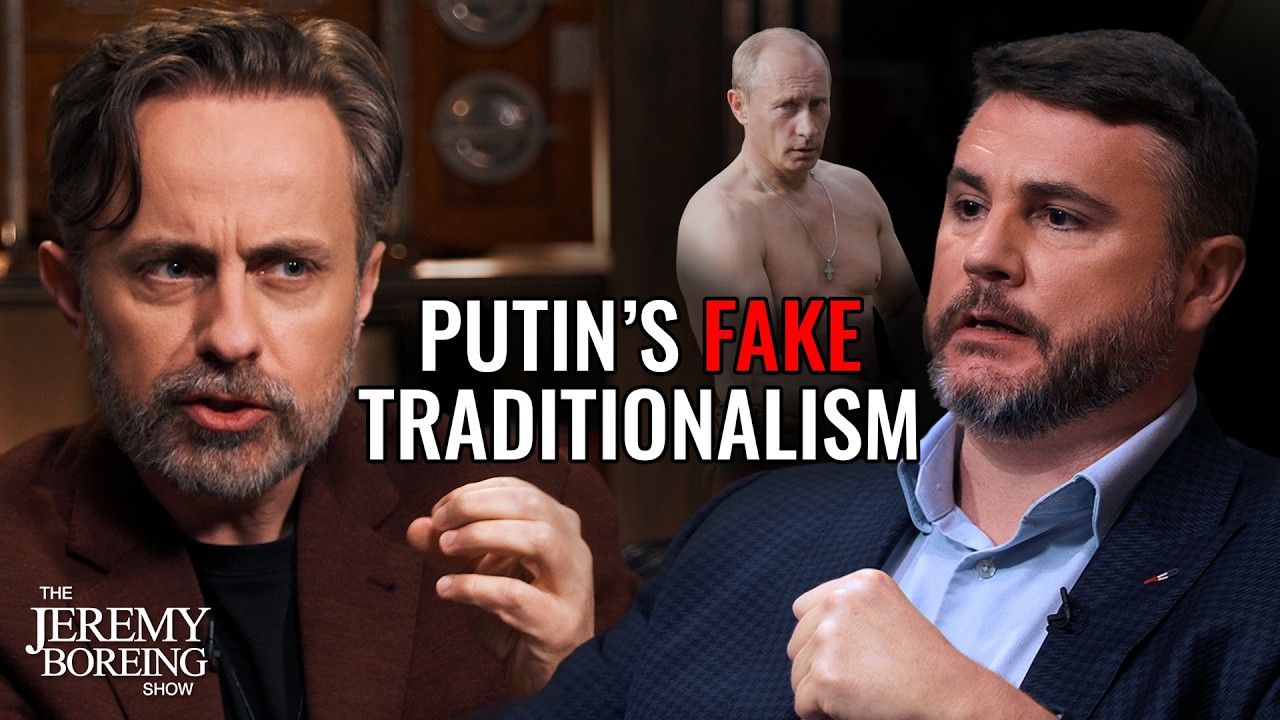
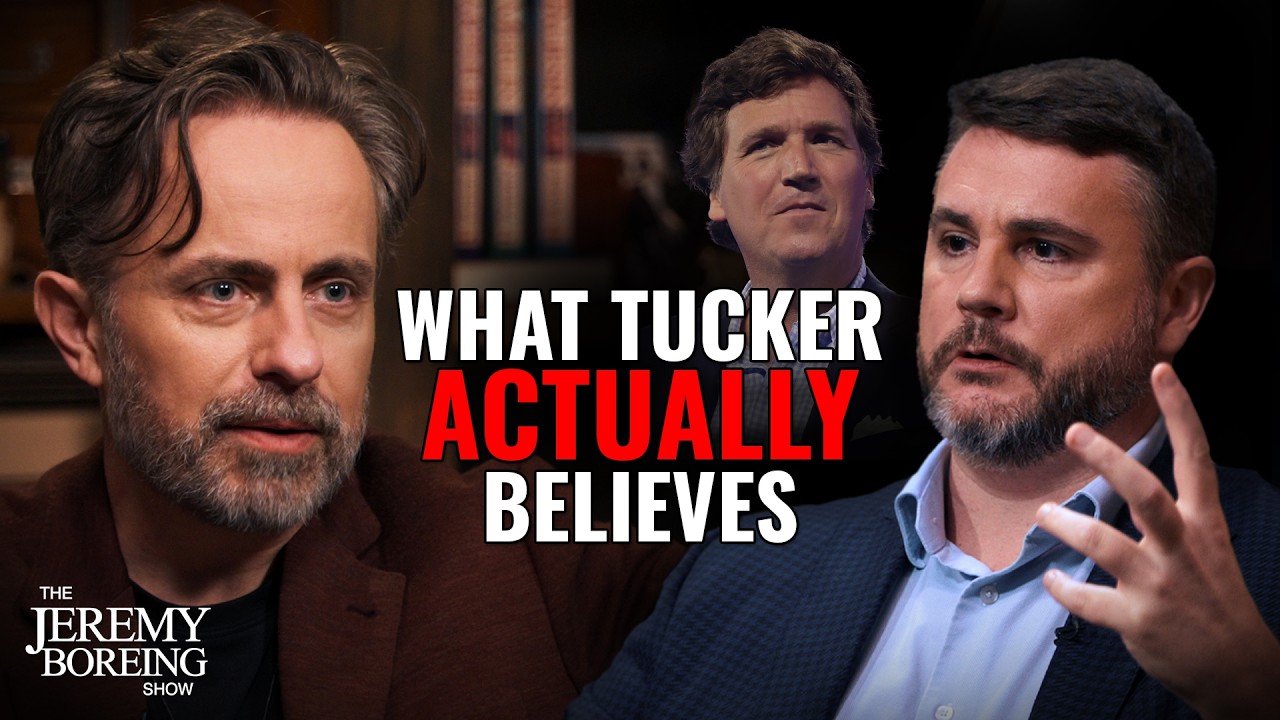
Following Tucker Carlson's much-hyped monologue, Jeremy Boreing convened a panel to work through what was actually said — and where the ideas underneath it come from.
The conversation opens with a question: is Aleksandr Dugin the Rasputin of the 21st century? The panel's answer is that the comparison holds in one specific way. Rasputin's power came from seduction — his ability to captivate educated, wealthy, sophisticated people who should have known better. The panelists describe spending months inside Dugin's writings and finding the same pull. Read deeply enough, they say, and it starts to make a kind of sense. One panelist describes needing to "detox" afterward.
From there the discussion turns to Tucker's speech itself. Boreing offers his read: a man who clearly believes something, who couches it in Christian language, but who never puts forward a gospel — a populism that gestures at the founders and the Constitution without the philosophical restoration the Tea Party once aimed at, and which sounds closer to blood and soil than to a proposition nation.
The bulk of the episode is a genuine explainer on Dugin's Fourth Political Theory. Liberalism, fascism, and communism have all hit the end of the road, Dugin argues, and something new must replace them — but he cannot say what. The reason he cannot say what is Martin Heidegger. The panel walks through Ereignis, the event in which Being suddenly reveals itself anew at the darkest moment; Dasein, being-there; and Geworfenheit, thrownness. It connects to Dugin's vision of a Russian empire of empires serving as katechon, the restrainer of the antichrist.
Then the sources: Dugin is not a Christian but a capital-T Traditionalist, drawing on René Guénon and his perennial philosophy — the claim that every orthodox tradition is an outer shell around one deeper esoteric truth — and on Julius Evola, the Italian fascist esotericist who believed himself invincible and was paralyzed by shrapnel proving otherwise.
Chapters:
The panel's takeaway: the Fourth Political Theory cannot be articulated until the current era is permitted to reach its natural end. Which is precisely what one panelist heard in Tucker's speech — America is ending, nothing means anything, and something new is about to reveal itself.
Full episode linked below. Subscribe for more.
Tucker Carlson, Alexander Dugin, Fourth Political Theory, Jeremy Boreing, James Lindsay, dissident right, Traditionalism, René Guénon, Julius Evola, Heidegger, Ereignis, Dasein, perennial philosophy, esotericism, Gnosticism, Putin's Rasputin, katechon, Russian influence, conservative media, blood and soil, populism, Christian nationalism, Tucker Carlson speech breakdown, woke right, multipolarity
Sentinel Indexing in Progress
Metadata and chapters are available. Claim extraction for this episode is pending.
All video content is delivered via YouTube embedded players in accordance with the YouTube Terms of Service. Sentinel provides research tools that promote discovery and accountability across political media.