
Legal Af
@legalafmtn·1.1M subscribers·6.7K videos
Trump IRS Scheme SHUT DOWN by Federal Judge in BLISTERING RULING
Posted
December 5, 2025
Views
41,730
Likes
3,901
Comments
220
Engagement
9.88%
December 5, 2025
41,730
3,901
220
9.88%
Every word spoken in this episode is indexed. Type any phrase to jump straight to the moment it was said.
Type any word or phrase that may have been spoken. Click a result to seek the player to that exact moment.
Try a name, a topic, or a quoted line
 10:55Now Playing
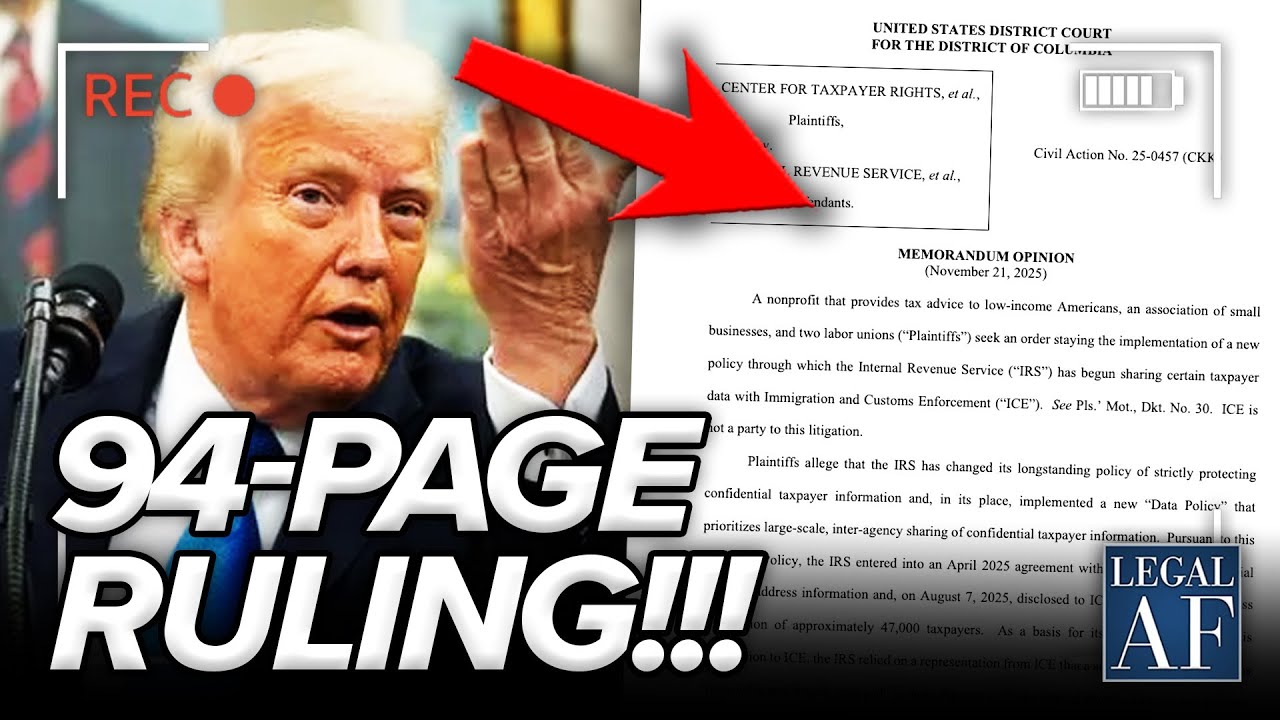
Brian Kabateck and Shant Karnikian break down Judge Colleen Kollar-Kotelly's 94-page ruling blocking the IRS from sharing taxpayer address information with ICE, finding Trump's deportation machine violated Internal Revenue Code Section 6103. The judge ruled the IRS unlawfully disclosed information about 47,000 taxpayers by failing to meet strict requirements that sharing only occurs for federal criminal investigations—but being in the US illegally is a civil violation, not a crime. ICE initially sought information on 7 million taxpayers, then narrowed to 1.28 million, claiming one single ICE agent was "personally and directly engaged" in all those investigations—which the judge found implausible and not credible. Section 6103 confidentiality protections were enacted post-Watergate after Nixon used tax records to target enemies, creating one of the tightest privacy regimes in US law. Brian explains undocumented immigrants pay over $100 billion annually in federal taxes (far more than they receive in benefits) and cannot file returns or collect Social Security, debunking the MAGA myth they're a "drain on the system." The policy discouraged people from filing taxes, threatening low-income tax clinics' federal funding. The hosts argue both sides should celebrate this ruling—conservatives suspicious of government overreach should oppose IRS records being used unlawfully, while the policy would discourage tax compliance from millions of taxpayers, harming revenue collection.
Legal AF Substack
Follow Legal AF on Bluesky
Follow Michael Popok on Bluesky
Subscribe to the Legal AF by MeidasTouch podcast here
Sentinel Indexing in Progress
Metadata and chapters are available. Claim extraction for this episode is pending.
All video content is delivered via YouTube embedded players in accordance with the YouTube Terms of Service. Sentinel provides research tools that promote discovery and accountability across political media.