Liberty Politics
@liberty-politics·94K subscribers·8.1K videos
What the Islamic Republic is REALLY Hiding
Posted
May 3, 2026
Views
6,970
Likes
680
Comments
140
Engagement
11.76%
May 3, 2026
6,970
680
140
11.76%
Every word spoken in this episode is indexed. Type any phrase to jump straight to the moment it was said.
Type any word or phrase that may have been spoken. Click a result to seek the player to that exact moment.
Try a name, a topic, or a quoted line
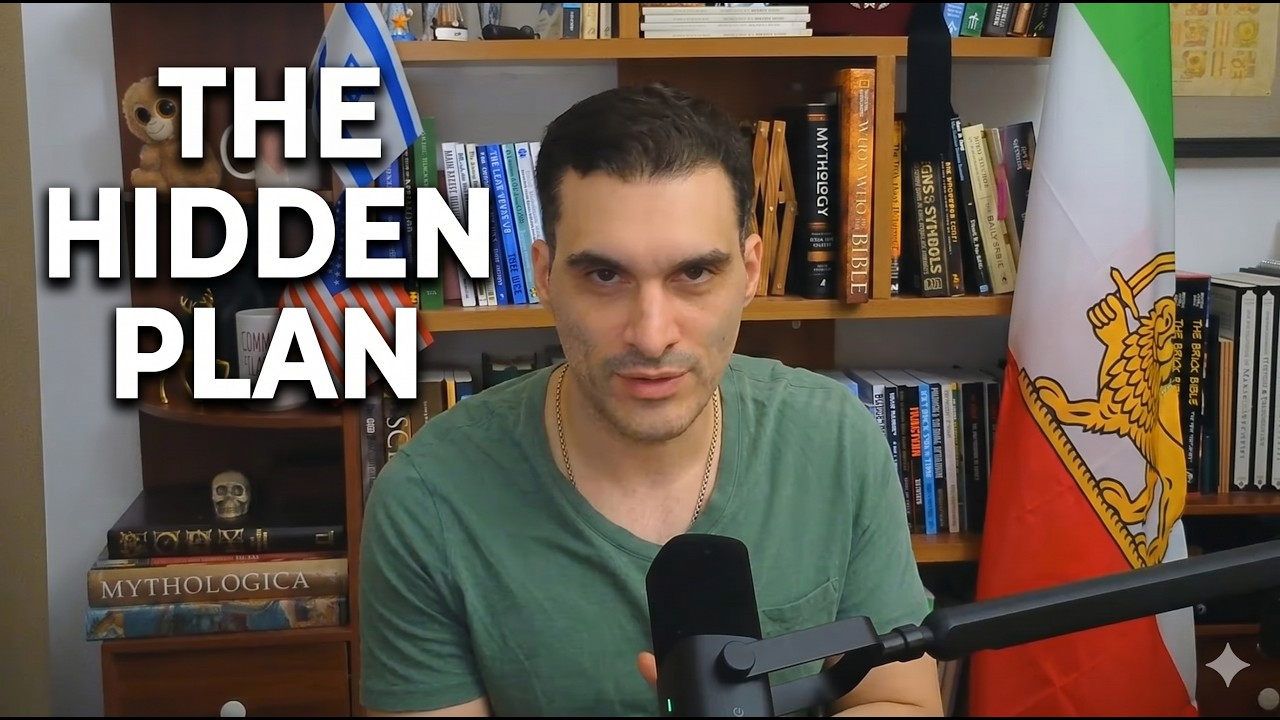 27:46Now Playing
🎖️ Come talk to me in our discussion group
The revolution of 1979 was only the beginning. Behind the scenes, a calculated expansionist strategy is working to bring down the global status quo. This is the clash of world orders that no one is talking about. It is time to stop looking at the surface level and start understanding the revolutionary DNA that drives a mission to dominate the entire world.
📜 The Origins: Rebellious Movements & The Quranic Canon
The Imperial Consolidation: During the Umayyad and Abbasid dynasties, the Islamic empire was vast and prone to rebellions. 🌍
"Seal of the Prophets": According to this revisionist view, establishing Muhammad as the final prophet (the "Seal") during the canonization of the Quran served a political purpose: it prevented new rebel leaders from claiming prophethood to legitimize uprisings against the state. 🛑📜
The Case of Zaid: The Quran explicitly mentions Zaid (Muhammad's adopted son) to clarify he is not a biological son. This severed any potential for Zaid's lineage to claim prophetic succession, reinforcing the state's monopoly on religious authority. 🧬🚫
🩸 The Workaround: The Concept of the Imamate
Spiritual Leadership over Prophethood: To bypass the "Seal of the Prophets" restriction, proto-Shia movements developed the concept of the Imam—a divinely guided spiritual leader who is not a prophet but possesses ultimate religious authority. 👳♂️✨
The Bloodline Connection: Legitimacy required a direct link to Muhammad. This was achieved through his daughter, Fatima, and his cousin, Ali (the First Imam). This bloodline became the foundation of Shia spiritual leadership. 🔗🩸
Organic Evolution: This wasn't a sudden conspiracy but a Darwinian, trial-and-error evolution of theology—whatever narratives successfully rallied opposition to the Sunni establishment survived. 🧬🌱
🌑 The Occultation: Waiting for the Mahdi
Twelver Shia Islam: The most dominant branch of Shia Islam revolves around a lineage of 12 Imams. 🕊️
The Hidden Imam: The 12th Imam (the Mahdi) is believed to have gone into "occultation" (hiding) as a child over 1,000 years ago. He is believed to be alive and will eventually return to bring global justice. 🕰️🌍
Historical Political Quietism: Because legitimate Islamic rule theoretically requires the presence of the Mahdi, historical Shia empires (like the Safavids in Iran) separated state and religion. The Shahs ruled the state, while the Mullahs provided a degree of legitimacy without actually governing. 👑🤝👳♂️
⚖️ The Paradigm Shift: 1979 & Khomeini's Innovation
Velayat-e Faqih (Guardianship of the Islamic Jurist): Ayatollah Khomeini radically transformed Shia theology. He took an existing concept—the jurist's responsibility to guard orphans and the vulnerable—and expanded it to the entire society. 🏛️📖
Ruling on Behalf of the Mahdi: Khomeini argued that Muslims did not need to wait for the Mahdi to establish an Islamic state. Instead, the top Islamic jurist (Supreme Leader) should rule on the Mahdi's behalf during his absence. 👑⚖️
The Mullahs Take Over: This completely shattered the centuries-old tradition of political quietism, placing the clergy directly in control of the state for the first time. 🕌⚙️
🔥 The "Revolutionary DNA" & Global Ambitions
Shia vs. Sunni "Software": Shia Islam's entire history was built on challenging the status quo and illegitimate authority. This made its cultural "software" inherently revolutionary. 💻💥
Cross-Pollination of Ideas: Sayyid Qutb’s revolutionary Sunni Islamist ideas (from the Muslim Brotherhood) struggled to gain massive traction in state-aligned Sunni countries. However, through figures like Navvab Safavi, these ideas found fertile ground in Iran's revolutionary Shia software. 🔄🤝
The Permanent Revolution: Usually, after a revolution succeeds, the new government becomes conservative to protect its power. However, because rebellion is baked into this new ideological DNA, Iran's Islamic Republic could not stop. They shifted their revolutionary target from the Shah to the "Global World Order," Western Imperialism, and Zionism, seeking to export their revolution across the Middle East and the world. 🌍⚔️🔥
Sentinel Indexing in Progress
Metadata and chapters are available. Claim extraction for this episode is pending.
All video content is delivered via YouTube embedded players in accordance with the YouTube Terms of Service. Sentinel provides research tools that promote discovery and accountability across political media.