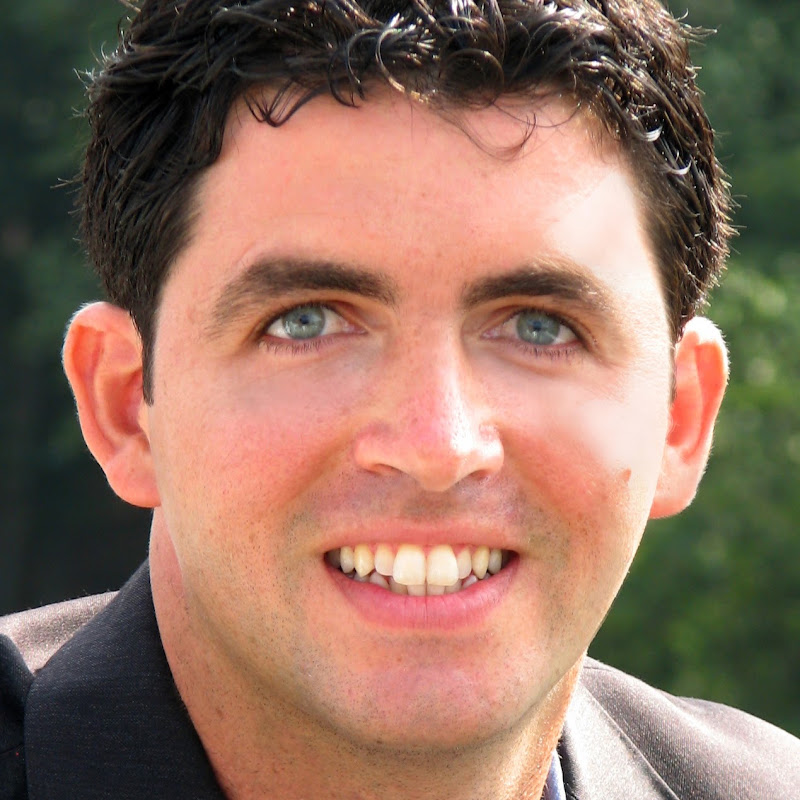
Manolis Kellis
@manoliskellis1·24.9K subscribers·255 videos
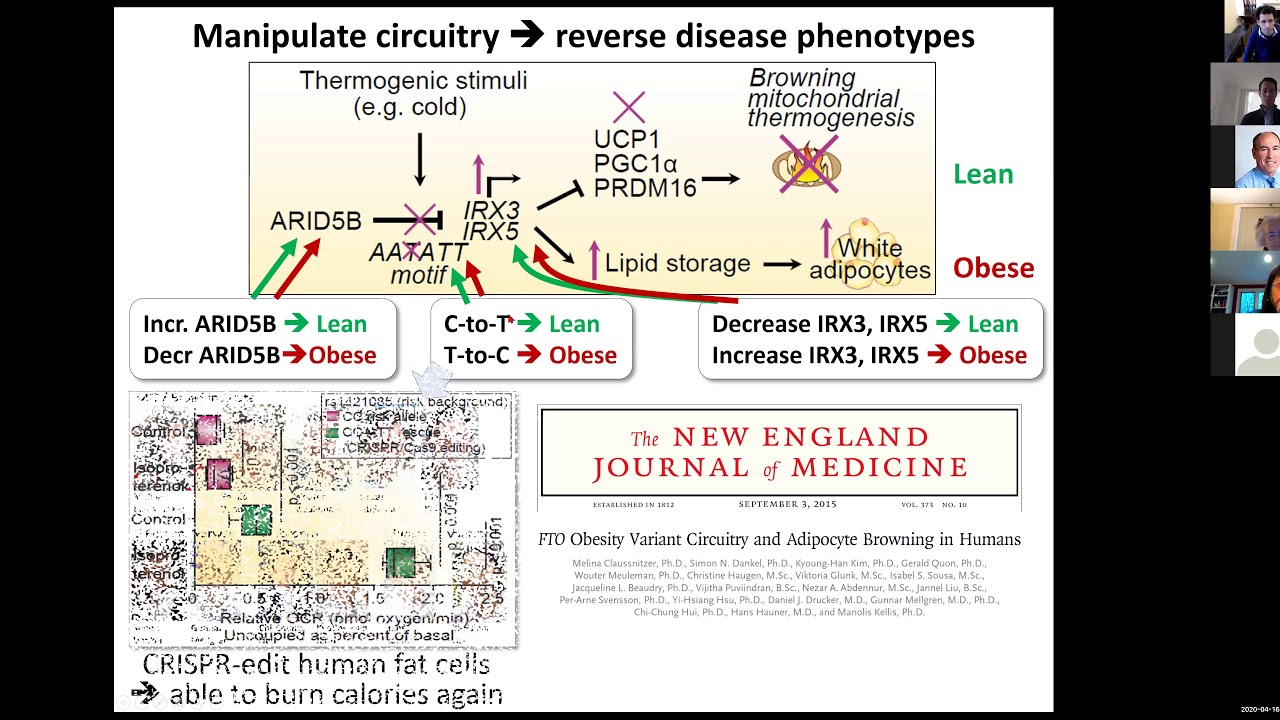
HIN | Covid-19 Genomics, Evolution, Mutations and Outlook | On-Demand Webinar
Posted
July 7, 2020
Views
158
July 7, 2020
158
Every word spoken in this episode is indexed. Type any phrase to jump straight to the moment it was said.
Type any word or phrase that may have been spoken. Click a result to seek the player to that exact moment.
Try a name, a topic, or a quoted line
See what was published immediately before and after this episode.
 1:18:07Now Playing
𝗛𝗲𝗹𝗹𝗲𝗻𝗶𝗰 𝗜𝗻𝗻𝗼𝘃𝗮𝘁𝗶𝗼𝗻 𝗡𝗲𝘁𝘄𝗼𝗿𝗸, with the support of the Greek Consulate of Boston and MIT Enterprise Forum Greece, hosts events to educate those in the US about technology innovation and entrepreneurship in Greece, and offer Greek entrepreneurs an opportunity to pitch and network in the US. While our events are typically held in Boston, due to the covid-19 situation we are hosting a series of webcasts in order to keep our community connected until our next in-person event.
Speaker: 𝗠𝗮𝗻𝗼𝗹𝗶𝘀 𝗞𝗲𝗹𝗹𝗶𝘀, 𝗣𝗵.𝗗., 𝗣𝗿𝗼𝗳𝗲𝘀𝘀𝗼𝗿, 𝗖𝗼𝗺𝗽𝘂𝘁𝗲𝗿 𝗦𝗰𝗶𝗲𝗻𝗰𝗲, 𝗠𝗜𝗧
Manolis Kellis , Ph.D., is Professor of Computer Science at MIT, a member of the Broad Institute of MIT and Harvard, a Principal Investigator of the Computer Science and Artificial Intelligence Lab at MIT, and the Head of the MIT Computational Biology Group (compbio.mit.edu). His research is dissecting the mechanisms underlying human disease, using genetics, genomics, epigenomics, gene regulation, and high-throughput experiments, with broad implications for medicine and human health.
Professor Kellis’ work is revolutionizing our understanding of the human genome and human disease, across Alzheimer’s, obesity, schizophrenia, heart disorders, and cancer. He has developed and disseminated some of the most widely-used techniques and resources in genomics. He has more than 220 publications with more than 90,000 citations, and has received multiple scientific awards, including the US Presidential Early Career Award (PECASE) by President Barack Obama. He has led several large-scale genomics projects, including the Roadmap Epigenomics project, the ENCODE project, the Genotype Tissue-Expression (GTEx) project, and comparative genomics projects in mammals, flies, and yeasts. He lived in Greece and France before moving to the US, and he has studied and conducted research at MIT, the Xerox Palo Alto Research Center, and the Cold Spring Harbor Lab.
Moderator: 𝗞𝗮𝘁𝗶𝗮 𝗖𝗮𝘁𝗵𝗲𝗿𝗶𝗻𝗲 𝗞𝗮𝗿𝗮𝗹𝗶𝘀, 𝗠𝗗, 𝗣𝗵𝗗, 𝗘𝘅𝗲𝗰𝘂𝘁𝗶𝘃𝗲 𝗗𝗶𝗿𝗲𝗰𝘁𝗼𝗿 𝗳𝗼𝗿 𝗕𝗶𝗼𝗹𝗼𝗴𝘆, 𝗥𝗚𝗖, 𝗥𝗲𝗴𝗲𝗻𝗲𝗿𝗼𝗻, 𝗜𝗻𝗰.
Dr. Karalis is trained in genetics and experimental endocrinology with broad experience and contributions in basic and translational research as well as strategic, scientific and managerial leadership of multidisciplinary teams in academic and industry settings. The focus of her interest is in the understanding how distrurbed homeostasis of the organism such as when exposed to external or internal challenges, drives disease mechanisms and how we can overcome the insults with new therapeutics.She has solid experience in inflammatory diseases, immune response, stress responses, metabolism, organoids, and organ chip technology.
At Emulate based on their Organs-on-Chips technology platform, as the EVP of Research she has been leading the team to develop disease models in micro-engineered environments and accurately understand how different diseases, medicines, chemicals and foods affect us and elucidate mechanisms driving the spectrum of individual’ responses. Models developed by the team are commercialized by Emulate and employed by a number of academic and industry groups around the world. Prior to joining Emulate she was heading the Developmental Biology Section at the Biomedical Research Foundation of the Academy of Athens, working on experimental models of human diseases with focus on intestinal inflamation, metabolism and tissue regeneration. She is affiliated faculty at the BSRC Alexander Fleming in Greece and Harvard Medical School, where she was Assistant Professor of Pediatrics and faculty at the Division of Endocrinology of Children’s Hospital. She has been a Helmholtz International fellow and a Visiting Scholar at Wyss Institute Harvard Medical School.
She joins the Regeneron Genetics Center to lead the Biology group for the understanding of new mechanisms for genetic inflammatory, metabolic and neurodegenerative diseases and development of new drugs for human patients.
Tuesday June 23, 2020
#hellenicinnovationnetwork #HIN
________
📌 Stay tuned for more!
🔵 Podcasts
Sentinel Indexing in Progress
Metadata and chapters are available. Claim extraction for this episode is pending.
All video content is delivered via YouTube embedded players in accordance with the YouTube Terms of Service. Sentinel provides research tools that promote discovery and accountability across political media.