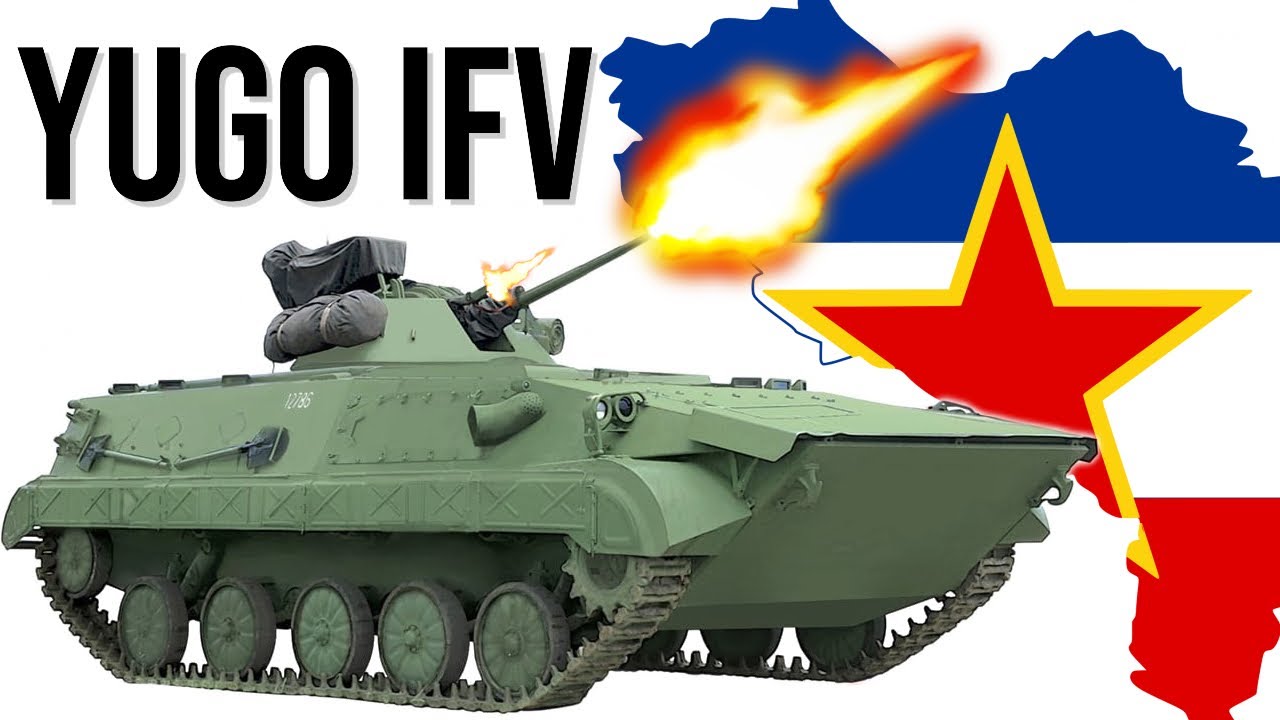
Yugoslavia’s BVP M-80 Infantry Fighting Vehicle Explained | SOVIET BMP COUSIN
January 27, 2025
41,503
2,075
309
5.74%
Search the Record
IndexedEvery word spoken in this episode is indexed. Type any phrase to jump straight to the moment it was said.
Type any word or phrase that may have been spoken. Click a result to seek the player to that exact moment.
Try a name, a topic, or a quoted line
Matsimus Episodes Around January 27, 2025
See what was published immediately before and after this episode.


 18:14Now Playing
Yugoslavia’s BVP M-80 Infantry Fighting Vehicle Explained | SOVIET BMP COUSIN


YouTube Description
as posted by the channelThe BVP M-80 (Serbo-Croatian: Борбено возило пешадије М-80 [БВП М-80]), is a tracked Yugoslav-made infantry fighting vehicle, produced from the 1980s until the country's collapse in the 1990s.
The first production variant was the M-80 which was only made in small numbers. The vehicle used a French-built engine with an output of 260 hp, the same engine as used in AMX-10P. After only a year, Yugoslavia started license production of Daimler-Benz's 315 hp engine in domestic FAMOS factories. This variant received a new designation as M-80A. Around 1000 vehicles were produced before the breakup of the country.
At the time it was produced, M-80A had similar characteristics with existing IFVs like Russian BMP-1 or French AMX 10P. Although many foreign experts compare M-80A with Russian BMP-1, the Yugoslav IFV is a true original design. Unlike the BMP-1 which had 6 road wheels and was armed with 73 mm gun, M-80A had 5 road wheels and had 20 mm gun. M-80A incorporates numerous elements from the French AMX-10P giving it more power and better protection over its counterpart. All M-80s are amphibious and are equipped with twin AT-3 launchers.
The M-80A is armed with one 20 mm gun, co-axial machine gun 7.62 mm and twin launcher for wire-guided anti-tank missiles. It is NBC protected, fire suppression system, inside heating and water ejecting system. It is fully amphibious and can perform crossing of any water barrier without previous preparations. Max. speed at water is 7 km/h. Crew consist of three, driver, commander and gun operator and in the after compartment, there is space for six fully equipped infantrymen who can engage the enemy with personal armament through six gun slits on both vehicle sides and back doors and one squad leader who commands infantry upon exiting the vehicle. Infantry leaves IFV through two doors at the back of the vehicle.
🟢 What’s Covered in This Video:
- Why Yugoslavia developed its own IFV
- Features of the BVP M80 and M80A models
- Combat performance during the Yugoslav Wars
- Upgrades introduced in the M80AB1
- Strengths, weaknesses, and its current operational role
If you're a military enthusiast or just love exploring unique armored vehicles, this video is for you! Don’t forget to subscribe to the channel for more deep dives into military history and technology.
Hope you enjoy!!
💥 💣 Check out our partnership clothing brand! Attire For Effect💣 💥
📸 Also follow them on Instagram: @attire_for_effect
💰 Want to support my channel? Check out my Patreon Donation page!
👕 Check out my Merch
📬Wanna send me something? My PO Box: 210A - 12A Street N Suite No. 135 Lethbridge Alberta Canada T1H2J1
📸 My instagram: @Matt_matsimus
Guests & Subjects Covered
Sentinel Indexing in Progress
Metadata and chapters are available. Claim extraction for this episode is pending.
All video content is delivered via YouTube embedded players in accordance with the YouTube Terms of Service. Sentinel provides research tools that promote discovery and accountability across political media.