Matt Beat
@iammrbeat·1.4M subscribers·960 videos
Making it Harder to Vote | Shelby County v. Holder
Posted
October 2, 2020
Views
94,811
Likes
2,915
Comments
413
Engagement
3.51%
October 2, 2020
94,811
2,915
413
3.51%
Every word spoken in this episode is indexed. Type any phrase to jump straight to the moment it was said.
Type any word or phrase that may have been spoken. Click a result to seek the player to that exact moment.
Try a name, a topic, or a quoted line
 5:32Now Playing
I wrote a new book all about the Supreme Court. Order your copy hereor visit
Make sure you are registered to vote
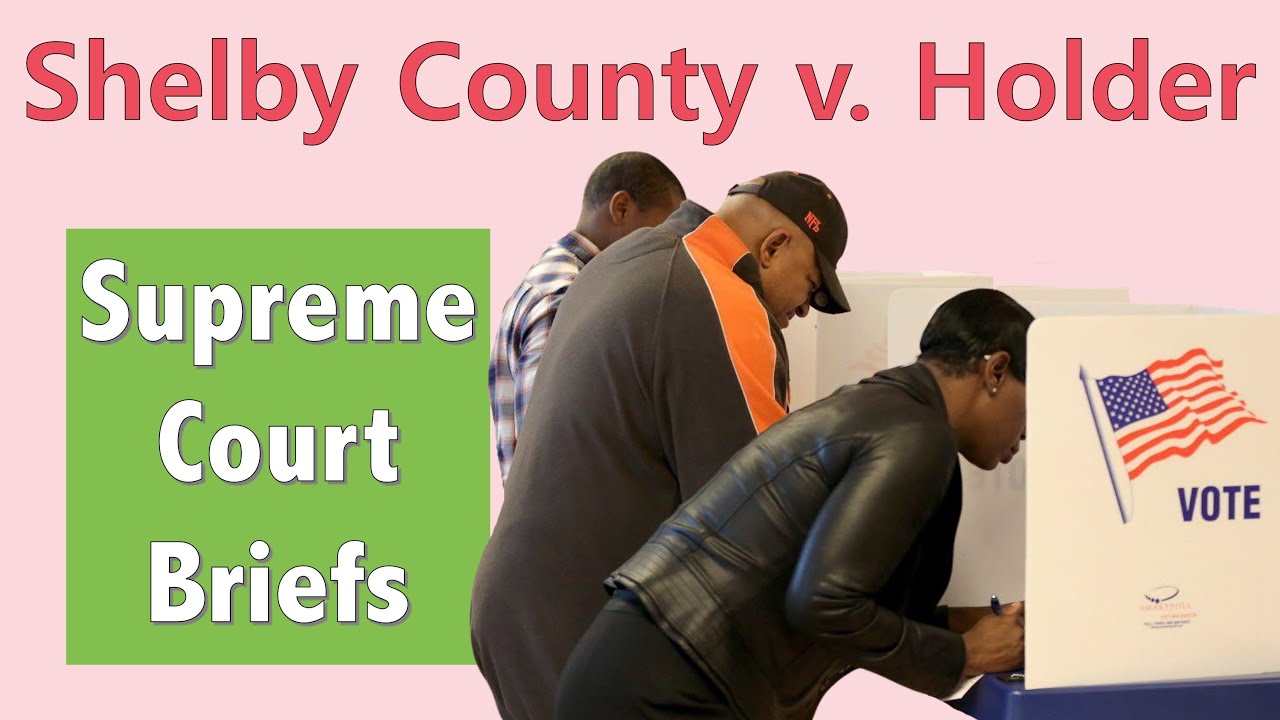
In episode 57 of Supreme Court Briefs, Shelby County, Alabama, thinks voter discrimination against African Americans in the South is totally over, man.
Corrections
Donate on Paypal
Buy Mr. Beat Tshirts, coffee mugs, etc.
Mr. Beat's band
Mr. Beat on Twitter
Mr. Beat on Facebook
Mr. Beat on Instagram
Mr. Beat's Discord server
Buy his Presidential Elections book?
Produced by Matt Beat. All images by Matt Beat, found in the public domain, or used under fair use guidelines. Music: "Beatbox Lighter" by Kwon
Check out cool primary sources here:
Other sources used:
Creative commons credits:
Rivers Langley; SaveRivers
Ruth Bader Ginsburg by Lorie Shaull from the Noun Project
WyoFile
Shelby County, Alabama
April 2010
The county sues the United States Attorney General, who at the time was Eric Holder. Why? Well Shelby County said that parts of the Voting Rights Act of 1965 were unconstitutional. You know, the law that Martin Luther King, Jr. and many others fought so hard to get passed to end voter discrmination that often targeted African Americans in the South? Shelby County had an issue with Section 5 of the Voting Rights Act, which required certain state and local governments to get clearance with the Attorney General if they wanted to change their election laws. Section 4b of the Voting Rights Act described a formula used to determine which governments would be subject to that preclearance requirement in Section 5.
Shelby County was basically like, “we ain’t discriminating anymore, so why discriminate against us?” It argued Sections 5 and 4b of the Voting Rights Act were unconstitutional, and that the times had changed, so they were outdated anyway. Well, the judge, John D. Bates, sided with the Attorney General, saying that such requirements were still needed to fight discrimination.
Oh you know that Shelby County went all up and appealed, but on May 18, 2012, the U.S. Court of Appeals for the DC Circuit agreed with the lower court. So Shelby County appealed again, this time to the Supreme Court, who agreed to hear oral arguments on February 27, 2013.
The Court had a lot to consider for this case. Obviously, the Voting Rights Act, but also the 14th Amendment, which protects everyone’s right to due process under the law, the 15th Amendment, which protects everyone from having their right to vote taken away based on “race, color, or previous condition of servitude,” and finally the 10th Amendment, which reserves all rights not granted to the federal government to the states. Whew.
The big question? Did state and local governments still have to follow Sections 5 and 4b of the Voter Rights Act?
The Court said “no,” but boy this was a close one. On June 25, 2013, they announced they had sided with Shelby County by a vote of 5-4. The Court argued that Section 4b of the Voting Rights Act was unconstitutional because the coverage formula was based on information that was more than 40 years old. The Court did NOT strike down Section 5, but without Section 4b, no jurisdiction could be subject to a preclearance, unless Congress established a new coverage formula. To this day, Congress has not done that by the way. The Court added that Congress can’t subject a state to preclearance simply based on past discrimination.
Writing for the majority, Chief Justice John Roberts argued that federal protection was no longer needed.
#supremecourtbriefs #supremecourt #apgov
Sentinel Indexing in Progress
Metadata and chapters are available. Claim extraction for this episode is pending.
All video content is delivered via YouTube embedded players in accordance with the YouTube Terms of Service. Sentinel provides research tools that promote discovery and accountability across political media.