Military1945
@m1945·37K subscribers·441 videos
Panzerfaust - Close Combat Training - Nahkampfausbildung - Panzerschreck - Tank Destruction Badge
Posted
September 17, 2020
Views
28,728
Likes
1,209
Comments
77
Engagement
September 17, 2020
28,728
1,209
77
4.48%
Every word spoken in this episode is indexed. Type any phrase to jump straight to the moment it was said.
Type any word or phrase that may have been spoken. Click a result to seek the player to that exact moment.
Try a name, a topic, or a quoted line
 9:58Now Playing
SUPPORT THE CHANNEL
www.Patreon.com/Military1945
The Panzerfaust was a one off, hand held anti-tank weapon. As the numerical superiority of the Russian and American mechanized forces increased during the war these close combat weapons gained in important. Their development also continued, mostly with an increases in their range.
So we’ll be seeing parts of this beautiful original training film that was used to show German soldiers, and to be honest last ditch youths and old men, how the weapon was assembled, the correct way of using it effectively and also demonstrating the kind of damage that could be done with it. After walking you through this I’ll introduce some footage of the weapon “out in the wild” and even some private films that show it being used.
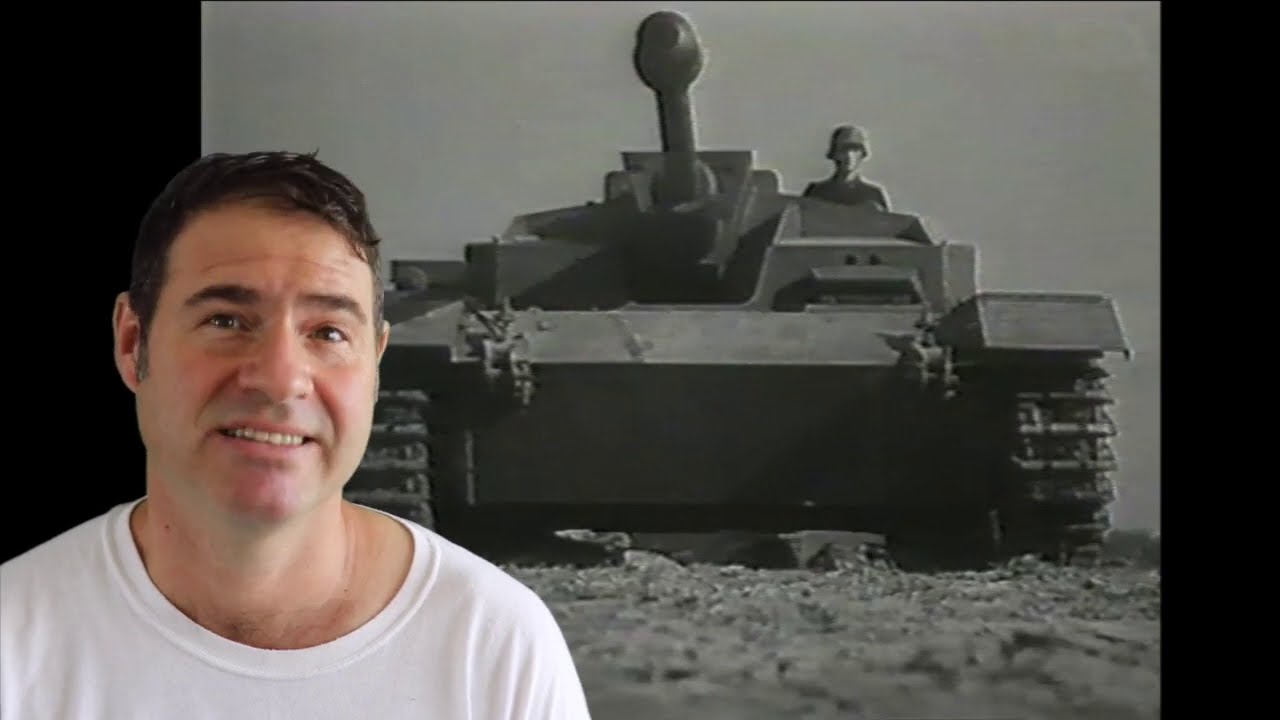
During 1944 and 45 on both the Eastern and Western fronts the German Wehrmacht found itself fighting largely defensive battles and facing massed formations of enemy tanks.
The Panzerfaust was the most common close combat weapon the German infantry was provided with and was capable of stopping even the most heavily armored tanks.
With the Panzerfaust 2, targets could be up to 30 meters away, that's about 98.5 ft, and they could be fired from protected positions. Here is the new 60 meter Panzerfaust. It had the same destructive capability as the Panzerfaust 2 but with its range doubled.
The Panzerfaust was both a weapon and its ammunition in one. 4 of them were transported in each crate and they were easily assembled for use. The ball head was be made ready for fire by loading the firing cap, and the explosive charge inside.
Important for the soldier to remember was that on firing, an intense jet of fire extended 3 meters or 9.84 ft behind the weapon. They could never be fired closed areas.
The weapon could be fired from many different firing positions. The usual position was kneeling with the firing tube rested on the soldiers shoulder. In this way the soldier was able to aim easily and was himself a relatively small target. The firing tube could also be held under his arm however in this position the solder offered a much larger target.
When fired the left hand needed to be at least 5 cm, or about 2” away from the ball head and ball head could not be resting directly on the ground. In special situations the weapon could be fired from trenches or fox holes as long as there was a minimum of space.
The Panzerfaust 60 differs from the Panzerfaust 2 in the way it is handled and fired. It weighed a bit more at 8.5 kg, or 18. lbs. On the weapons sights you can see the pre-marked distances. Here is the firing trigger. Here we see the two weapons together.
When firing at a tank traveling at a medium speed, if you are situated 30 m away aim at the front of the tank. At 60 m aim about 1/2 length of the tank in front. And at 80 m aim an entire tank length in front.
About 14,000 German soldiers were awarded the silver Tank Destruction Badge for destroying a tank with hand held weapons. The soldier who receive the most badges was named Gunter Vizenz who destroyed 21 tanks single handedly.
Development after the Panzerfaust 60 continued with the Panzerfaust 100 and then eventually 150 being introduced.
Before we look at some Hungarian footage, a Volkssturm film clip and the private material I mentioned please take the time to subscribe to this channel. Please like this production and hit the bell so that you are informed when the next video is uploaded. I expect to be doing about 2 or 3 a week so if you have any specific topic requests please write it down in the comment section below and I’ll see what we can do.
This late-war footage show an elderly man being introduced to the hand grenade, being issued a standard K98 rifle and eventually shown how to fire a Panzerfaust. These Volkssturm units were made up of a mix of both voluntary and drafted old men. Their combat effectiveness was limited at best.
The Panzerfaust was both a compact and robust anti tank weapon. Troops that were cut off from their normal supply lines could easily be resupplied with them by air. The simplicity of the weapon meant that there was little chance that they’d be damaged.
This is private footage from small collection of films from 1942-43 that show Romanian soldiers training for close combat. The original film has a run time of 6:05 and the content is interesting, the quality of the film footage is great and it’s absolutely rare.
Here we see the Moltovcocktails were being used together with white phosphorus bombs. On contact with air the white phosphorus bursts into flames and emits smoke which effects the tank crews visibility. The burning substance would also hinder them from opening the hatch and using their small arms in defense. Moltovcocktails would then be used to destroy the vulnerable tank.
Sentinel Indexing in Progress
Metadata and chapters are available. Claim extraction for this episode is pending.
All video content is delivered via YouTube embedded players in accordance with the YouTube Terms of Service. Sentinel provides research tools that promote discovery and accountability across political media.