Military1945
@m1945·37K subscribers·441 videos
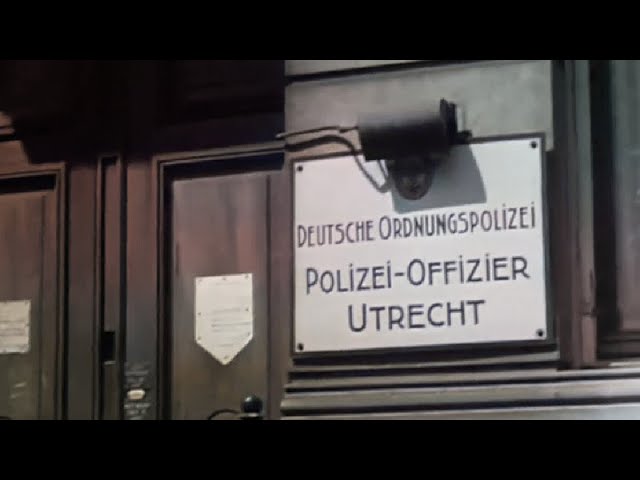
Confidence (or insecurity?) of Gestapo & Waffen SS after surrendering, RAW FOOTAGE Holland, 1945
Posted
July 18, 2024
Views
5,475
Likes
351
Comments
44
Engagement
July 18, 2024
5,475
351
44
7.21%
Every word spoken in this episode is indexed. Type any phrase to jump straight to the moment it was said.
Type any word or phrase that may have been spoken. Click a result to seek the player to that exact moment.
Try a name, a topic, or a quoted line
 3:58Now Playing
🔥PREVIEW ALL YOUTUBE VIDEOS
www.Patreon.com/Military1945
Episode 257
Be sure to give this video a THUMBS UP! Best way to support the channel!
SUBSCRIBE to M1945
ORIGINALS for sale...
Despite Dutch neutrality, Nazi Germany invaded the Netherlands on 10 May 1940 as part of Fall Gelb (Case Yellow). On 15 May 1940, one day after the bombing of Rotterdam, the Dutch forces surrendered. The Dutch government and the royal family relocated to London. Princess Juliana and her children sought refuge in Ottawa, Canada until after the war.
German occupation lasted in some areas until the German surrender in May 1945. Active resistance, at first carried out by a minority, grew in the course of the occupation. The occupiers deported the majority of the country's Jews to Nazi concentration camps.
Due to the high variation in the survival rate of Jewish inhabitants among local regions in the Netherlands, scholars have questioned the validity of a single explanation at the national level. In part due to the well-organised population registers, about 70% of the country's Jewish population were killed in the course of World War II—a much higher percentage than in either Belgium or France,[although lower than in Lithuania. Declassified records revealed that the Germans paid a bounty to Dutch police and administration officials to locate and identify Jews, aiding in their capture. Communists in and around the city of Amsterdam organized the February strike—a general strike (February 1941) to protest against the persecution of Jewish citizens.
World War II occurred in four distinct phases in the Netherlands:
September 1939 to May 1940: After the war broke out, the Netherlands declared neutrality. The country was subsequently invaded and occupied.
May 1940 to June 1941: An economic boom caused by orders from Germany, combined with the "velvet glove" approach from Arthur Seyss-Inquart, resulted in a comparatively mild occupation.
June 1941 to June 1944: As the war intensified, Germany demanded higher contributions from occupied territories, resulting in a decline of living standards. Repression against the Jewish population intensified and thousands were deported to extermination camps. The "velvet glove" approach ended.
June 1944 to May 1945: Conditions deteriorated further, leading to starvation and lack of fuel. The German occupation authorities gradually lost control over the situation. Nazis wanted to make a last stand and commit acts of destruction. Others tried to mitigate the situation.
The Allies liberated most of the south of the Netherlands in the second half of 1944. The rest of the country, especially the west and north, remained under German occupation and suffered from a famine at the end of 1944, known as the "Hunger Winter". On 5 May 1945, German surrender at Lüneburg Heath led to the final liberation of the whole country.
Sentinel Indexing in Progress
Metadata and chapters are available. Claim extraction for this episode is pending.
All video content is delivered via YouTube embedded players in accordance with the YouTube Terms of Service. Sentinel provides research tools that promote discovery and accountability across political media.