
Normalizing the Unthinkable: How Propaganda Paved the Way for the Holocaust
December 8, 2025
1,929
180
78
13.37%
Search the Record
IndexedEvery word spoken in this episode is indexed. Type any phrase to jump straight to the moment it was said.
Type any word or phrase that may have been spoken. Click a result to seek the player to that exact moment.
Try a name, a topic, or a quoted line
Military1945 Episodes Around December 8, 2025
See what was published immediately before and after this episode.

 8:04
8:04The Fall of the Occupier: German Generals Surrender in Paris (1944 Color)


 12:26Now Playing
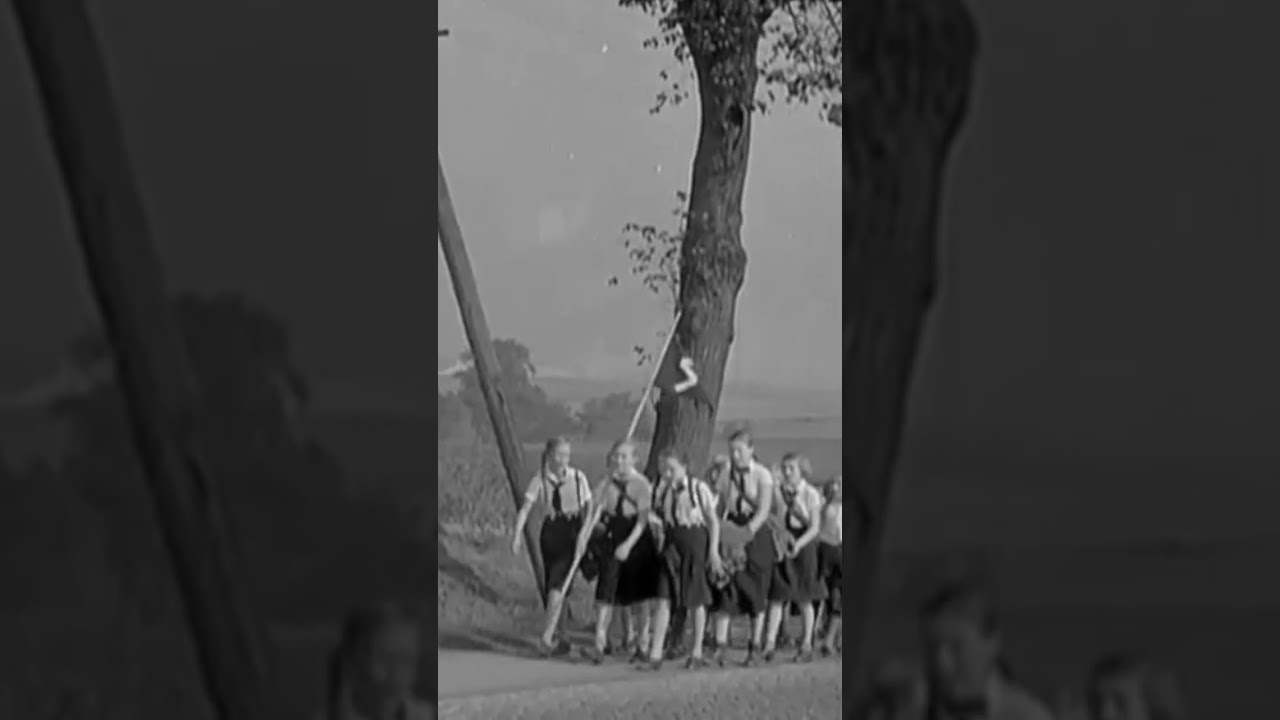
Normalizing the Unthinkable: How Propaganda Paved the Way for the Holocaust


YouTube Description
as posted by the channelEpisode 306
*Explore the Full Archive (7,000+ Films)*
I’ve digitized over 7,000 rare films to preserve this history. Open a free account to browse and purchase raw high-res reels here:
*Support the Mission on Patreon*
Get exclusive access to raw footage and preview all upcoming uploads:
Julius Sebastian Streicher was a German publicist, politician and convicted war criminal. A member of the Nazi Party, he served as the Gauleiter of Franconia and a member of the Reichstag, the national legislature. He was the founder and publisher of the virulently antisemitic newspaper Der Stürmer, which became a central element of the Nazi propaganda machine. The publishing firm was financially very successful and made Streicher a multimillionaire.
After the war, Streicher was convicted of crimes against humanity during the Nuremberg trials. Specifically, he was found to have continued his vitriolic antisemitic propaganda when he was well aware that Jews were being murdered. For this, he was executed by hanging. Streicher was the first member of the Nazi regime held accountable for inciting genocide by the Nuremberg Tribunal.
Beginning in 1924, Streicher used Der Stürmer as a mouthpiece not only for general antisemitic attacks, but for calculated smear campaigns against specific Jews, such as the Nuremberg city official Julius Fleischmann, who worked for Streicher's nemesis, mayor Hermann Luppe. Der Stürmer accused Fleischmann of stealing socks from his quartermaster during combat in World War I. Fleischmann sued Streicher and disproved the allegations in court, where Streicher was fined 900 marks. Der Stürmer's official slogan, Die Juden sind unser Unglück (the Jews are our misfortune), was deemed non-actionable under German statutes, since it was not a direct incitement to violence.
Streicher's opponents complained to authorities that Der Stürmer violated a statute against religious offense with his constant promulgation of the "blood libel" – the medieval accusation that Jews killed Christian children to use their blood to make matzoh. Streicher argued that his accusations were based on race, not religion, and that his communications were political speech, and therefore protected by the German constitution.
Streicher orchestrated his early campaigns against Jews to make the most extreme possible claims, short of violating a law that might get the paper shut down. He insisted in the pages of his newspaper that the Jews had caused the worldwide Depression, and were responsible for the crippling unemployment and inflation which afflicted Germany during the 1920s. He claimed that Jews were white-slavers responsible for Germany's prostitution rings. Real unsolved killings in Germany, especially of children or women, were often confidently explained in the pages of Der Stürmer as cases of "Jewish ritual murder".
One of Streicher's constant themes was the sexual violation of ethnic German women by Jews, a subject which he used to publish semi-pornographic tracts and images detailing degrading sexual acts. The fascination with the pornographic aspects of the propaganda in Der Stürmer was an important feature for many antisemites. With the help of his cartoonist Phillip "Fips" Rupprecht, Streicher published image after image of Jewish stereotypes and sexually charged encounters. His portrayal of Jews as subhuman and evil is considered to have played a critical role in the dehumanization and marginalization of the Jewish minority in the eyes of common Germans – creating the necessary conditions for the later perpetration of the Holocaust. To protect himself from accountability, Streicher relied on Hitler's protection. Hitler declared that Der Stürmer was his favorite newspaper, and saw to it that each weekly issue was posted for public reading in special glassed-in display cases known as "Stürmerkasten". The newspaper reached a peak circulation of 600,000 in 1935. One of the possible solutions to the Nazi's perceived problem Streicher mentioned in the pages of Der Stürmer was transporting Jews to Madagascar.
Streicher's publishing firm also released three antisemitic books for children, including the 1938 Der Giftpilz (translated into English as The Toadstool or The Poisonous Mushroom), one of the most widespread pieces of propaganda, which warned about the supposed dangers Jews posed by using the metaphor of an attractive yet deadly mushroom. Late in 1936 Streicher also issued Trust No Fox on his Green Heath and No Jew on his Oath, an infamously anti-Semitic children's picture book by the 18-year-old Elvira Bauer. In the book the Jews are depicted as "children of the devil" and Streicher as the great educator and a hero of all German children.
Streicher did not limit his vituperative attacks to Jews themselves but also launched them against those he perceived as insufficiently hostile towards Jews.
Links & Promotions
Guests & Subjects Covered
Sentinel Indexing in Progress
Metadata and chapters are available. Claim extraction for this episode is pending.
All video content is delivered via YouTube embedded players in accordance with the YouTube Terms of Service. Sentinel provides research tools that promote discovery and accountability across political media.