German FRONTAL ATTACK in 1917 vs STOSSTRUPPEN use in 1918 #ww1
December 31, 2025
1,166
48
4.12%
Search the Record
IndexedEvery word spoken in this episode is indexed. Type any phrase to jump straight to the moment it was said.
Type any word or phrase that may have been spoken. Click a result to seek the player to that exact moment.
Try a name, a topic, or a quoted line
Military1945 Episodes Around December 31, 2025
See what was published immediately before and after this episode.



 0:33Now Playing
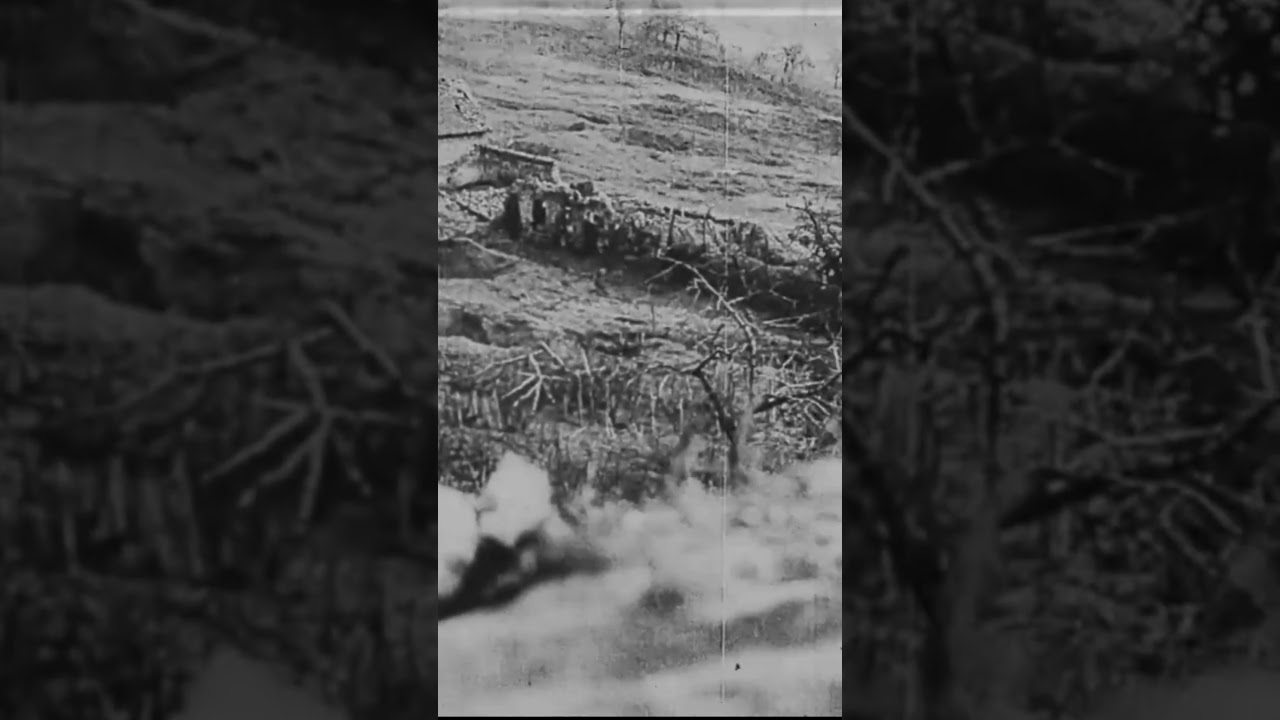
German FRONTAL ATTACK in 1917 vs STOSSTRUPPEN use in 1918 #ww1


Segments
YouTube Description
as posted by the channelFULL VIDEO
The German Stormtroopers (Sturmtruppen or Stoßtruppen) were a revolutionary response to the bloody stalemate of trench warfare. While the British and French looked to mechanical solutions like the tank, Germany focused on a "tactical" solution: retraining the human soldier to become a high-speed, high-firepower precision instrument.
1. Development: From Pioneers to Elites
The development of the Stormtroopers was an evolution of "trial and error" rather than a single invention.
The Problem (1914–1915): Traditional massed infantry charges were being slaughtered by machine guns and modern artillery. The German High Command realized that "linear" tactics were obsolete.
The Prototype (March 1915): The first official unit, Sturmabteilung Calsow, was formed. Initially, it failed because it was used like traditional infantry.
The Breakthrough (September 1915): Captain Willy Rohr took command and fundamentally changed the approach. He replaced heavy equipment with lightweight gear, introduced the "assault squad" concept, and emphasized individual initiative.
Expansion (1916–1917): After proving their worth at Verdun, Stormtrooper battalions were established across the army. They became a prestigious elite, receiving better rations, specialized uniforms (with leather patches for crawling), and the best equipment.
2. The Role: Infiltration and "Shock"
The Stormtroopers were not designed to hold territory; they were "can openers" designed to break the line so the regular army could pour through. Their role followed three core principles:
Infiltration (The "Hutier" Tactics): Instead of attacking the enemy's strongest points (machine gun nests), Stormtroopers were trained to bypass them. They searched for "soft spots" in the line, infiltrated deep into the rear, and caused chaos.
The "Short, Sharp" Barrage: Unlike the week-long bombardments used by the British, Stormtrooper attacks were preceded by brief, violent, and highly accurate artillery strikes (often involving gas) to daze the defenders without destroying the ground they needed to cross.
Decentralized Command: For the first time, small-unit leaders (NCOs and junior officers) were given the freedom to make their own decisions on the fly based on the local situation, rather than waiting for orders from the rear.
The Stormtroopers' greatest test was the 1918 Kaiserschlacht (Spring Offensive). They achieved the greatest territorial gains of the entire war, advancing up to 40 miles in some sectors.
However, they were victims of their own success. Because the best and bravest men were concentrated into Stormtrooper units, they suffered astronomical casualty rates. When these elite units were depleted, the "regular" German army lacked the training to sustain the momentum, and the offensive eventually stalled due to exhaustion and poor logistics.
Key Takeaway: The Stormtroopers essentially invented modern squad tactics. Their emphasis on fire-and-maneuver, small-unit initiative, and combined arms (infantry + artillery) remains the foundation of infantry combat today.
Guests & Subjects Covered
Sentinel Indexing in Progress
Metadata and chapters are available. Claim extraction for this episode is pending.
All video content is delivered via YouTube embedded players in accordance with the YouTube Terms of Service. Sentinel provides research tools that promote discovery and accountability across political media.