Minnesota Senate Media Services
@mnsenatemedia·10.8K subscribers·6.8K videos
Session Update: Amended Bill Limits Expansion of Ranked Choice Voting
Posted
April 3, 2023
Views
186
Likes
1
Engagement
0.54%
April 3, 2023
186
1
0.54%
Every word spoken in this episode is indexed. Type any phrase to jump straight to the moment it was said.
Type any word or phrase that may have been spoken. Click a result to seek the player to that exact moment.
Try a name, a topic, or a quoted line
 1:48Now Playing
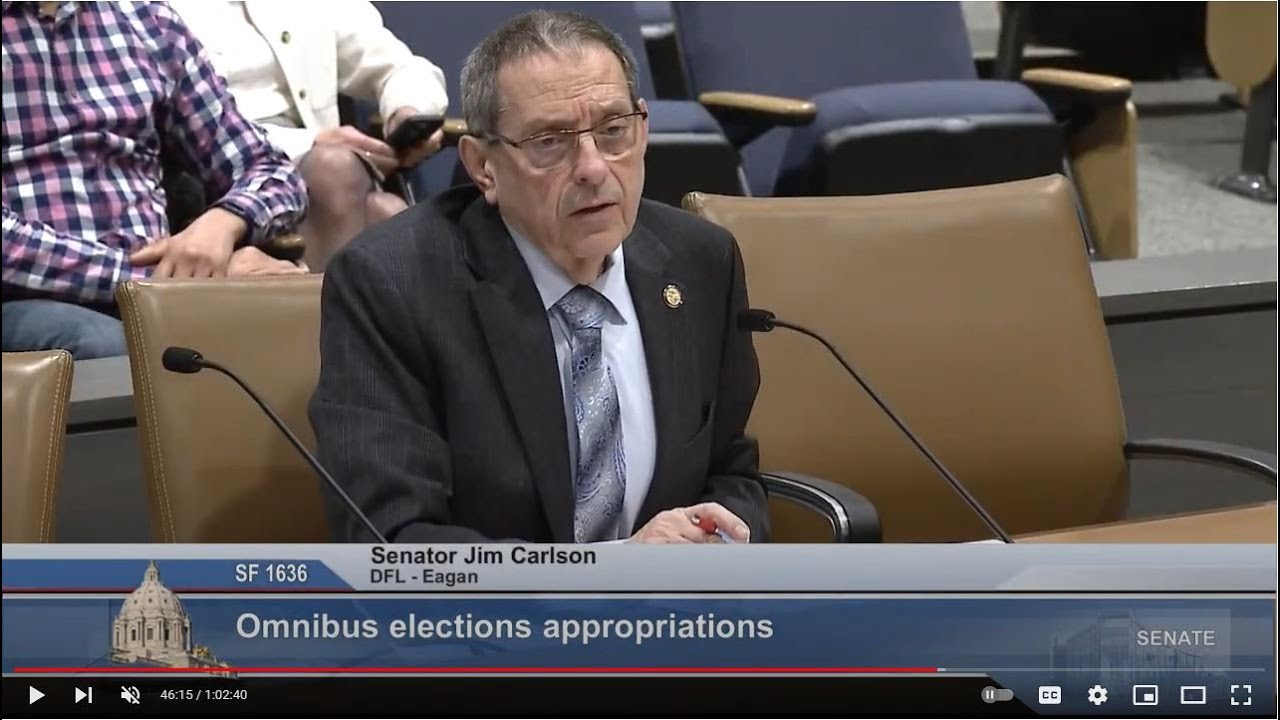
Saying that "ranked choice voting is much more complicated than we originally thought," Senate Elections Chair Jim Carlson, DFL-Eagan, modified his original elections bill that would have allowed all local governments to use ranked choice voting for the selection of local officials. Instead, as passed by the committee Monday, April 4, the ranked choice voting option is limited to municipalities that vote during even numbered years. According to Mary Hartnett of Clean Elections Minnesota, about 85 percent of Minnesota's municipalities do not have the authority to set their own rules for local elections and depend upon legislative approval.
Under the ranked choice voting system, voters rank candidates for an office in order of their preference. The voting process continues until one candidate receives more than half of the vote.
The amended elections bill, SF 1636, creates a task force that is charged with assessing the adoption and implementation of statewide ranked choice voting and to recommend implementation standards.
Sentinel Indexing in Progress
Metadata and chapters are available. Claim extraction for this episode is pending.
All video content is delivered via YouTube embedded players in accordance with the YouTube Terms of Service. Sentinel provides research tools that promote discovery and accountability across political media.