Mother Jones
@motherjones·358K subscribers·1.1K videos
The Battle Over Solar on Farmland
Posted
March 16, 2026
Views
10,993
Likes
780
Comments
120
Engagement
8.19%
March 16, 2026
10,993
780
120
8.19%
Every word spoken in this episode is indexed. Type any phrase to jump straight to the moment it was said.
Type any word or phrase that may have been spoken. Click a result to seek the player to that exact moment.
Try a name, a topic, or a quoted line
 2:06Now Playing
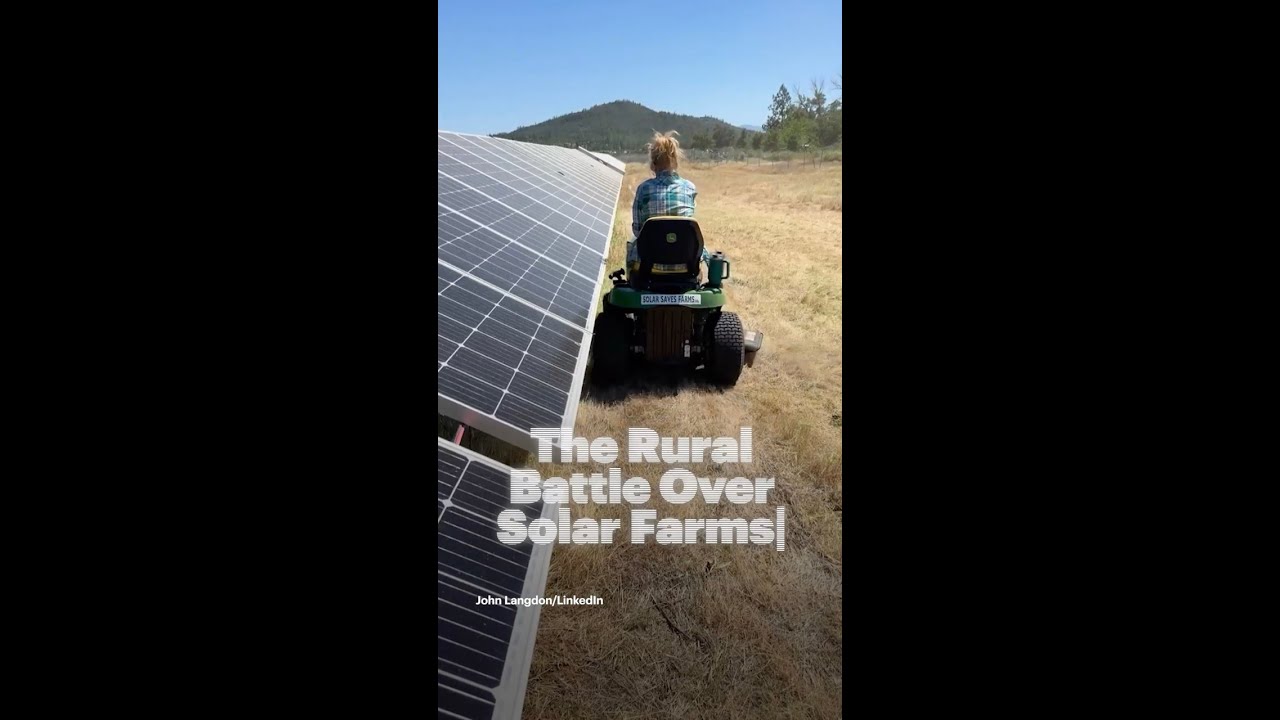
Agrivoltaics—solar on farmland—is either a green revolution or a poison pill for good land. It depends which farmers you ask.
After seeing dueling signs on a road near his home, environmental journalist Henry Carnell spoke to two Oregon farmers that are diametrically opposed about the future of agrivoltaics.
The idea of integrating solar farms with agriculture was first conceived in the 1980s by a pair of German researchers as a way to alleviate poverty in sub-Saharan Africa. The plan never panned out, but about a decade ago, scientists in Japan reconsidered the technology as a potential player in the urgent push to decarbonize the world economy. Over the past decade, it has spread rapidly across the globe.
As of 2024, the last year for which statistics are available, there were more than 600 agrivoltaics sites in the United States producing 10 gigawatts of energy, enough to power 7.5 million homes—double the capacity of just four years before.
Still, many farmers are skeptical. Those who adopt agrivoltaics often face community ostracism for its perceived effect on land and property values—lowering or raising them, depending on the complaint—and for risking the health of the land.
Read Henry's full report at MotherJones.com.
Sentinel Indexing in Progress
Metadata and chapters are available. Claim extraction for this episode is pending.
All video content is delivered via YouTube embedded players in accordance with the YouTube Terms of Service. Sentinel provides research tools that promote discovery and accountability across political media.