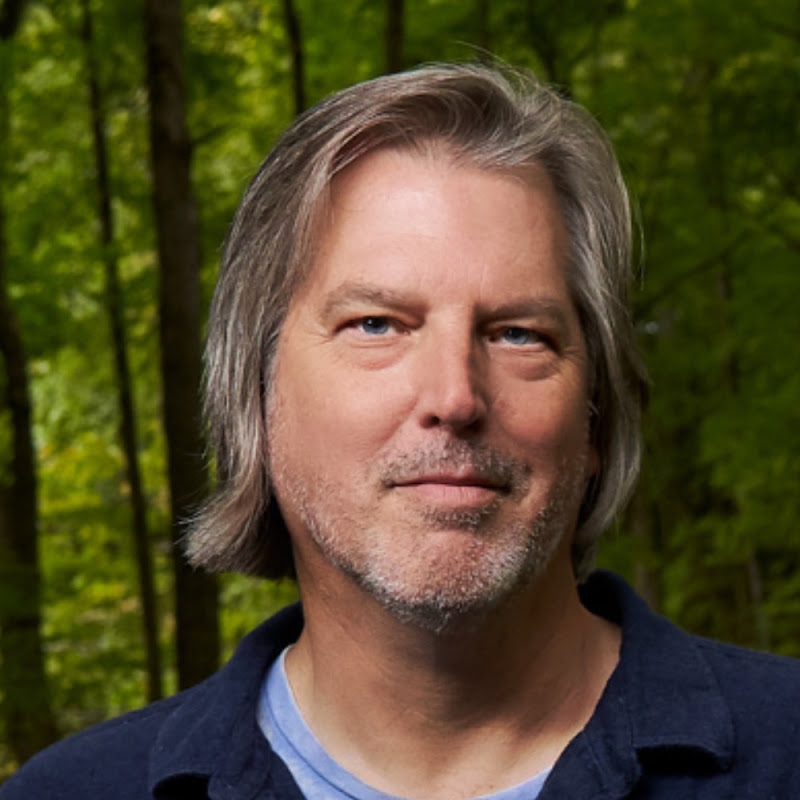
Nate Hagens
@thegreatsimplification·131K subscribers·1K videos
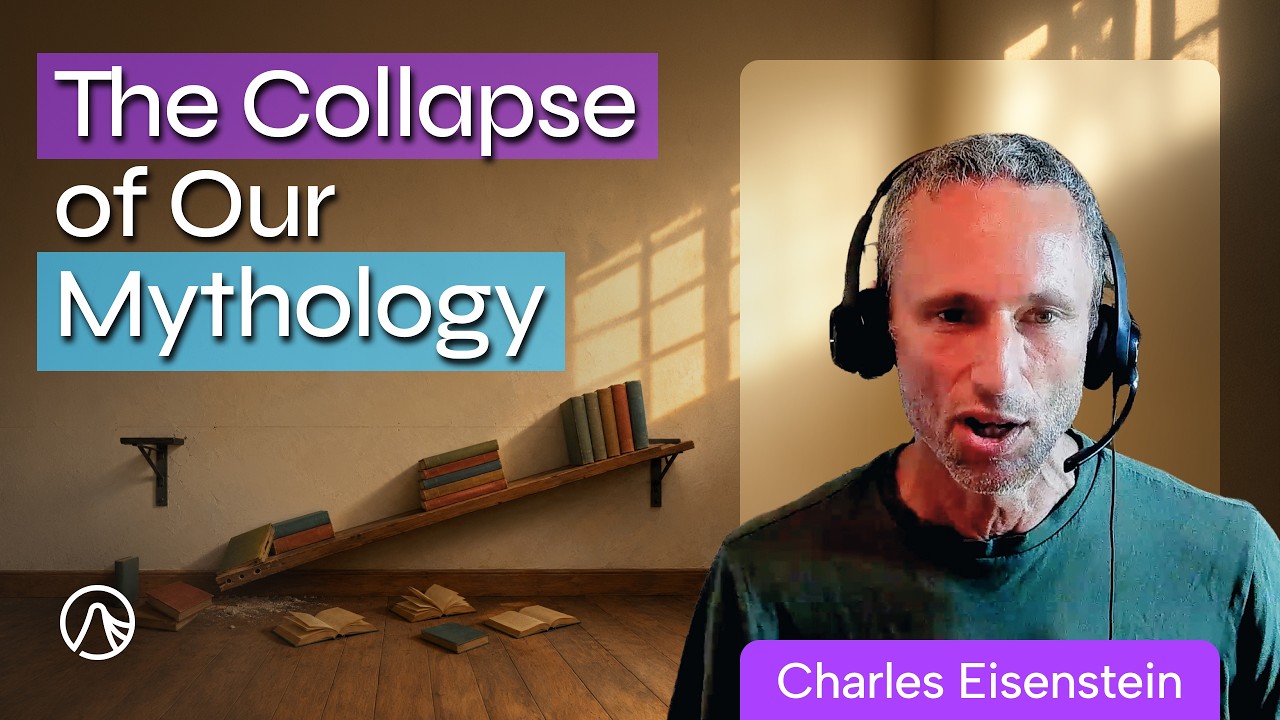
Can Humanity Choose What’s Next? with Charles Eisenstein | TGS 232
Posted
September 2, 2026
Views
8,277
Likes
384
Comments
153
Engagement
6.49%
September 2, 2026
8,277
384
153
6.49%
Every word spoken in this episode is indexed. Type any phrase to jump straight to the moment it was said.
Type any word or phrase that may have been spoken. Click a result to seek the player to that exact moment.
Try a name, a topic, or a quoted line
 1:37:33Now Playing
(Conversation recorded on August 12th, 2026)
The world we live in today looks nothing like the world that was promised to our parents and grandparents. That promise was shaped by the idea that humans are separate from the rest of the natural world, and the right amount of cleverness would offer us endless protection and wealth. Today, as institutions hollow out and simply existing becomes more and more difficult, many of us are waking up to a different possibility: we are not separate at all. If we accept that our existence is interdependent with the existence of others, how might we live differently?
In this episode, Nate welcomes author and philosopher, Charles Eisenstein, for a long-requested conversation on the mythologies underneath civilization. For over two decades, Charles has argued that the crises defining modern life all trace back to the story of separation, the largely unspoken belief that each of us is an isolated self, competing against other selves and against a nature made of indifferent, exploitable resources. Charles traces how this story co-evolved with technology, language, and scale, and how quantitative thinking both extends and distorts our understanding of complex problems. He and Nate also discuss why Charles has come to believe that ecological and energy constraints will not force humanity onto a wiser path, rather that the choice has to be made consciously, person by person.
With the story of separation starting to fall apart, do we have any say in which stories will emerge in its place? What sort of path might humanity veer toward if we start living into the truths we know but have been keeping buried? And if each of us begins to embody that story in our day-to-day lives, through small actions, choices, and beliefs, could it possibly build into a larger change in consciousness?
About Charles Eisenstein:
Charles Eisenstein is an American author, public speaker, and teacher whose work focuses on civilization, consciousness, money, and human cultural evolution. He graduated from Yale University in 1989 with a degree in Mathematics and Philosophy, and spent the following decade as a Chinese–English translator before turning to writing and speaking full-time.
He is the author of several books, including The Ascent of Humanity (2007), Sacred Economics (2011), The More Beautiful World Our Hearts Know Is Possible (2013), and Climate: A New Story (2018). His most recent book, The Coronation, examined the pandemic as a mirror of civilization's relationship to control, fear, and uncertainty. His essays have circulated widely online, and he speaks and gives interviews frequently on themes spanning economics, ecology, and spirituality.
Show Notes and More:
Want to learn the broad overview of The Great Simplification in 30 minutes? Watch our Animated Movie:
---
Support The Institute for the Study of Energy and Our Future:
Join our Substack newsletter:
Join our Hylo channel and connect with other listeners:
Sentinel Indexing in Progress
Metadata and chapters are available. Claim extraction for this episode is pending.
All video content is delivered via YouTube embedded players in accordance with the YouTube Terms of Service. Sentinel provides research tools that promote discovery and accountability across political media.
---