The Most Energetic Events in the Universe with Tim Paglione
February 18, 2025
507,903
8,928
610
1.88%
Search the Record
IndexedEvery word spoken in this episode is indexed. Type any phrase to jump straight to the moment it was said.
Type any word or phrase that may have been spoken. Click a result to seek the player to that exact moment.
Try a name, a topic, or a quoted line
Neil deGrasse Tyson Episodes Around February 18, 2025
See what was published immediately before and after this episode.




 49:15Now Playing
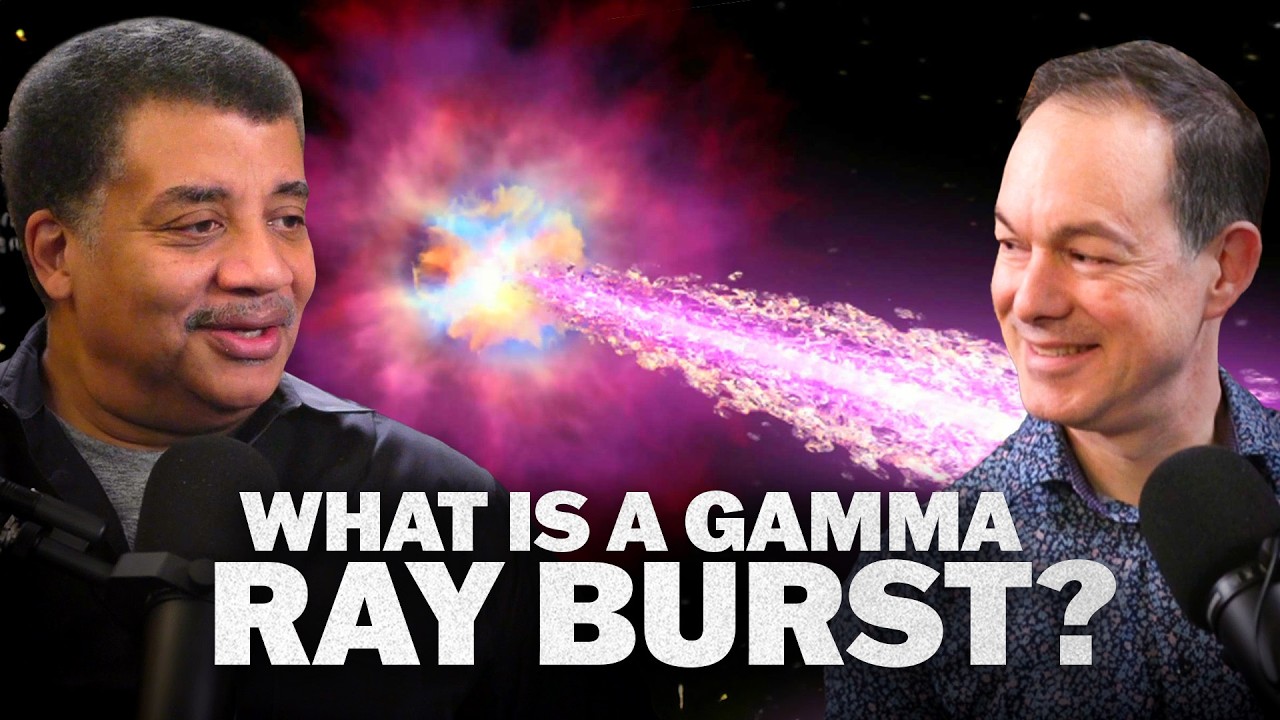
The Most Energetic Events in the Universe with Tim Paglione



Chapters
YouTube Description
as posted by the channelWhat can gamma rays tell us about supernovae and galaxy formation? Neil deGrasse Tyson and co-host Chuck Nice sit down with astrophysicist Tim Paglione to explore high-energy cosmic phenomena, gamma rays, and the extreme events that create them.
We start by traveling up the electromagnetic spectrum to understand how gamma rays— the most energetic form of light— are produced in the universe. What do astrophysicists mean by “shock,” and how do cosmic rays get “shocked up” as they move through space? We break down the physics behind particle acceleration, from the Large Hadron Collider to interstellar clouds getting slammed by high-energy particles.
Then, we dive into the mysterious world of muons—particles that shouldn’t make it to Earth’s surface but do, thanks to time dilation. How do these cosmic messengers give us insight into the most explosive events in the universe? We discuss the immense energy of supernovae, hypernovae, and how they compare to the total energy output of our Sun.
Next, we zoom out to galaxy clusters and the legacy of Enrico Fermi. How does the Fermi Gamma-ray Space Telescope help us detect elusive sources like pulsars and gamma-ray bursts? What makes pulsars spin like high-speed blenders, and why do their powerful magnetic fields act like cosmic particle accelerators?
We also tackle listener questions: Can gamma rays trigger star formation? How does cosmic chemistry work in molecular clouds? And could the explosive deaths of stars be the heartbeat of galaxies themselves? Plus, we discuss JWST’s discoveries of ancient supernovae and what they reveal about the early universe.
Timestamps:
Check out our second channel, @StarTalkPlus
Get the NEW StarTalk book, 'To Infinity and BeyondA Journey of Cosmic Discovery' on Amazon
Support us on Patreon
FOLLOW or SUBSCRIBE to StarTalk:
About StarTalk:
Science meets pop culture on StarTalk! Astrophysicist & Hayden Planetarium director Neil deGrasse Tyson, his comic co-hosts, guest celebrities & scientists discuss astronomy, physics, and everything else about life in the universe. Keep Looking Up!
#StarTalk #NeildeGrasseTyson
Links & Promotions
Guests & Subjects Covered
Sentinel Indexing in Progress
Metadata and chapters are available. Claim extraction for this episode is pending.
All video content is delivered via YouTube embedded players in accordance with the YouTube Terms of Service. Sentinel provides research tools that promote discovery and accountability across political media.