Npr
@npr·843K subscribers·3.4K videos
Salman Rushdie details his attack, his memoir "Knife" and finding love later in life | NPR
Posted
April 17, 2024
Views
44,998
Likes
782
Comments
201
Engagement
2.18%
April 17, 2024
44,998
782
201
2.18%
Every word spoken in this episode is indexed. Type any phrase to jump straight to the moment it was said.
Type any word or phrase that may have been spoken. Click a result to seek the player to that exact moment.
Try a name, a topic, or a quoted line
See what was published immediately before and after this episode.
 29:52Now Playing
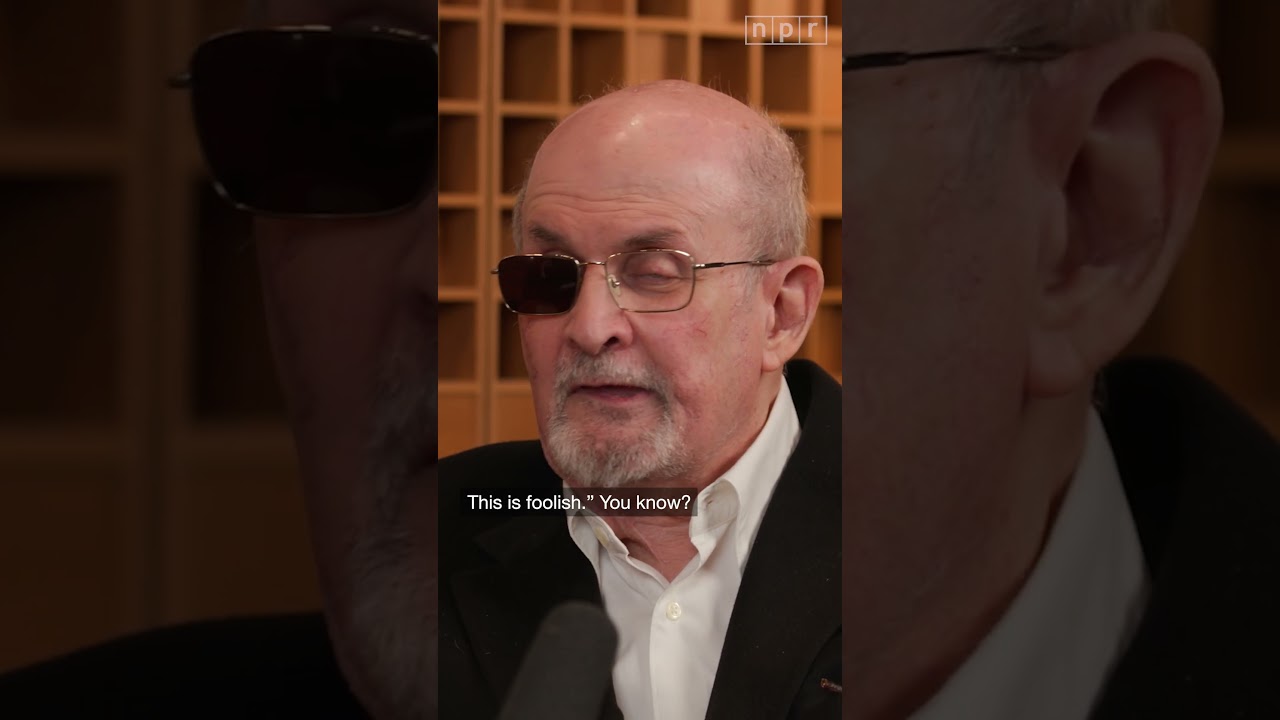
Salman Rushdie is a writer. A storyteller.
So when you ask him to tell the story of the day, in 2022, when he was attacked and nearly killed by a young man with a knife, Rushdie paints a vivid picture.
He describes lying on the floor in a pool of his own blood, overwhelmed with a singular emotion. It wasn't fear, it wasn't pain. It was extreme loneliness.
"I thought, here I am in the middle of upstate New York, almost in Canada, very far from everyone I love. You know, dying as I thought. I thought I was dying. Dying in the company of strangers. And that felt ... worse than the dying," he said.
Rushdie writes about the attack in his memoir, "Knife." He sat down with All Things Considered host Mary Louise Kelly in NPR's New York bureau recently to talk about what happened that day, his reflections on the fatwa calling for his death decades ago, and finding great love later in life.
------------------------------------------------------
Follow NPR elsewhere, too:
Sentinel Indexing in Progress
Metadata and chapters are available. Claim extraction for this episode is pending.
All video content is delivered via YouTube embedded players in accordance with the YouTube Terms of Service. Sentinel provides research tools that promote discovery and accountability across political media.