Nyc Mayors Office
@nycmayorsoffice·150K subscribers·213 videos
Mayor de Blasio Delivers Remarks at the Fair Workweek Rally
Posted
May 30, 2017
Views
256
Likes
1
Engagement
0.39%
May 30, 2017
256
1
0.39%
Every word spoken in this episode is indexed. Type any phrase to jump straight to the moment it was said.
Type any word or phrase that may have been spoken. Click a result to seek the player to that exact moment.
Try a name, a topic, or a quoted line
 53:23Now Playing
Mayor de Blasio, Speaker Mark-Viverito Announce That New York City is the Largest City to End Abusive Scheduling Practices in the Fast Food and Retail Industries
Predictable schedules and predictable paychecks are now a right, not a privilege, in these low-wage industries
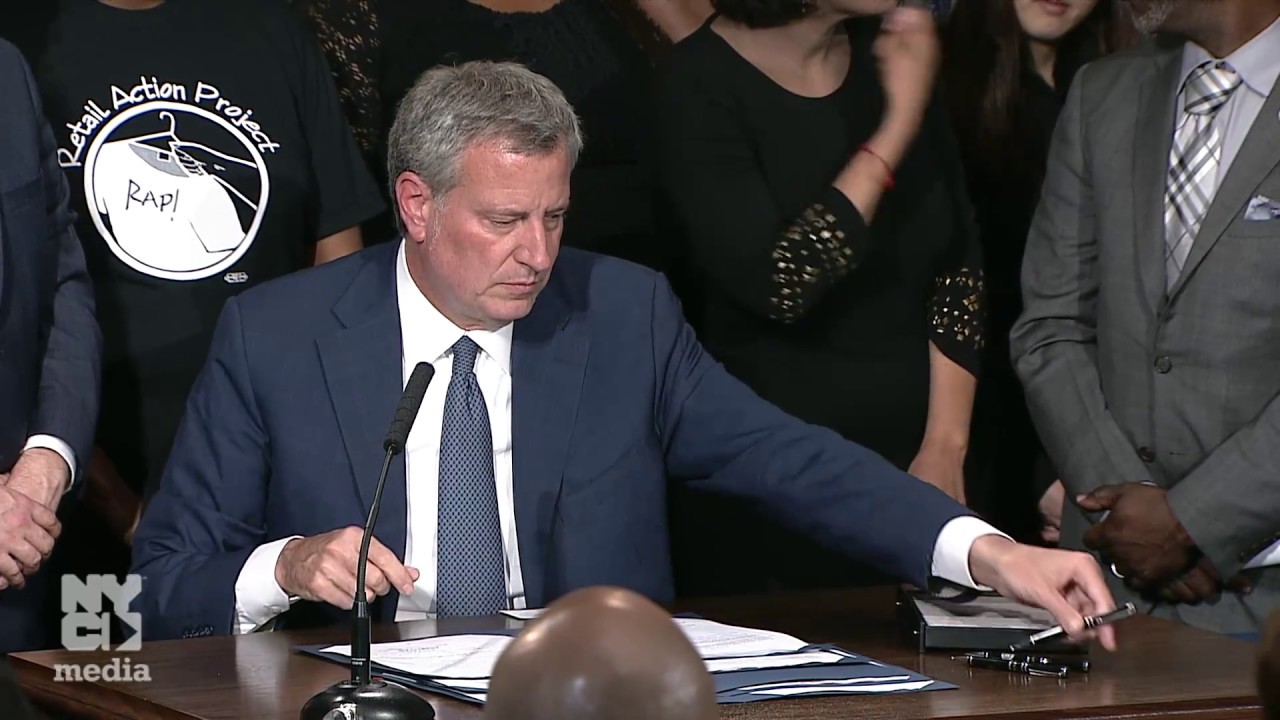
Today, Mayor de Blasio, City Council members, advocates, and workers held a rally at City Hall to mark the “Fair Workweek” package of bills becoming law. This package will ensure that predictable schedules and predictable paychecks for fast food and retail workers in New York City will be soon be rights, not privileges.
The Mayor’s package, which includes bills that deliver on his promise to end unfair and inconsistent scheduling practices in the fast food industry, will hold fast food and retail corporations operating in New York City accountable for their scheduling practices, which have left workers with little sense of when they will work and how much they will earn. Such practices have made it too difficult for hundreds of thousands of low-wage earners in New York City to obtain additional employment, plan for child or elder care, or further their education. The Mayor will sign the bills as part of a bill signing ceremony later this afternoon and they will go into effect in 180 days.
The fast food scheduling-related bills, which were announced in part by Mayor de Blasio last fall, would require fast food employers to give written notice of schedules to their employees no less than two weeks in advance, written “good faith” estimates of weekly hours to new employees, regulate the practice of “clopenings,” or consecutive closing, then opening, shifts, and would also require fast food employers to offer any new shifts to current employees before they hire anyone else. If a fast food employer makes changes to an employee’s schedule with less than 14 days’ notice, the employer must pay the employee a premium.
An additional fast food industry-related bill requires fast food employers to deduct and remit voluntary contributions to nonprofits when their employees make such a request in writing, if the recipient nonprofits meet certain requirements.
Lastly, a bill applicable to those retailers with 20 or more employees in New York City prohibits such retailers from scheduling their employees for “on call” shifts, which force employees to check in with their employers on little to no notice about whether or not they will be working on any given day.
This package’s new scheduling-related requirements will ensure that hundreds of thousands of hardworking New Yorkers who are trying to make ends meet no longer face entrenched obstacles imposed by profit-driven corporations when they are simply trying to plan for how and when their families will be cared for and how much will be in their paychecks at the end of the week.
Across the country, nearly one in five Americans has an unstable work schedule and about 40 percent of early career workers, defined as workers aged 26 - 32, have less than one week advance notice of their schedules. This is particularly an issue with workers in industries such as fast food and retail, in which nationally the average worker age is 29 and in which an average of 25 percent of workers are raising children.
Enforcement of these Fair Workweek laws will fall under the jurisdiction of the City’s Office of Labor Policy and Standards (OLPS), which is housed within the Department of Consumer Affairs (DCA). OLPS is NYC’s central resource for workers and serves as a dedicated voice in City government for workers in NYC. The Office enforces key municipal workplace laws, conducts original research, and develops policies that are responsive to an evolving economy and issues affecting workers in New York City, particularly people of color, women, and immigrants.
The de Blasio administration continues to raise the bar nationally when it comes to ensuring low-wage, immigrant, or other vulnerable workers, including women and people of color, are protected from exploitation. To date, DCA-OLPS has secured more than $5 million in fines and restitution on behalf of 16,000 workers in New York City who have been denied their right to paid sick leave, and the Office is also now implementing the first-of-its-kind “Freelance Isn’t Free Law,” which guarantees nearly all freelancers the right to a written contract and timely payment. In addition to enforcing many such municipal workplace laws, OLPS also houses the first-of-its-kind Paid Care Division, which is focused on researching and advocating on behalf of paid care workers – those who provide child care, elder care, or performing other domestic work – thereby constituting a critical part of the nation’s social and economic infrastructure.
City Hall Rotunda
New York, NY 10007
Sentinel Indexing in Progress
Metadata and chapters are available. Claim extraction for this episode is pending.
All video content is delivered via YouTube embedded players in accordance with the YouTube Terms of Service. Sentinel provides research tools that promote discovery and accountability across political media.