Mayor Mamdani Releases Preliminary Citywide Racial Equity Plan and True Cost of Living Measure
April 6, 2026
15,359
688
4.48%
Search the Record
IndexedEvery word spoken in this episode is indexed. Type any phrase to jump straight to the moment it was said.
Type any word or phrase that may have been spoken. Click a result to seek the player to that exact moment.
Try a name, a topic, or a quoted line
Nyc Mayors Office Episodes Around April 6, 2026
See what was published immediately before and after this episode.




 44:56Now Playing
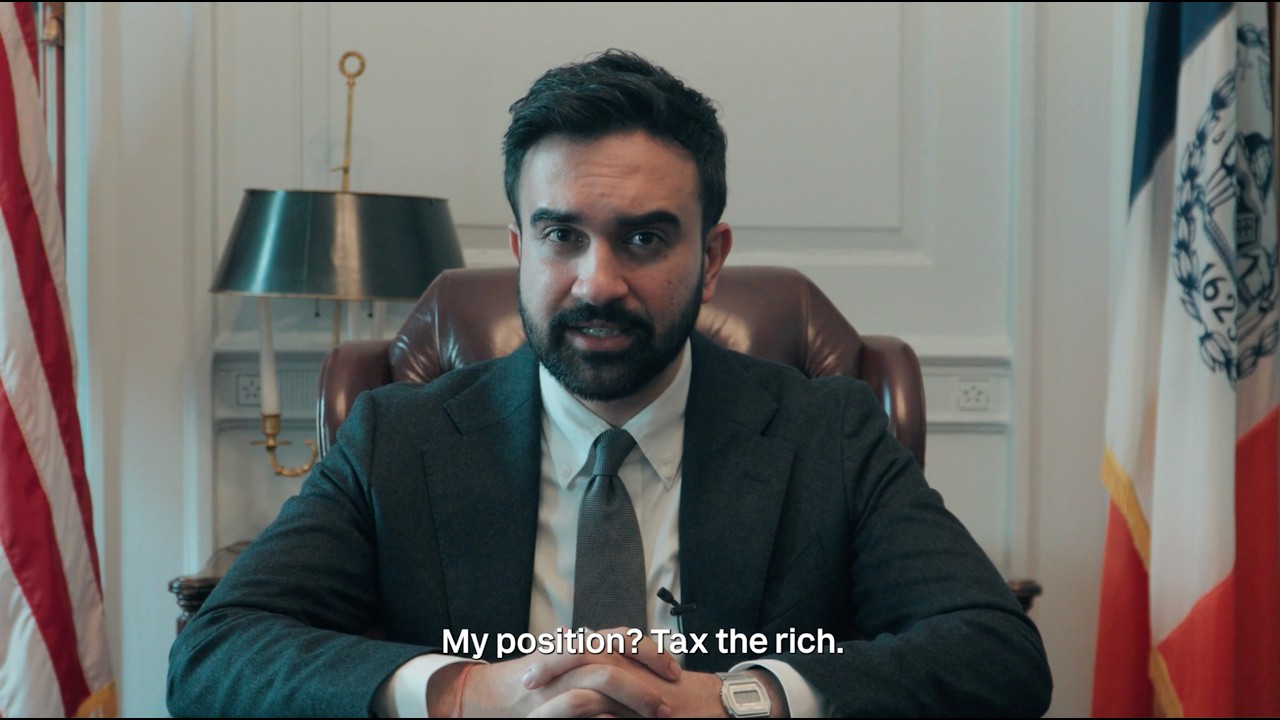
Mayor Mamdani Releases Preliminary Citywide Racial Equity Plan and True Cost of Living Measure




YouTube Description
as posted by the channelMayor fulfills obligation left unmet by previous administration and urges New Yorkers to share feedback
True Cost of Living report shows 62% of New Yorkers do not meet the true cost of living — a crisis falling hardest on communities of color
Mayor Zohran Mamdani today released the Preliminary Citywide Racial Equity Plan (REP) and the inaugural NYC True Cost of Living (TCOL) Measure, two reports that together establish a new framework for how New York City measures affordability, understands inequity and plans for a more equitable future.
The Preliminary Citywide REP is the first governmentwide racial equity framework in the city’s history, outlining data-driven agency goals, strategies and indicators to address long-standing disparities across public policy, services and practices. The True Cost of Living Measure, spearheaded by the Mayor’s Office of Equity & Racial Justice in collaboration with the Urban Institute and the Mayor’s Office for Economic Opportunity, provides a clear picture of what New Yorkers need to meet essential needs and achieve foundational economic security.
The REP marks the first time any New York City administration has required major city agencies to examine their work through a racial equity lens and identify and eliminate disparities.
The plan sets goals across seven domains: Children, Youth, Older Adults and Families; Economy; Housing and Preservation; Infrastructure and Environment; Health and Wellbeing; Community Safety, Rights and Accountability; and Good Governance and Inclusive Decision-Making.
From the redlining that locked generations of Black and immigrant New Yorkers out of homeownership to highway construction that tore through Bronx communities in the 1950s and 1960s, the report confronts the City’s role in creating structural inequities.
Context and Foundational data from the Preliminary Plan:
• 45 City agencies participated in the first governmentwide racial equity planning process.
• The median household net worth of white New Yorkers is approximately $276,900 — nearly 15 times greater than that of Black New Yorkers, at $18,870.
• Black New Yorkers have the lowest life expectancy of any racial or ethnic group at 76.1 years, compared with 81.8 years for white New Yorkers.
• The plan proposes more than 200 agency-level short, medium and long-term goals, over 800 strategies for implementation, and 600 indicators to track and report progress.
Key Goals from the Preliminary Racial Equity Plan:
• Economic Opportunity: Expand access to capital for underserved businesses, connect New Yorkers in high-unemployment communities to quality jobs, and help young people build generational wealth.
• Housing: Apply a racial equity framework to all new housing proposals to ensure fair geographic investment.
• Health: Ensure that every New Yorker has access to a primary care physician by 2034 and reduce truck-related pollutants in communities of color that are disproportionately affected by warehousing activity.
The True Cost of Living Measure calculates what families must earn to meet essential needs across eight categories: housing, food, health care, child care, transportation, taxes, savings and other essentials.
Unlike the federal poverty line, the TCOL reflects the realities of New York City’s economy and accounts for differences in family size, composition and location. The inaugural report uses 2022 data as a baseline for future tracking.
Key Findings:
• 62% of New Yorkers — 5.04 million people — do not meet their true cost of living, compared with roughly 18% to 20% identified as poor under traditional measures.
• The average annual resource gap is $39,603 per family.
• The median annual costs for a family with children are $159,197 to achieve economic security but median resources are $124,007 — a gap of more than $35,000.
• 73% of children in New York City — 1.2 million — live in families that don’t meet their cost of living; in the Bronx, that figure rises to 87%.
• New Yorkers with self-reported disabilities face the highest burden, with 92% unable to meet their cost of living and an average resource gap of $76,178.
• Hispanic New Yorkers face the highest TCOL rate at 77.6%, followed by Black New Yorkers at 65.6% and Asian and Pacific Islander New Yorkers at 63.3%, compared with 43.7% for white New Yorkers. Intraborough racial disparities are starkest in Manhattan, where Hispanic residents face a TCOL rate of 85.3 percent and Black residents a rate of 80% compared to 32.9 percent for white residents.
• Approximately 3.58 million New Yorkers earn above the federal poverty line but still don’t meet their cost of living — a “missing middle” often largely invisible in traditional poverty measures.
• Government supports, including stabilized housing, Universal Pre-K/3-K, SNAP and tax credits, reduce the overall NYC TCOL rate by about 5 percentage points.
Medgar Evers College, CUNY
1638 Bedford Ave, Brooklyn, NY 11225
April 6, 2026
Guests & Subjects Covered
Sentinel Indexing in Progress
Metadata and chapters are available. Claim extraction for this episode is pending.
All video content is delivered via YouTube embedded players in accordance with the YouTube Terms of Service. Sentinel provides research tools that promote discovery and accountability across political media.