Pbs Space Time
@pbsspacetime·3.5M subscribers·445 videos
The Unruh Effect
Posted
April 4, 2018
Views
1,036,508
Likes
22,302
Comments
2,246
Engagement
2.37%
April 4, 2018
1,036,508
22,302
2,246
2.37%
Every word spoken in this episode is indexed. Type any phrase to jump straight to the moment it was said.
Type any word or phrase that may have been spoken. Click a result to seek the player to that exact moment.
Try a name, a topic, or a quoted line
 11:14Now Playing
Viewers like you help make PBS (Thank you 😃) . Support your local PBS Member Station here
Worried about black holes? Consider this: Every time you accelerate - you generate an event horizon behind you. The more you accelerate away from it the closer it gets. Don’t worry, it can never catch up to you, but the Unruh radiation it generates sure can.
You can further support us on Patreon at
Get your own Space Time tshirt at
Tweet at us! @pbsspacetime
Facebook: facebook.com/pbsspacetime
Email us! pbsspacetime [at] gmail [dot] com
Comment on Reddit
Help translate our videos!
Previous Episode:
The Andromeda-Milky Way Collision
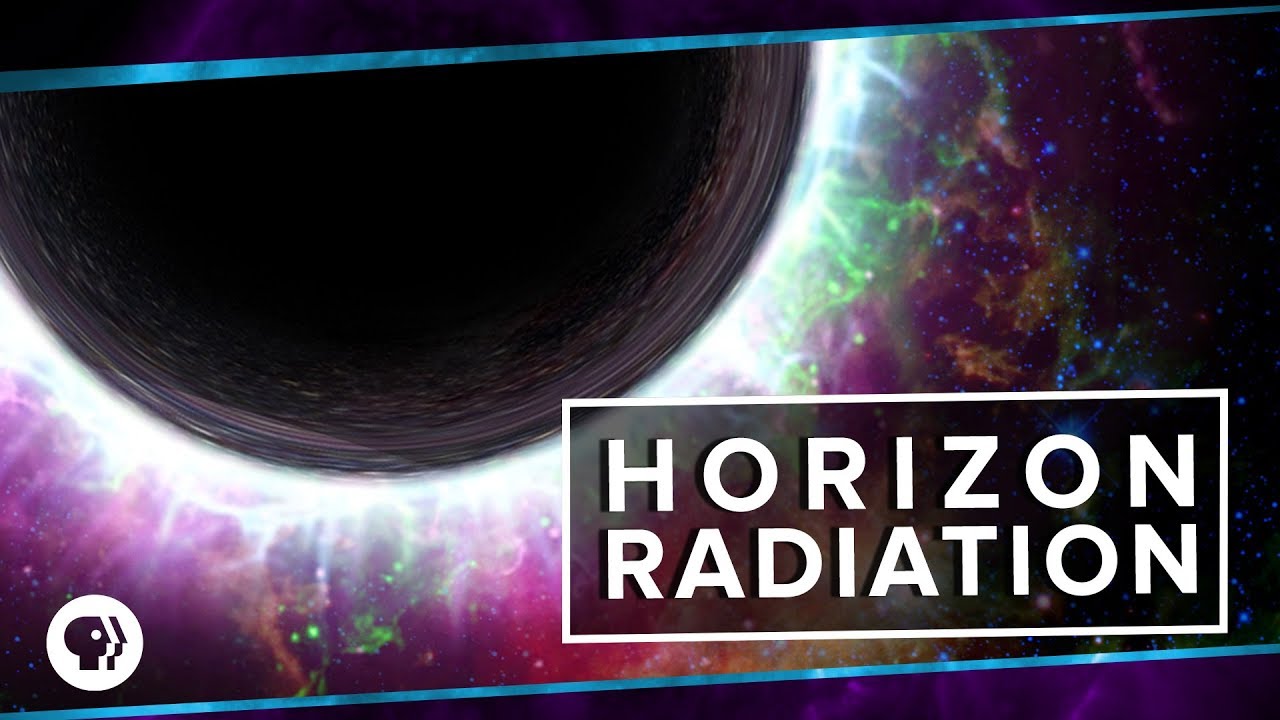
Around the same time that Stephen Hawking was demonstrating the existence of the black hole radiation that would bear his name, three other researchers, Stephen Fulling, Paul Davis, and William Unruh, were looking at an effect that now seems eerily similar. They were independently studying how the nature of quantum fields appears to change depending on whether or not an observer is accelerating. They found that simple act of acceleration cuts off your causal access to a region of the universe. It creates a type of event horizon. As we saw in our episode on horizon radiation, the presence of horizons distorts the quantum vacuum in a way that can create particles.
Hosted by Matt O'Dowd
Written by Graeme Gossel and Matt O'Dowd
Produced by Rusty Ward
Graphics by Grayson Blackmon
Assistant Editing and Sound Design by Mike Petrow and Linda Huang
Made by Kornhaber Brown (www.kornhaberbrown.com)
Classical analogue of the Unruh effect
Leonhardt, Griniasty, Wildeman, Fort, & Fink
Special thanks to our Patreon Big Bang, Quasar and Hypernova Supporters:
Big Bang
CoolAsCats
David Nicklas
Faisal Saud
Anton Lifshits
Joey Redner
Quasar
Tambe Barsbay
Mayank M. Mehrota
Mars Yentur
Mark Rosenthal
Dean Fuqua
Roman Pinchuk
ColeslawPurdie
Hypernova
Edmund Fokschaner
Matthew O’Connor
Eugene Lawson
Barry Hatfield
Martha Hunt
Joseph Salomone
Chuck Zegar
Jordan Young
Ratfeast
John Hofmann
Craig Peterson
Thanks to our Patreon Gamma Ray Burst Supporters:
James Hughes
Fabian Olesen
Kris Fernet
Jane Meyers
James Flowers
Greg Allen
TJMadison
Denys Ivanov
Nick Virtue
Alexey Eromenko
Nicholas Rose
Scott Gossett
Mark Vasile
Patrick Murray
Sultan Alkhulaifi
Alex Seto
Michal-Peanut Karmi
Erik Stein
Kevin Warne
JJ Bagnell
J Rejc
Avi Goldfinger
John Pettit
Florian Stinglmayr
Benoit Pagé-Guitard
Nathan Leniz
Brandon Labonte
David Crane
Greg Weiss
Sentinel Indexing in Progress
Metadata and chapters are available. Claim extraction for this episode is pending.
All video content is delivered via YouTube embedded players in accordance with the YouTube Terms of Service. Sentinel provides research tools that promote discovery and accountability across political media.