Prageru
@prageru·3.5M subscribers·6.6K videos
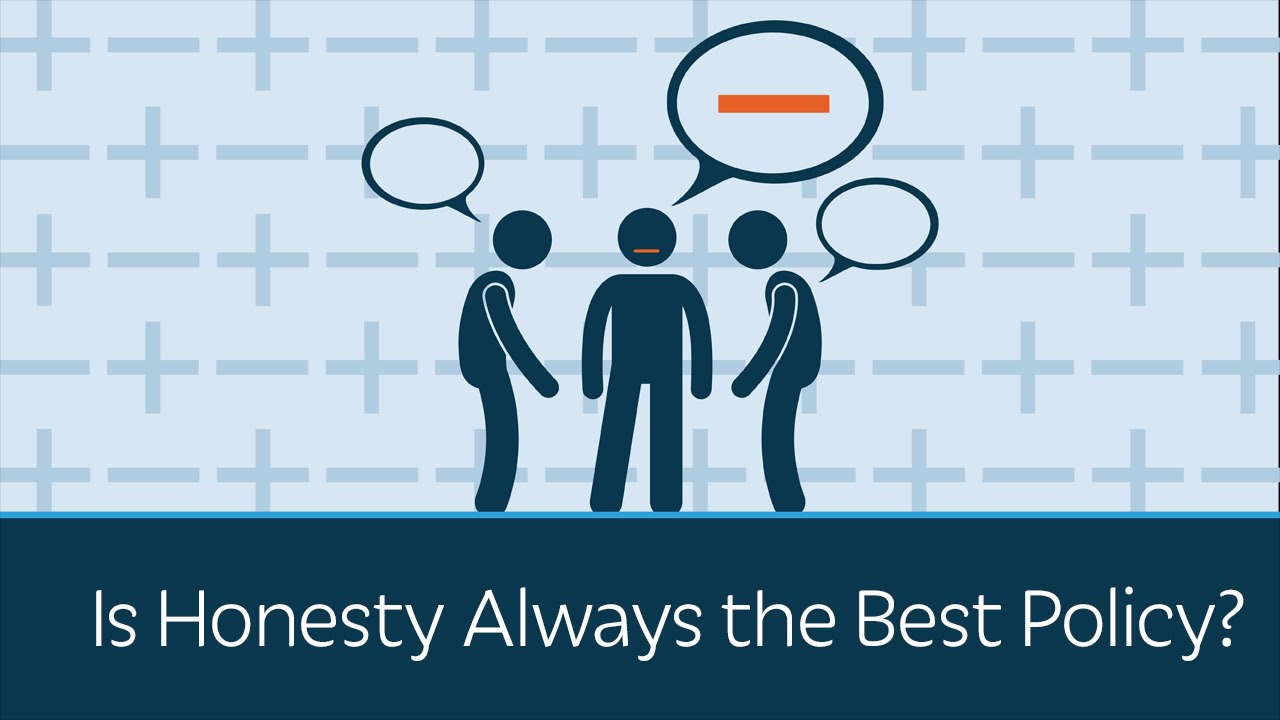
Is Honesty Always the Best Policy? | 5 Minute Video
Posted
October 12, 2015
Views
715,882
Likes
6,237
Comments
480
Engagement
0.94%
October 12, 2015
715,882
6,237
480
0.94%
Every word spoken in this episode is indexed. Type any phrase to jump straight to the moment it was said.
Type any word or phrase that may have been spoken. Click a result to seek the player to that exact moment.
Try a name, a topic, or a quoted line
 3:45Now Playing
Telling the truth is usually right. But can it also sometimes be wrong? If so, when? And why? Rabbi Joseph Telushkin, a bestselling author and renowned scholar, explains when honesty isn't the best policy.
🚨 PragerU is experiencing severe censorship on Big Tech platforms. Go to to watch our videos free from censorship!
SUBSCRIBE 👉
📲 Take PragerU videos with you everywhere you go. Download our free mobile app!
Download for Apple iOS ➡
Download for Android ➡
📳 Join PragerU's text list!
SHOP! 🛒 Love PragerU? Visit our store today!
FOLLOW us!
PragerU is on Snapchat!
JOIN PragerFORCE!
For Students
JOIN our Educators Network!
Script:
Pretty much everybody regards the Golden Rule -- "Do unto others as you would have others do unto you" -- as the best guide to moral behavior. But did you ever consider this rule in terms of speech, in how you talk about others?
We all acknowledge that it's wrong to spread untruths about people, but many of us seem to feel that it's okay to say anything about another as long as it's true. But the fact that something is true doesn't mean that it is necessarily anybody else's concern. Do you want every aspect of your life made known to others -- even if true?
How important is it to guard our tongues?
A lifetime of experience suggests to me that unfair speech is a major, not a minor, issue. I often ask listeners at workshops I conduct on the ethics of speech: 'How many of you can think of at least one embarrassing personal incident, that were it to become widely known, would negatively impact your life?"
Almost all the hands go up, except for those who have led very boring lives, have poor memories, or are lying. What is perverse about human nature is that while we don't want others to know about such events in our lives, almost all of us are just aching to learn and speak about such events in the lives of others.
Let's analyze this further. Why exactly don't we want people to know about a highly embarrassing episode? After all, for most of us, the deep secret that we're concealing doesn't involve a criminal act. But we all know that if people learn about this one thing, it can easily become their primary association with us and with our name.
Why is this so?
Because, what is most interesting about people is what's not so nice about them. This is pretty much true of just about everyone. As Isaac Bashevis Singer, the Nobel Prize winning writer, used to say, "Even good people don't like to read novels about good people."
If you're thinking that what I have said so far does not apply to you, that you rarely speak about others, when you do your comments are always fair, then let me pose a question and a challenge. Can you go for twenty-four hours without saying anything unkind about anyone?
Invariably, when I make this challenge people laugh nervously. I can read their minds: "One day without any negative comments about anybody? My boss? My co-workers?" They're not sure they can do it.
For the complete script, visit
Sentinel Indexing in Progress
Metadata and chapters are available. Claim extraction for this episode is pending.
All video content is delivered via YouTube embedded players in accordance with the YouTube Terms of Service. Sentinel provides research tools that promote discovery and accountability across political media.