Prageru
@prageru·3.5M subscribers·6.6K videos
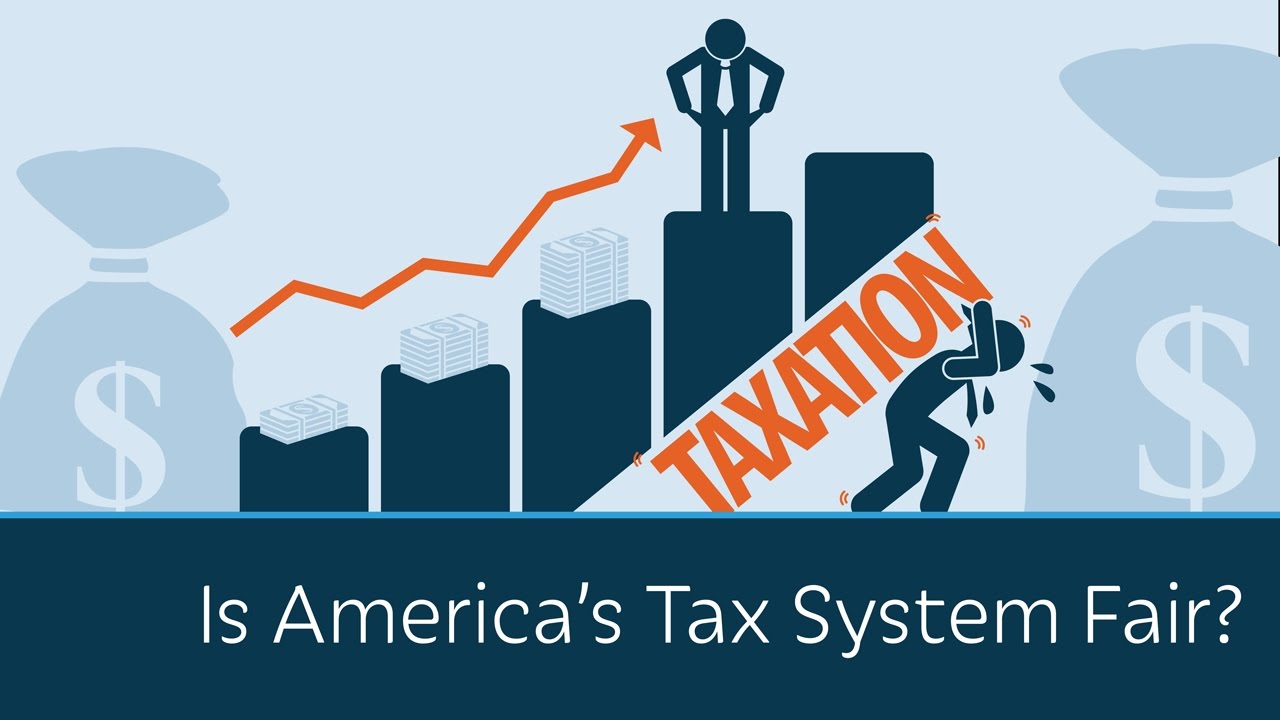
Is America's Tax System Fair? | 5 Minute Video
Posted
September 29, 2016
Views
1,025,603
Likes
14,277
Comments
2,726
Engagement
1.66%
September 29, 2016
1,025,603
14,277
2,726
1.66%
Every word spoken in this episode is indexed. Type any phrase to jump straight to the moment it was said.
Type any word or phrase that may have been spoken. Click a result to seek the player to that exact moment.
Try a name, a topic, or a quoted line
 5:03Now Playing
Is the U.S. tax system fair? Are the rich paying too little or too much? What about the middle and lower class? New York Times bestselling author Amity Shlaes answers these questions, and offers a tax solution that most Americans could get on board with. Donate today to PragerU!
Joining PragerU is free! Sign up now to get all our videos as soon as they're released.
Download Pragerpedia on your iPhone or Android! Thousands of sources and facts at your fingertips.
Join Prager United to get new swag every quarter, exclusive early access to our videos, and an annual TownHall phone call with Dennis Prager!
Join PragerU's text list to have these videos, free merchandise giveaways and breaking announcements sent directly to your phone!
Do you shop on Amazon? Click and a percentage of every Amazon purchase will be donated to PragerU. Same great products. Same low price. Shopping made meaningful.
VISIT PragerU!
FOLLOW us!
PragerU is on Snapchat!
JOIN PragerFORCE!
For Students
JOIN our Educators Network!
Script:
Tax the rich some more.
That recommendation comes from many politicians.
It seems obvious to tax the rich. We tell ourselves they won’t miss that little extra bit we take. And after all, it’s only right that they pay their fair share.
The technical name for taxing the rich more is progressivity. And it’s hard to oppose a concept that shares its roots with an optimistic word like progress. But this surface logic obscures some important truths about progressivity. So let’s stand back.
The first thing we see when we take our distance is surprising. It is that many people don’t know what progressivity is.
Suppose you pay five dollars in tax on your income. A rich man pays ten dollars, because he makes twice as much as you. This arrangement sounds like progress, right?
But that is not a progressive tax schedule. It is a proportional one—a true fair share. What was once known as the tithe, but is now commonly called now a flat tax. Under a flat tax, everyone pays the same rate no matter what they earn.
In the 1980’s a poll by political scientist Karlyn Keene suggested that Americans thought flat proportional taxes were fair taxes. And as we know from architecture and art, humans are wired to like proportionality. A progressive tax structure by contrast is actually disproportionate.
Progressivity resembles a flight of stairs. Each individual starts out at the bottom, paying the same rate, say 10 percent. When his income rises to a certain line, the taxpayer moves up a step on the staircase and his rate goes up to, say 20 percent, but only for the share of income past that line. At the next step, the rate goes up again, say to 30 percent, but again only for the last stair of income. And so on.
But the prospect of going up all those stairs tires the climber. Surveying the rates at the top, workers stop chasing a promotion they once thought they wanted. Why bother? The taxman will take the money anyhow. When workers or professionals stall on the stairs, the government loses money, but so do regular people. For when the person who decides not to earn more money is a business owner, the result of that decision is a smaller company and fewer jobs for others.
Of course some people do keep climbing, no matter what. Some people are wired that way. And those taxpayers can get to the point where they pay half of what they earn—especially in high tax states—which leads to the greatest argument against the progressivity staircase: Progressivity is unjust. People have a right to what they earn—even Californians and New Yorkers.
For the complete script, visit
Sentinel Indexing in Progress
Metadata and chapters are available. Claim extraction for this episode is pending.
All video content is delivered via YouTube embedded players in accordance with the YouTube Terms of Service. Sentinel provides research tools that promote discovery and accountability across political media.