Prageru
@prageru·3.5M subscribers·6.6K videos
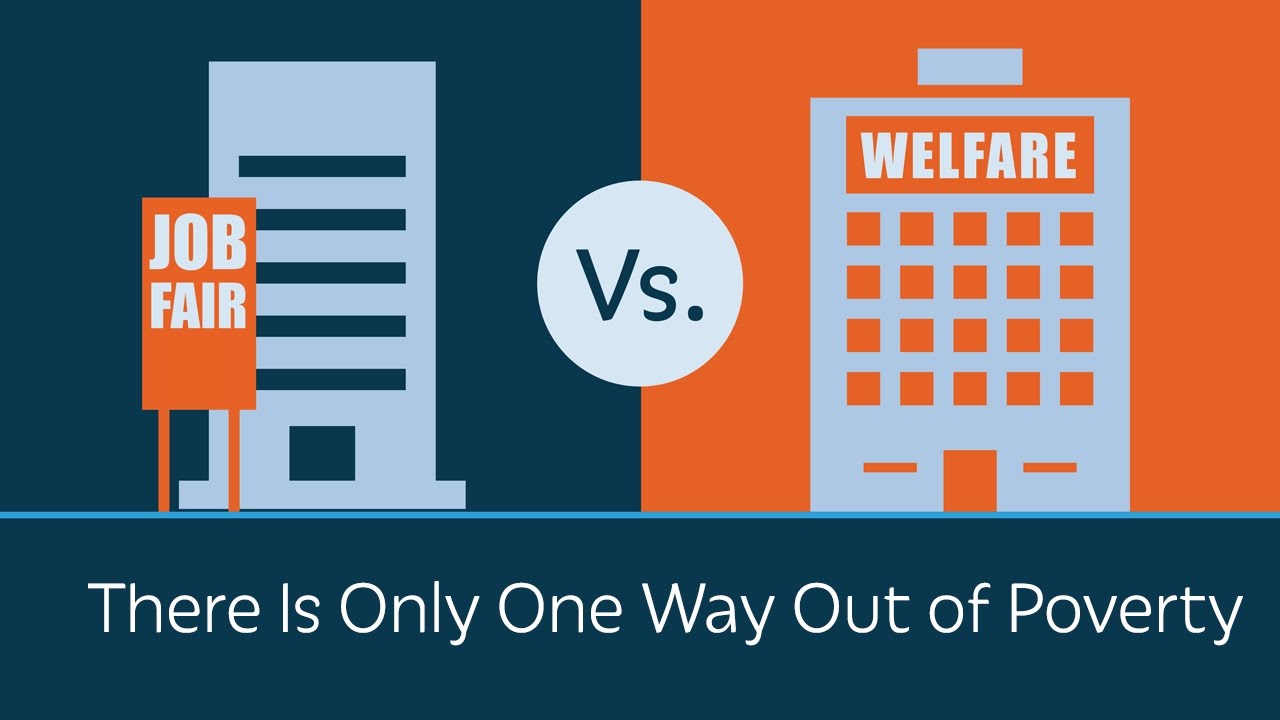
There Is Only One Way Out of Poverty | 5 Minute Video
Posted
March 13, 2017
Views
5,162,561
Likes
26,188
Comments
2,942
Engagement
0.56%
March 13, 2017
5,162,561
26,188
2,942
0.56%
Every word spoken in this episode is indexed. Type any phrase to jump straight to the moment it was said.
Type any word or phrase that may have been spoken. Click a result to seek the player to that exact moment.
Try a name, a topic, or a quoted line
 4:11Now Playing
What's the best way to help people stuck in poverty get out of poverty? Arthur Brooks, president of the American Enterprise Institute, shows where conservatives and progressives differ.
Donate today to PragerU!
Read Arthur's book!
Have you taken the pledge for school choice? Click here!
Joining PragerU is free! Sign up now to get all our videos as soon as they're released.
Download Pragerpedia on your iPhone or Android! Thousands of sources and facts at your fingertips.
Join Prager United to get new swag every quarter, exclusive early access to our videos, and an annual TownHall phone call with Dennis Prager!
Join PragerU's text list to have these videos, free merchandise giveaways and breaking announcements sent directly to your phone!
Do you shop on Amazon? Click and a percentage of every Amazon purchase will be donated to PragerU. Same great products. Same low price. Shopping made meaningful.
VISIT PragerU!
FOLLOW us!
PragerU is on Snapchat!
JOIN PragerFORCE!
For Students
JOIN our Educators Network!
Script:
What’s the best way to help poor people escape poverty?
Progressives and conservatives have very different answers to this question, but before we explore those answers, let’s agree on this:
Both progressives and conservatives believe that the government has a moral obligation to help those who, through bad luck or unfortunate circumstances, can’t help themselves.
Here’s what a conservative icon, Nobel Prize-winning economist, Frederic Hayek, said on the subject:
“There is no reason why, in a society that has reached the general level of wealth ours has attained, the first kind of security should not be guaranteed to all…some minimum of food, shelter, and clothing sufficient to preserve health and the capacity to work.”
Whatever the media might tell you, there isn’t a conservative out there who would not agree with Hayek’s statement.
As I have documented in my book, Who Really Cares, when it comes to philanthropy and charitable giving, conservatives actually out-give progressives -- by a lot.
Where the two sides disagree is on the role the government plays – not in protecting the poor from poverty, but in lifting them out of it.
Here’s a disturbing piece of data: On balance, since President Lyndon Johnson’s War on Poverty programs came fully online in 1966, the poverty rate in America has hardly budged.
That rate, as computed by the United States government, was 14.7 percent in 1966.
And today?
It’s 13.5 percent.
The rate has fluctuated a few points up and down over the decades. The net result is just one percentage point of progress. And this is after the government has spent over 20 trillion dollars on poverty relief programs.
20 trillion dollars – the current size of the US debt -- and the needle has barely moved.
Now, it’s true that the official poverty rate doesn’t measure consumption. Certainly, poor people today have many more things than poor people did in 1970.
Across all income levels, including the poor, Americans are likely to have cell phones, air conditioners, flat screen TVs, computers and a car. And life expectancy has lengthened considerably thanks to overall improvements in health care.
But it demeans poor people to say that this material progress makes poverty less of a problem. Our goal should never be to merely make poverty less miserable for people. Our goal must be to make poverty more escapable.
Many progressives offer a straightforward solution: more funding for poverty programs. They believe that we need to transfer more wealth – through government taxation -- from people who have money to people who don’t. This is the income inequality argument.
For the complete script, visit
Sentinel Indexing in Progress
Metadata and chapters are available. Claim extraction for this episode is pending.
All video content is delivered via YouTube embedded players in accordance with the YouTube Terms of Service. Sentinel provides research tools that promote discovery and accountability across political media.