Prageru
@prageru·3.5M subscribers·6.6K videos
Government Can't Fix Healthcare | 5 Minute Video
Posted
July 17, 2017
Views
1,706,194
Likes
17,670
Comments
2,781
Engagement
1.20%
July 17, 2017
1,706,194
17,670
2,781
1.20%
Every word spoken in this episode is indexed. Type any phrase to jump straight to the moment it was said.
Type any word or phrase that may have been spoken. Click a result to seek the player to that exact moment.
Try a name, a topic, or a quoted line
 4:20Now Playing
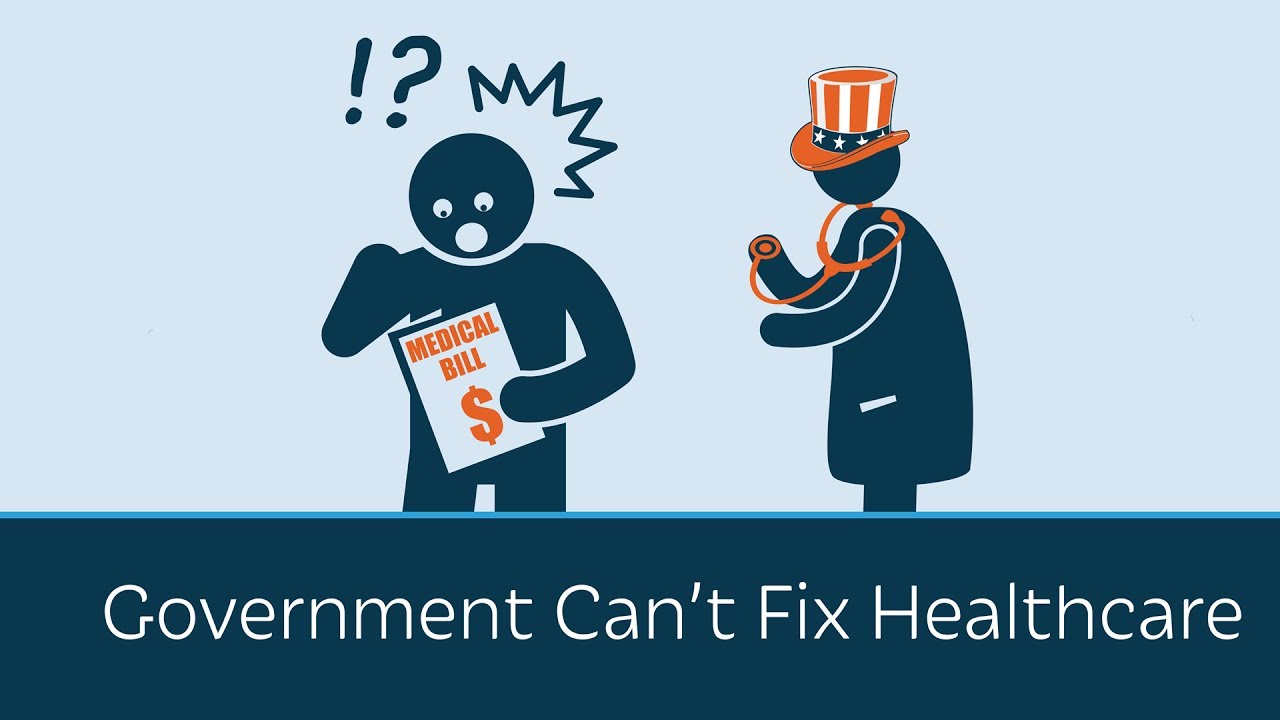
Why is the government so bad at healthcare? Why did Obamacare make it more expensive than it already was? Is there a solution? Former Member of Congress Bob McEwen explains.
Donate today to PragerU!
Have you taken the pledge for school choice? Click here!
Joining PragerU is free! Sign up now to get all our videos as soon as they're released.
Download Pragerpedia on your iPhone or Android! Thousands of sources and facts at your fingertips.
Join Prager United to get new swag every quarter, exclusive early access to our videos, and an annual TownHall phone call with Dennis Prager!
Join PragerU's text list to have these videos, free merchandise giveaways and breaking announcements sent directly to your phone!
Do you shop on Amazon? Click and a percentage of every Amazon purchase will be donated to PragerU. Same great products. Same low price. Shopping made meaningful.
VISIT PragerU!
FOLLOW us!
PragerU is on Snapchat!
JOIN PragerFORCE!
For Students
JOIN our Educators Network!
Script:
Why is the government so bad at healthcare? They’ve been at it for seventy-five years and still can’t get it right. It’s expensive. Access is spotty. It’s mired in bureaucracy. And it’s fraught with waste.
Obamacare was supposed to fix all this, but instead, like every other government healthcare program before it, it just made things worse.
Why?
Because the government is a third-party payer.
Let me explain.
Suppose you are going to buy something for yourself. You have two priorities: price and quality. You want the highest quality for the lowest possible price.
Say you’re buying a television. You have many options: the size of the screen, the quality of the image, the price. Only you know which one best suits your needs and your budget. And a lot of companies are competing for your business. You do your research; you make your choice.
This is called a first-party purchase – the person paying is the person using.
Now, let’s suppose that either the price or quality is not controlled by you; in this case, you are buying something for someone else. You care about the price because you are paying for it, but you are a little more flexible on the quality. A good example would be a wedding gift – say, a coffee maker.
You might think, by the time it breaks they’ll forget who gave it to them anyway…the cheaper one will be fine.
All of us have bought things for others we never would have bought for ourselves. We care about the price because we’re paying for it, but not so much about the quality because we’re not going to use it.
Or, suppose that we’re going to use something, but we’re not going to pay for it. Then we’re concerned about the quality because we’re consuming it, but the cost is not as important because we’re not paying for it. Any father who ever got roped into paying for an open bar at a wedding understands this program. Nobody ever orders the cheap stuff when it’s free.
These are called second-party purchases. The person paying is not the person using.
And now, for the coup de grace: when it is not your money paying for something, AND you don’t use it. Then you’re not concerned about either the price or the quality.
Suppose the boss gives you $150 to buy a door prize for the office party. In a store window, you see a six-foot tall stuffed frog marked $149.00 You think, Oh, that’s perfect – let’s buy it. The raffle winner is awarded the six-foot frog. Everyone laughs at the gag.
Now, this is called a third-party purchase – a purchase that is made with money that is not yours (therefore you don’t care about the cost) to buy something you’re not going to consume (therefore you don’t care about the quality).
Here’s the point: By definition, all government purchases are third-party purchases. The government spends other people's money on things it won't consume. It doesn’t care about the price or the quality. Thus, there will always be waste in government spending.
For the complete script, visit
Sentinel Indexing in Progress
Metadata and chapters are available. Claim extraction for this episode is pending.
All video content is delivered via YouTube embedded players in accordance with the YouTube Terms of Service. Sentinel provides research tools that promote discovery and accountability across political media.