Prageru
@prageru·3.5M subscribers·6.6K videos
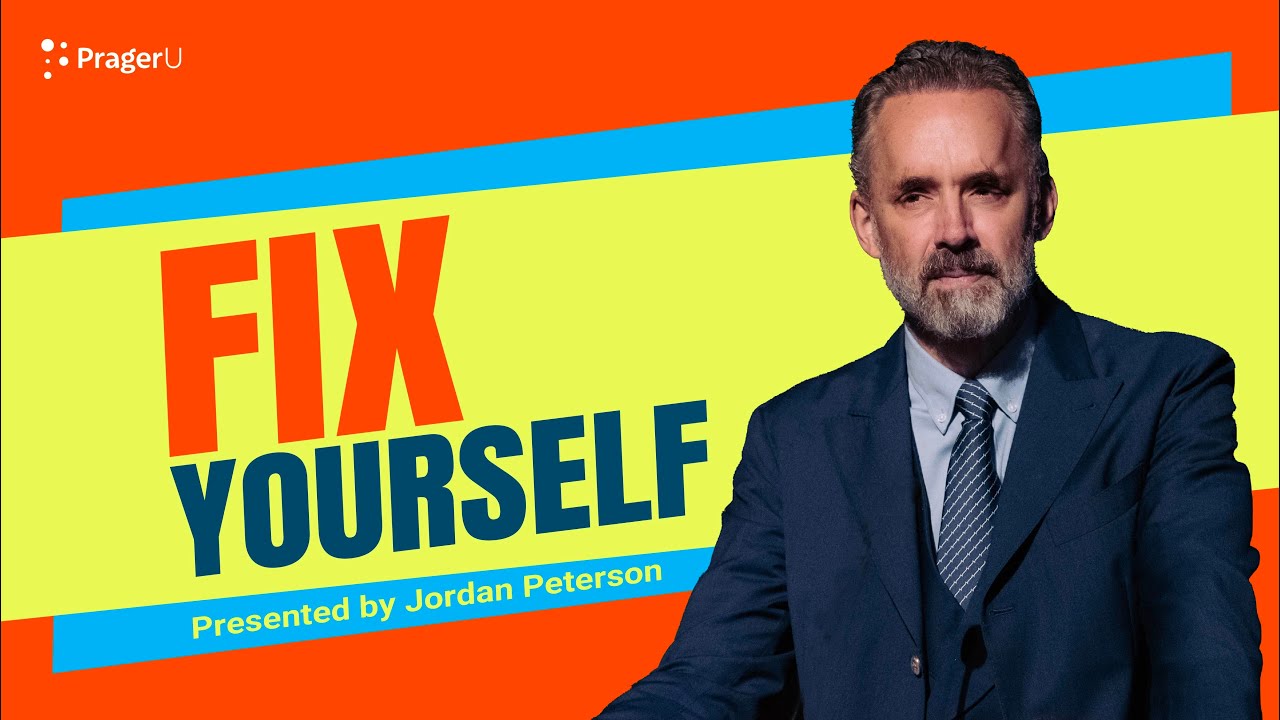
Fix Yourself | 5 Minute Video
Posted
January 29, 2018
Views
2,535,449
Likes
98,181
Comments
4,827
Engagement
4.06%
January 29, 2018
2,535,449
98,181
4,827
4.06%
Every word spoken in this episode is indexed. Type any phrase to jump straight to the moment it was said.
Type any word or phrase that may have been spoken. Click a result to seek the player to that exact moment.
Try a name, a topic, or a quoted line
 5:25Now Playing
Want to make the world a better place? Start by bettering yourself. Best-selling author and clinical psychologist Jordan Peterson explains how incremental daily changes can lead to a better life and ultimately a more harmonious world.
Donate today to PragerU!
Have you taken the pledge for school choice? Click here!
Get PragerU bonus content for free!
Download Pragerpedia on your iPhone or Android! Thousands of sources and facts at your fingertips.
Join Prager United to get new swag every quarter, exclusive early access to our videos, and an annual TownHall phone call with Dennis Prager!
Join PragerU's text list to have these videos, free merchandise giveaways and breaking announcements sent directly to your phone!
Do you shop on Amazon? Click and a percentage of every Amazon purchase will be donated to PragerU. Same great products. Same low price. Shopping made meaningful.
VISIT PragerU!
FOLLOW us!
PragerU is on Snapchat!
JOIN PragerFORCE!
For Students
JOIN our Educators Network!
Script:
Blaming others for your problems is a complete waste of time. When you do that, you don’t learn anything.
You can’t grow, and you can’t mature. Thus, you can’t make your life better.
In my three decades as a professor and clinical psychologist, I have learned that there are two fundamental attitudes toward life and its sorrows. Those with the first attitude blame the world. Those with the second ask what they could do differently.
Imagine a couple on the brink of divorce. They’re hurt and angry. The unhappy, bitter husband recalls the terrible things his wife has done, and the reasons he can no longer live with her.
The harried and disillusioned wife, in turn, can describe all the ways her husband let her down. Each has a long list of necessary changes—for the other person.
Their prospects for reconciliation are grim. Why? Because other people aren’t the problem. You’re the problem. You can’t change other people, but you can change yourself. But it’s difficult. It takes courage to change, and it takes discipline. It’s much easier—and much more gratifying to your basest desires—to blame someone else for your misery.
Consider the youthful activist, making a “statement” against the “corrupt” capitalist system by smashing in the storefront of a local business. What has he done, other than to bring harm to people who have nothing to do with his real problems?
The guilt, doubt and shame he will inevitably feel in consequence will have to be suppressed so his beliefs can remain unchanged. And that suppression will do nothing but foster his anger and alienation.
In the play “The Cocktail Party” by American-English poet T.S. Eliot, one of the characters is having a very hard time of it. She speaks of her profound unhappiness to her psychiatrist. She tells him that she hopes her suffering is all her own fault.
Taken aback, the psychiatrist asks why. Because, she tells him, if it’s her fault, she can do something about it. If it’s in the nature of the world, however, she’s doomed. She can’t change everything else. But she could change herself.
Now, there are people who seem to be consigned to a terrible fate. But most of us aren’t. Most of us have a chance to make our lives better.
But how?
Start small. Ask yourself a few questions: Have you taken full advantage of the opportunities offered to you? Are you working to your fullest capacity at school or at work? Have you, in other words, set your own house in order?
If the answer is no, try this: stop doing what you know to be wrong. Stop today.
Don’t waste time asking how you know that what you’re doing is wrong.
Inopportune questioning can confuse without enlightening, and deflect you from action. You can know something is right or wrong without knowing why.
Start paying attention: Do you procrastinate, show up late, spend money you don’t have, and drink more than you should?
For the complete script, visit
Sentinel Indexing in Progress
Metadata and chapters are available. Claim extraction for this episode is pending.
All video content is delivered via YouTube embedded players in accordance with the YouTube Terms of Service. Sentinel provides research tools that promote discovery and accountability across political media.