Prof Sam Vaknin
@samvaknin·443K subscribers·2.3K videos
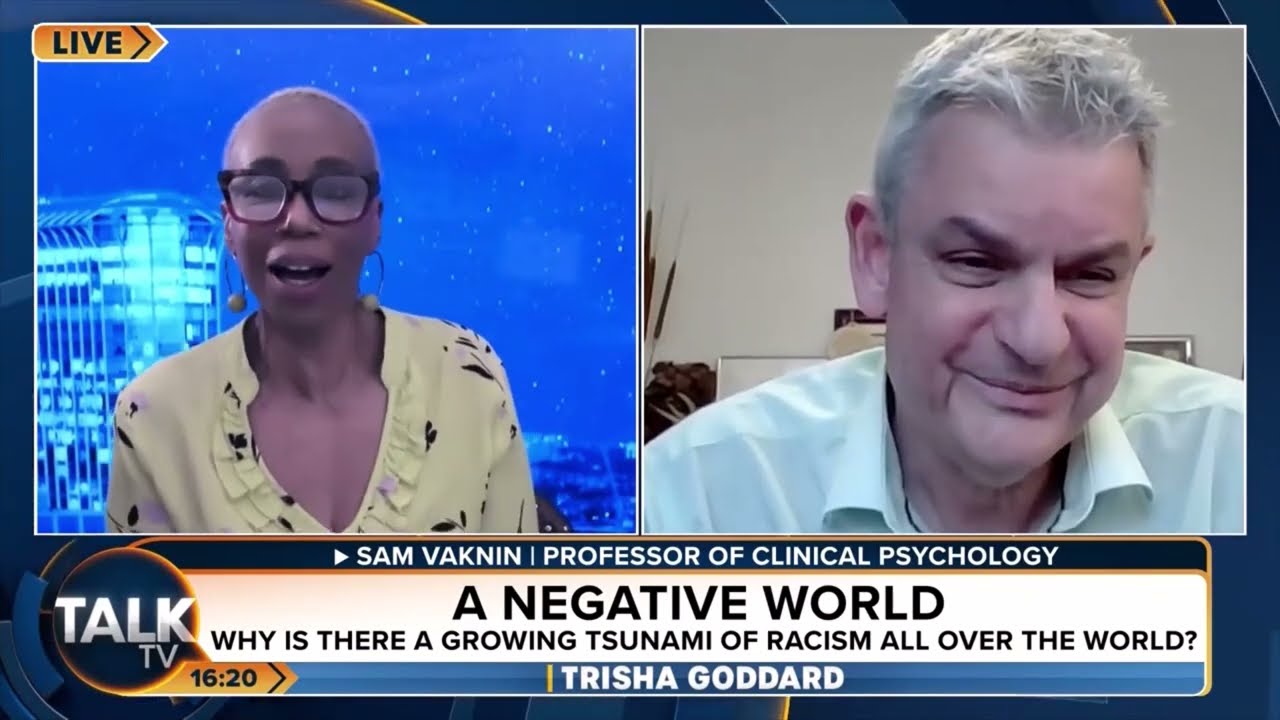
Why do We Hate (Talk TV with Trisha Goddard)
Posted
April 1, 2024
Views
7,614
Likes
506
Comments
23
Engagement
6.95%
April 1, 2024
7,614
506
23
6.95%
Every word spoken in this episode is indexed. Type any phrase to jump straight to the moment it was said.
Type any word or phrase that may have been spoken. Click a result to seek the player to that exact moment.
Try a name, a topic, or a quoted line
 14:31Now Playing
Do we hate those who resemble us the most - or the least?
Negative identity via othering, alterity (Levinas), stereotyping, stigmatization.
But “nearly we” (Ernest Crawley) provoke aggression, hatred, envy because they challenge uniqueness, superiority, and privilege.
Projection, splitting, reaction formation.
Narcissism of small differences (Freud, 1917).
Intimacy and proximity breed contempt.
In a study titled "War and Relatedness" () , published by the National Bureau of Economic Research, the authors, Enrico Spolaore, Romain Wacziarg concluded
"(T)he degree of genealogical relatedness between populations has a positive effect on their conflict propensities because more closely related populations, on average, tend to interact more and develop more disputes over sets of common issues ... (P)opulations that are genetically closer are more prone to go to war with each other, even after controlling for a wide set of measures of geographic distance and other factors that affect conflict, including measures of trade and democracy."
Developmental Othering failure.
Entitled Competitive Victimhood (Bradley) imposes costs on scarce resources by generating rights and entitlements and by creating social obligations and grievances.
Remedying empathy deficit and educating to dispel lies and fallacies.
WATCH From Lovebombing to Conflict (TalkTV Interviews with Trisha Goddard)
Find and Buy MOST of my BOOKS and eBOOKS in my Amazon Store
Sentinel Indexing in Progress
Metadata and chapters are available. Claim extraction for this episode is pending.
All video content is delivered via YouTube embedded players in accordance with the YouTube Terms of Service. Sentinel provides research tools that promote discovery and accountability across political media.