Professor Dave Explains
@professordaveexplains·4.3M subscribers·2.1K videos
The 18 Electron Rule for Transition Metal Complexes
Posted
September 28, 2022
Views
188,957
Likes
2,934
Comments
60
Engagement
September 28, 2022
188,957
2,934
60
1.58%
Every word spoken in this episode is indexed. Type any phrase to jump straight to the moment it was said.
Type any word or phrase that may have been spoken. Click a result to seek the player to that exact moment.
Try a name, a topic, or a quoted line
 10:45Now Playing
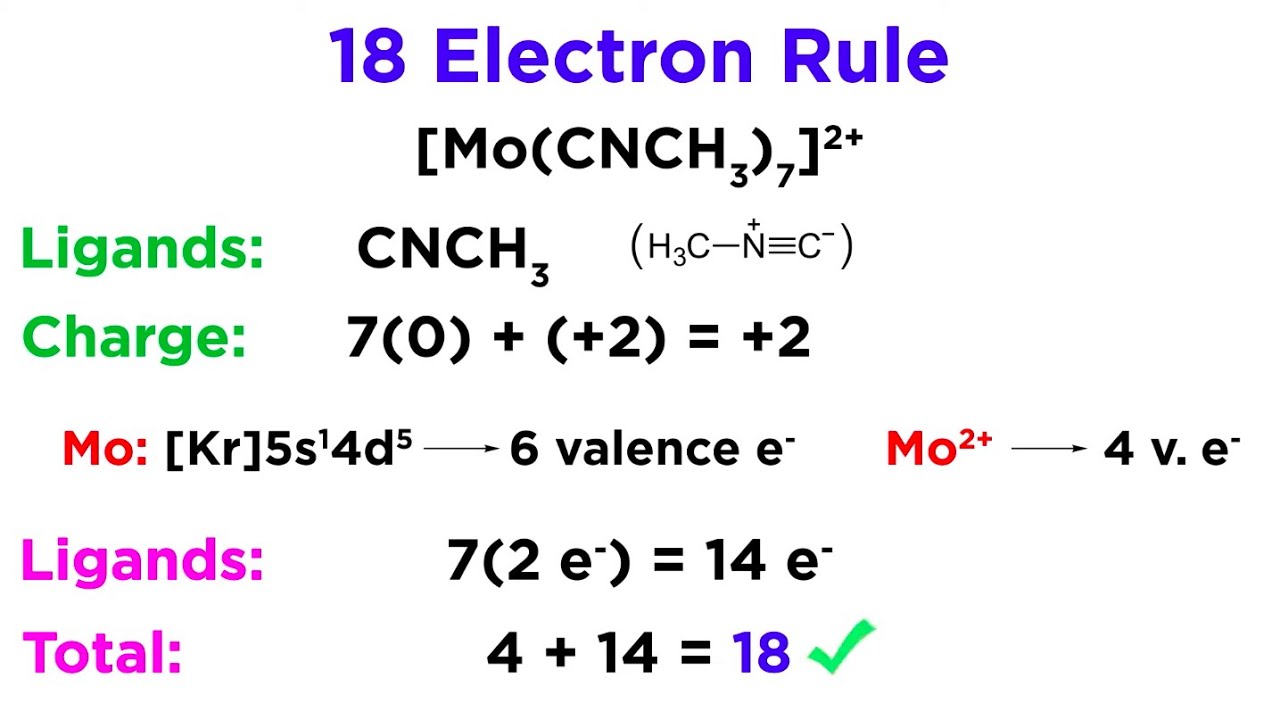
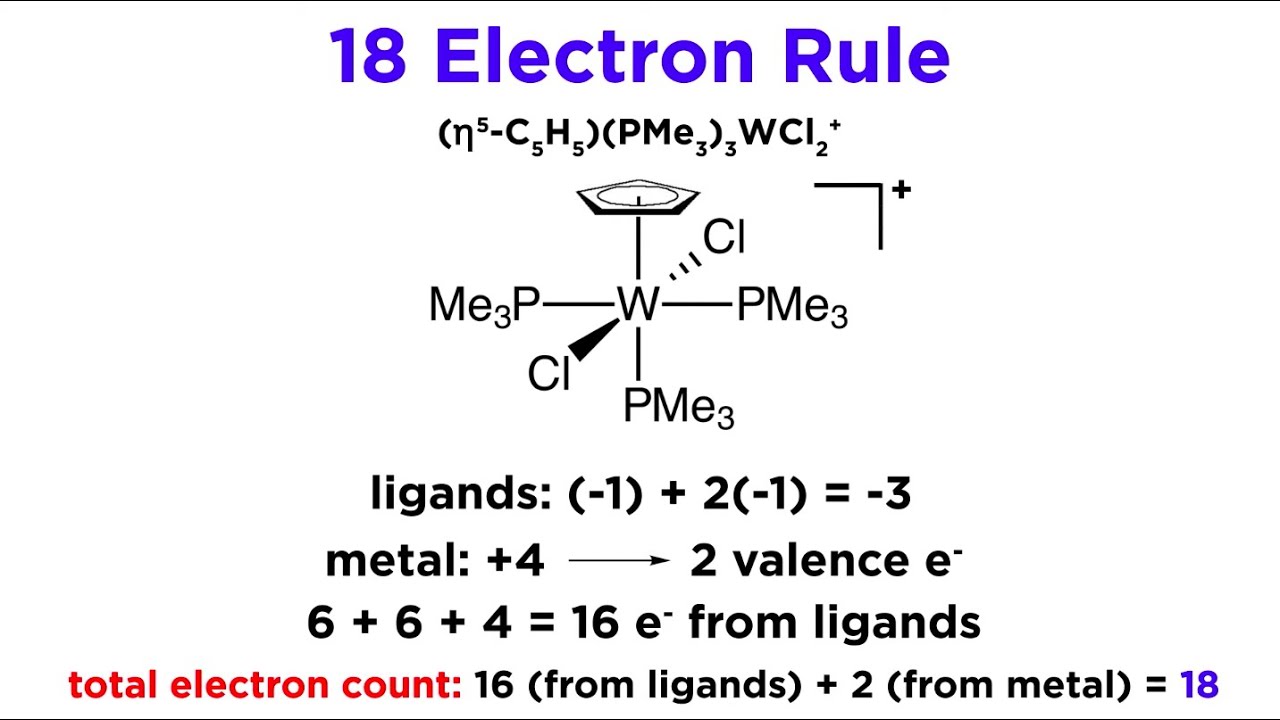
Ok, so we understand how ligands bond to metals to form transition metal complexes, but how many ligands will fit? Well, remember the octet rule from general chemistry? There is a similar concept that we can apply here, which is called the 18 electron rule. 18 is bigger than 8 because transition metals have access to d orbitals. Let's see how this rule works now!
Watch the whole Inorganic/Organometallic Chemistry playlist
General Chemistry Tutorials
Organic Chemistry Tutorials
Biochemistry Tutorials
Biology Tutorials
Classical Physics Tutorials
Modern Physics Tutorials
Mathematics Tutorials
EMAIL► ProfessorDaveExplains@gmail.com
Check out "Is This Wi-Fi Organic?", my book on disarming pseudoscience!
Barnes and Noble
Book Depository
Sentinel Indexing in Progress
Metadata and chapters are available. Claim extraction for this episode is pending.
All video content is delivered via YouTube embedded players in accordance with the YouTube Terms of Service. Sentinel provides research tools that promote discovery and accountability across political media.