Reading Through History
@readingthroughhistor·106K subscribers·437 videos
History Brief: The Second Red Scare (Part 1)
Posted
December 12, 2016
Views
53,347
Likes
215
Comments
16
Engagement
0.43%
December 12, 2016
53,347
215
16
0.43%
Every word spoken in this episode is indexed. Type any phrase to jump straight to the moment it was said.
Type any word or phrase that may have been spoken. Click a result to seek the player to that exact moment.
Try a name, a topic, or a quoted line
 3:33Now Playing
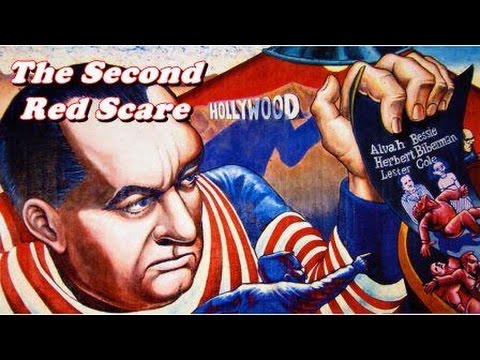
This video gives a brief description of the Red Scare of the 1950s. Teachers, check out our store on TpT
***
Music Provided by Piano Horror
The song is available here
***
Follow us on Facebook
****
Follow us on Twitter
In this video:
Throughout the Cold War, many Americans harbored an intense fear and hatred of communism. Why were they so afraid? Where did this hatred come from?
In February of 1950, Senator Joseph McCarthy produced a list of 205 names. He claimed that all of these were people who worked within the State Department and were also Communists. Following this revelation, Senator McCarthy began a series of Congressional investigations in which countless accusations were made towards many individuals.
Senator McCarthy's investigations, as well as those of the House Un-American Activities Committee (HUAC), helped create the atmosphere of fear and resentment towards communists that would dominate the next two decades. Because of Senator McCarthy's efforts, the phrase “McCarthyism” was used to describe the act of accusing someone, with little or no evidence.
In the early 50s, there were also several pieces of legislation passed that increased the paranoia against communism. The best example was the Internal Security Act of 1950. This law required Communist organizations to register with the Attorney General's office. Members of these organizations were not allowed to become citizens of the US (if they already were they could possibly lose their citizenship).
There was also a “Federal Employees Loyalty Program”. This was a review board that determined the “Americanism” of federal employees. The board recommended that any employee suspected of being “Un-American” should have their employment terminated. Across the nation, many states, communities, and even private businesses also established “Loyalty Review Boards”. It is estimated that by the end of the 1950s around 20% of all employees had to pass some sort of loyalty review.
If an employee was discharged because they were deemed to be “disloyal” to the nation, their life could potentially be ruined. No other employer would be willing to hire someone with this type of speculation in their background. Some industries even developed “blacklists” to prevent “disloyal citizens” from being hired. “Blacklisting” is a term used to describe the informal exclusion of a certain group from employment. Blacklisting was especially prominent in high profile fields such as the entertainment industry (television and movies) and government employment.
Throughout this time period, thanks to the anticommunist hysteria, thousands of honest and loyal Americans were accused of being Communists, or communist sympathizers.
Sentinel Indexing in Progress
Metadata and chapters are available. Claim extraction for this episode is pending.
All video content is delivered via YouTube embedded players in accordance with the YouTube Terms of Service. Sentinel provides research tools that promote discovery and accountability across political media.