Rebel Hq
@RebelHQ·1.5M subscribers·18.5K videos
Putin's Hold on Trump: What Could Go Wrong?
Posted
December 27, 2016
Views
10,954
Likes
313
Comments
150
Engagement
4.23%
December 27, 2016
10,954
313
150
4.23%
Every word spoken in this episode is indexed. Type any phrase to jump straight to the moment it was said.
Type any word or phrase that may have been spoken. Click a result to seek the player to that exact moment.
Try a name, a topic, or a quoted line
 5:55Now Playing
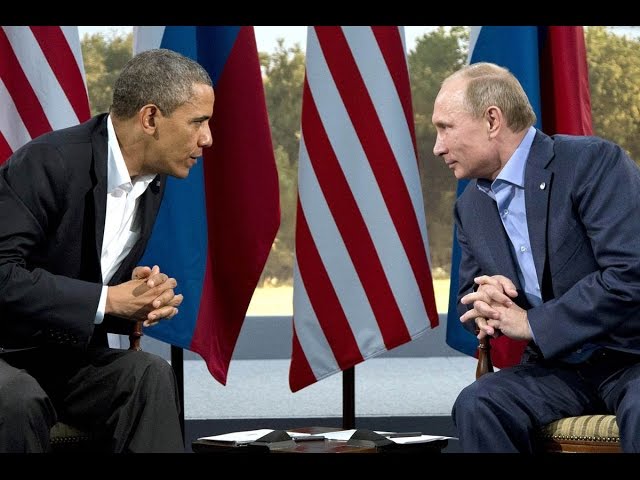
TYT's Eric Byler ( ) sat down with former Pentagon official Evelyn Farkas to find out why foreign policy experts on both sides of the political aisle are so concerned about Russian dictator Vladimir Putin's apparent hold on United States presidentelect Donald Trump (part 1 of 2). The interview was recorded prior to Trump's musing that a renewed nuclear arms race with Russia would be a great idea.
Farkas recently wrote in Politico Magazine, "...The basic foreign policy implication is that a President Trump will seek to accommodate Vladimir Putin's objectives: equal status between the United States and Russia; a 19th century sphere of influence for Russia in Europe/Eurasia/Central Asia; and acceptance of brutal nondemocratic dictators even in the face of their people's nonviolent attempts to force them from power. And the United States is unlikely to retaliate against Russian cyberattacks, and may not maintain strong deterrence against Russian violations of air, sea and space protocols for military behavior.
"In Europe, this would mean no further NATO enlargement and no military or other assistance to non-NATO states like Ukraine and Georgia that are occupied in part by Russian forces and trying to maintain their political and economic sovereignty. It would likely arrest the movement toward democracy and free-market capitalism. In the Middle East, it would mean letting the brutal dictator Bashar Assad try to rule Syria by force, with Russia and Iran helping.
"The result would be more insecurity—Eastern and Western European states would start looking out for their own interests, arming unilaterally and weakening NATO and further dividing the EU. With collective security diminished, and the chance of American resistance significantly reduced, Russia may be tempted to test NATO countries by sending security forces into the Baltics to protect ethnic Russians or by conducting risky military maneuver in NATO air or maritime space. If a conflict were to break out among major European powers—collectively our top trading partner, and individually our closest allies—U.S. basic interests would be affected. If America chose to side with Russia over our European allies, that would be a repudiation of U.S. interests and values. In Syria, the final crushing of the conventional opposition forces would spell the dawn of a bitter and destabilizing insurgency against Assad, Iran and Russia.
"For the homeland, the failure to respond to Russian cyber-interference and to establish and maintain military deterrence against attacks on U.S. military and civilian infrastructure will make us less safe. There will be a greater temptation for the Russian government to use cyber and other means to disrupt normal life in America for smaller stakes, like getting sanctions lifted or retaliating against the Magnitsky human rights law. Being cooperative in this area will only make America weak, coupled as it will be by mutual distrust between our militaries and the conventional and nuclear balances between us."
Sentinel Indexing in Progress
Metadata and chapters are available. Claim extraction for this episode is pending.
All video content is delivered via YouTube embedded players in accordance with the YouTube Terms of Service. Sentinel provides research tools that promote discovery and accountability across political media.