
Feminism in International Relations | Major Themes |
June 26, 2020
3,598
83
19
2.83%
Search the Record
IndexedEvery word spoken in this episode is indexed. Type any phrase to jump straight to the moment it was said.
Type any word or phrase that may have been spoken. Click a result to seek the player to that exact moment.
Try a name, a topic, or a quoted line
Study Politics Episodes Around June 26, 2020
See what was published immediately before and after this episode.

 28:52Now Playing
Feminism in International Relations | Major Themes |




Chapters
Segments
YouTube Description
as posted by the channelFeminism in International Relations is a theory that adopts a “gender lens” or “feminist lens”. Feminists in International Relations is actually “a way of looking at the world which prioritizes certain features, issues or processes”. Feminists in IR see things through the angel of “man” and “woman”. Feminists in IR also believes that discourses in IR are not neutral but are partial. The viewpoint about international relations is the viewpoint of “men” or “masculine”. There are four types of feminists. This includes Liberal Feminism, Standpoint Feminism, Historical Materialist Feminism, and Post-Structuralist Feminism.
One of the major assumptions of Feminism in IR includes:
1. Status of the woman is one measure to determine the progressive and civilized nature of society.
2. The position of woman is not ordained by God nor by nature, but the position of woman is socially constructed.
3. The participation of women in public life is a key to advance the status of women.
4. Under capitalism, women will not be able to achieve emancipation due to the presence of public life and private life.
5. Due to this distinction, a woman’s work is unpaid and devalued. On the other hand, a man’s work is paid because he works in public life.
6. “woman” and “man” occupy readily different lifeworlds.
7. Woman’s experiences of nurturing and caring shape famine experience and lead to a distinct viewpoint. By using this different experience of women, legitimate social knowledge can be constructed.
8. A post-structuralist feminist believes that gender is discursively constructed. They also believe that there is no authentic “woman’s experience” or “standpoint”.
9. A person’s understanding of “masculine” or “famine” is constructed through language, symbols, and stories.
10. Judith Butler said, “one is not born, but becomes a woman”. Gender is a performance.
Feminists have also viewpoints about The State and Power, Identity and Community, Institutions and World Order, Inequality and Justice, Peace and Security, Conflict, and Violence. Feminists want to bring women to the position of influence in international relations.
To watch more videos, you can click on the following links:
What is State
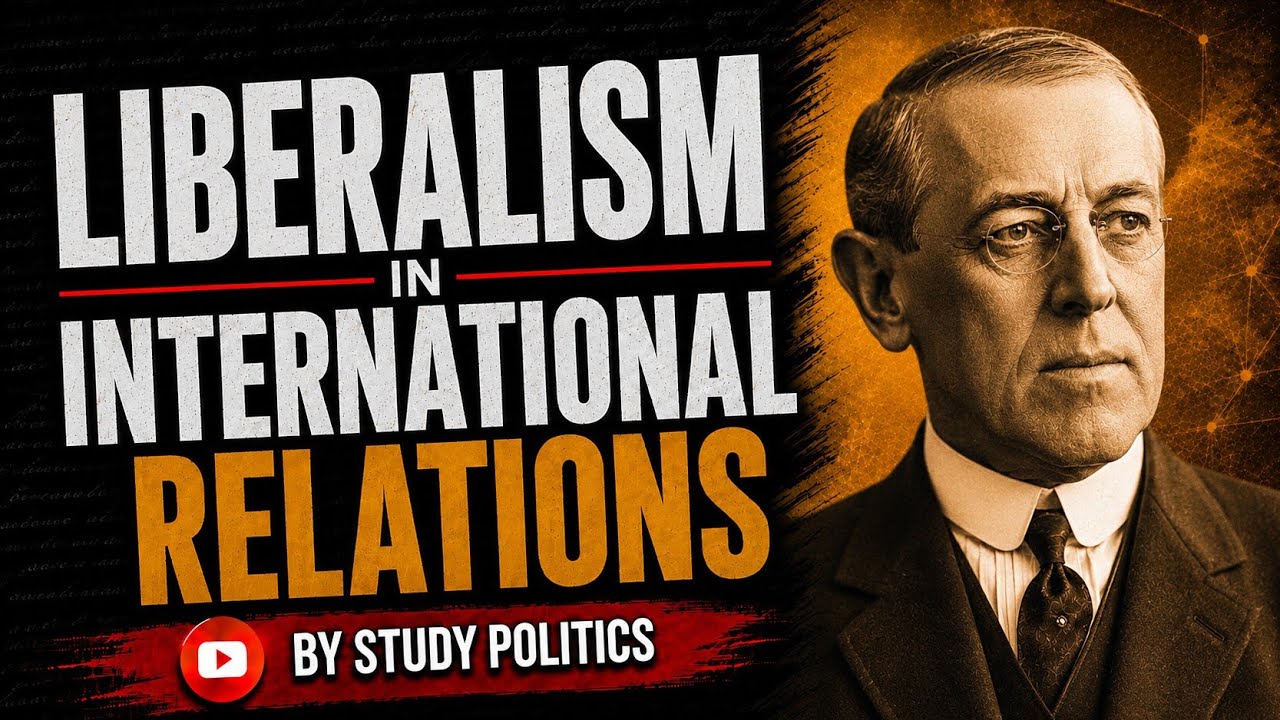
Liberalism in IR
Structuralism in IR
SovietAfghan War
The era of Ayub Khan
Treaty of Westphalia
To subscribe to my channel you can click on the following link:
Study Politics is an educational Channel. The purpose of this channel is to provide information about different topics related to History, International Relations, Political Science, Sociology, Current Affairs, and other Social Sciences. The students of competitive exams like CSS, PMS, PPSC, PCS, ISP, UPSC, and others will find this channel extremely beneficial because of its simplified material and nature of its content. Besides some specific students, the other people belong to other fields other than social sciences can also find this channel useful. It will provide them day-to-day news with the explanation.
You can also like my Facebook page, can follow me on Twitter and on Linkedin.
#StudyPolitics #Feminism_in_IR
Links & Promotions
Guests & Subjects Covered
Sentinel Indexing in Progress
Metadata and chapters are available. Claim extraction for this episode is pending.
All video content is delivered via YouTube embedded players in accordance with the YouTube Terms of Service. Sentinel provides research tools that promote discovery and accountability across political media.