The Ring of Fire
@theringoffire·1.4M subscribers·27K videos
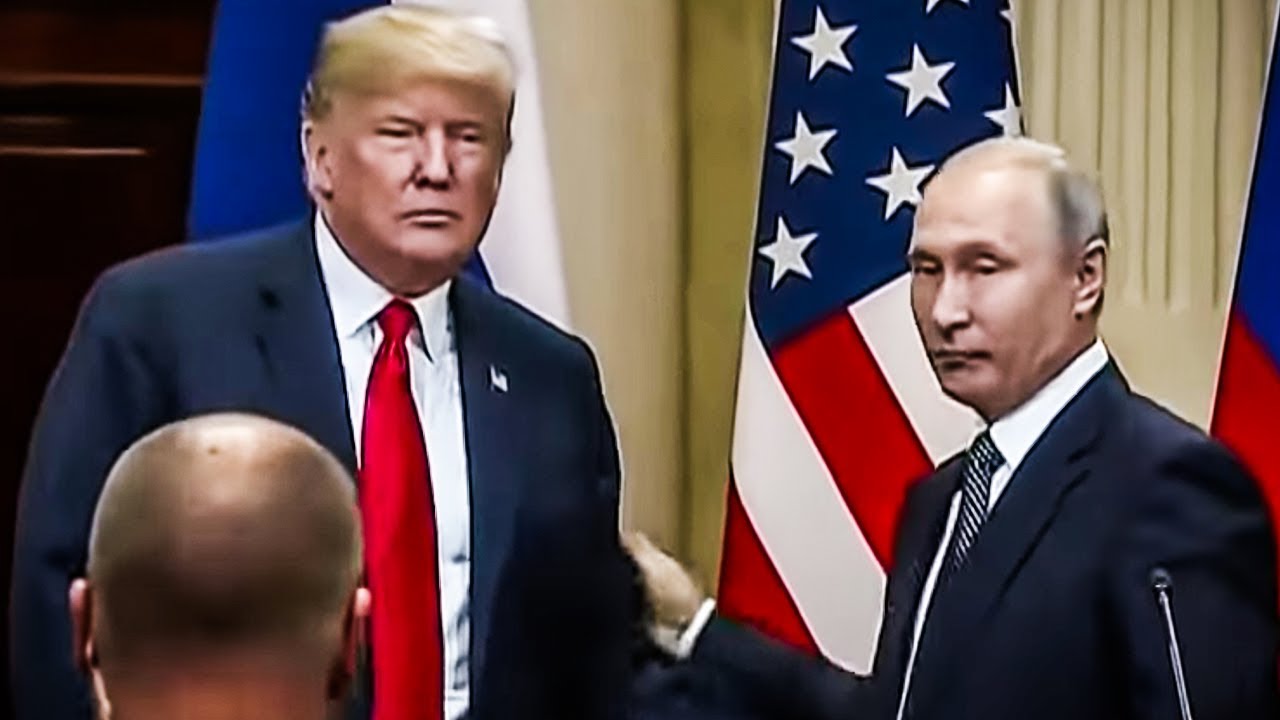
Trump Sues New York Times For Saying He Made A Deal With Putin
Posted
March 1, 2020
Views
70,030
Likes
4,330
Comments
558
Engagement
March 1, 2020
70,030
4,330
558
6.98%
Every word spoken in this episode is indexed. Type any phrase to jump straight to the moment it was said.
Type any word or phrase that may have been spoken. Click a result to seek the player to that exact moment.
Try a name, a topic, or a quoted line
 5:40Now Playing
Donald Trump is suing the New York Times for libel, alleging that the paper’s claim that Trump had a secret deal with Putin to defeat Hillary Clinton in the 2016 election was a complete fabrication. Unfortunately for Trump, libel laws put most of the burden of proof onto the plaintiff, and he’ll have to PROVE that he wasn’t working with a foreign country to sway the results of the election. Ring of Fire’s Farron Cousins discusses this.
Become a member today!
Support us by becoming a monthly patron on Patreon, and help keep progressive media alive!
Find our merchandise at Teespring
Spread the word! LIKE and SHARE this video or leave a comment to help direct attention to the stories that matter. And SUBSCRIBE to stay connected with Ring of Fire's video content!
Support Ring of Fire by subscribing to our YouTube channel
Be sociable! Follow us on:
Follow more of our stories at
Subscribe to our podcast
*This transcript was generated by a third-party transcription software company, so please excuse any typos.
It was announced this week that Donald Trump's reelection campaign is suing the New York Times on Donald Trump's behalf over allegedly false claims that Donald Trump in 2016 had some kind of agreement in place with Vladimir Putin to destroy Hillary Clinton and send Trump to the White House. Now here's the thing. Let me read this from the Trump reelection campaign. This is what they said when they announced the lawsuit. Today, the president's reelection campaign filed suit against the New York Times for falsely stating the campaign had an overarching deal with Vladimir Putin's oligarchy to help the campaign against Hillary Clinton in exchange for a new pro Russian foreign policy starting with relief from economic sanctions. This actually was spawned by an op-ed in the New York Times by an opinion colomnists titled The Real Trump-Russia Quid Pro Quo by a man named Max Frankel. Now here's the thing, those are pretty bold accusations in this op-ed, right? I mean, you are just flat out there stating Donald Trump had to deal with Putin himself to take down Hillary Clinton in exchange for getting rid of the sanctions.
That is very specific and I'm not gonna lie, you really didn't have the evidence with you to back that up, but libel lawsuits work a little bit differently folks. And even though Trump, believe it or not, does have a pretty good case here, it may not be as good as they think it is because in a libel suit, for the most part, the plaintiff has to prove that what the other person said was false. So by filing this lawsuit, they have opened up the door for the New York Times and their lawyers to go through their campaign material to go through emails, to go through documents, to go through everything because that's how discovery works. They get to get all of those dirty little secrets, unless of course they decide, oh, we forgot about that. Maybe we're not gonna file this suit after all. Because here's the thing, the New YorkTtimes may not find something to back up the claim made by Frankel in the op-ed, but they will certainly find some pretty damning material in there that would eventually become public because of the way that court records work. Unless the Trump administration sued to have them sealed.
So yeah, this could be very interesting. Here's something people have to understand about libel laws. There's certain different things that either have to be proven or disproven. Typically a set of four. First one is the statement, which must be about another person must be false, must be false. So if that statement made by Frankel is proven to be true, automatically there's no libel. Number two, the statement must be published to a third party who cannot also be the person who is being defamed. So it had to be visible is what that means. You know, can't just be something you said to your buddy in a back alley when nobody was listening. That's not slander. You can't sue for that, has to be something made public. The third one, now this is what could easily bite the New York Times here. If the nature of the statement is of public concern, the person who has published it must be at least liable in negligence. That's important.
#rof #trofire #theringoffire #progressivenews
Sentinel Indexing in Progress
Metadata and chapters are available. Claim extraction for this episode is pending.
All video content is delivered via YouTube embedded players in accordance with the YouTube Terms of Service. Sentinel provides research tools that promote discovery and accountability across political media.