The Trump Report
@presidenttrumpreport·1.7M subscribers·19.1K videos
Lord Richards Speaks to G&T on Troops Cuts and More
Posted
March 21, 2021
Views
119
Likes
2
Engagement
1.68%
March 21, 2021
119
2
1.68%
Every word spoken in this episode is indexed. Type any phrase to jump straight to the moment it was said.
Type any word or phrase that may have been spoken. Click a result to seek the player to that exact moment.
Try a name, a topic, or a quoted line
 13:21Now Playing
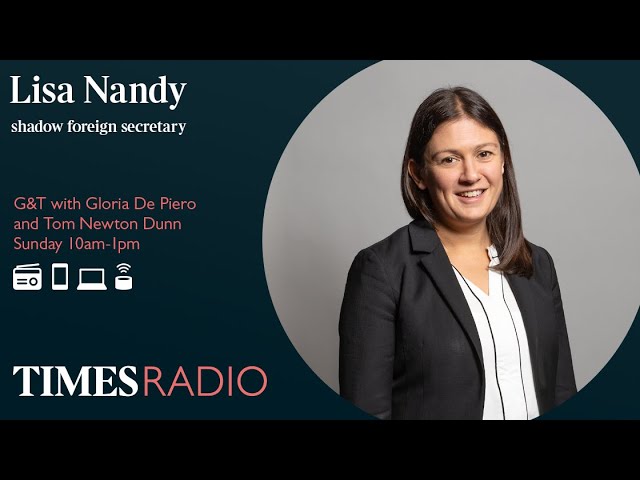
Cuts to troop numbers planned by the Government risk encouraging Russia or China to mount a conventional attack on Britain or the West, a former defence chief has told Times Radio.
In an interview with G&T on Sunday, former Chief of Defence Staff General Lord Richards has attacked ministers' plans to reduce the size of the Army, Royal Navy and RAF.
If troops are cut further, the UK also wouldn't be able to fight another Gulf War or Iraq War, it wouldn't be able to retake the Falklands, and it would not have the military strength to stop genocides like Rwanda, the senior commander also claimed.
Lord Richards also suggested Britain may soon be asked to deploy troops to Yemen, as part of an international peace-keeping force.
And he criticised the Government's decision to reduce aid spending below the legal target of 0.7% of GNI.
On troop cuts:
The direction of travel is right. We need to get more into high tech, cyber, AI, drone technology and so on, but it can't be at the expense of conventional capabilities. And key to that is numbers - mass still matters. If we were only going to do high end warfare, you could argue that what is being suggested is right, but of course, the world isn’t like that. The chiefs of staff have been under huge monetary pressure, and they are in my judgement underselling the requirement for conventional capability, even in this sort of more high tech world we're entering. Some very welcome new money was put into the defence budget by the Prime Minister. And my goodness, if he hadn't done that we'd be in a hell of a state, but the bulk of it is having to pay off a black hole is that is already in there.
You've got to have some of the more traditional capability in case mass becomes an asymmetric attraction to one's potential opponents. I'm thinking, Russia and China. I don't necessarily buy that they're about to start World War Three with us, but, they still possess large numbers, and if all we've got is high tech stuff, and they've got half a million troops that can come across the border at you, then these high tech capabilities aren't going to be much good. If your opponent senses that they are at a disadvantage, or their own capability of being neutered by one's own possession of those capabilities, they will look for another way of achieving their goals, and that could suddenly become numbers again - mass. And we certainly won't have it. Never underestimate your enemy was an early lesson for me, and I keep it very much close to my own way of judging these things.
If I have a criticism, it is that we've got very noble ambitions, but the resources required to achieve that vision aren’t there. By potentially scattering our limited armed forces, by penny packeting them around the world, we risk achieving influence nowhere, but still at great expense.
On another Gulf War, the Falklands, and stopping a new Rwanda:
I think we could do another Sierra Leone, because we had 5,000 people there and that's considered a small scale operation. We would not be able to recapture the Falklands, almost certainly. The strategy in respect of that is to continue to occupy the Falklands and not allow them to be captured. Now, if that goes wrong, we've got a problem. We could not do a Gulf War 1 or 2.
Things come back to bite you. I don't want us necessarily to get involved in another Afghanistan or Iraq. But say Rwanda came along again, would we just stand by and ignore it? I just like to think we wouldn’t. We'd have a moral and ethical responsibility to help. All those things like that require troops and numbers. I'm not saying we should get involved with regime change, but I bet you anything there are people out there who in 10 years' time will say, 'this is intolerable, we've got to do something about it'. And we'll say, 'No, all we do is fight state on state war'. We don't have any numbers to risk getting involved in these nice-to-do operations that may be morally hugely important to us, but are practically no longer in our gift.
On Yemen:
The pressures will come again somewhere. They already are in the case in Yemen. I understand from my contacts that there is talk of some stabilisation force having to go into Yemen. If the Americans feed into that, it would be very hard for the United Kingdom to say no, we're not going to do it.
On cutting aid below 0.7%:
It’s much cheaper to pay a bit upfront on aid and development, then fight a war that goes wrong because you haven't done enough in advance to sort the problem out in other ways. It's a great shame that we've lost that extra dimension to our influence at a time when I would have thought we should have been trying to stand ourselves apart from the norm. Global Britain, and all that.
Sentinel Indexing in Progress
Metadata and chapters are available. Claim extraction for this episode is pending.
All video content is delivered via YouTube embedded players in accordance with the YouTube Terms of Service. Sentinel provides research tools that promote discovery and accountability across political media.