United States Institute of Peace
@unitedstatesinstituteofpeace·110K subscribers·2.2K videos
The Missing Peace Symposium: Jody Williams Keynote Address
Posted
March 20, 2013
Views
591
Likes
3
Comments
3
March 20, 2013
591
3
3
1.02%
Every word spoken in this episode is indexed. Type any phrase to jump straight to the moment it was said.
Type any word or phrase that may have been spoken. Click a result to seek the player to that exact moment.
Try a name, a topic, or a quoted line
 46:57Now Playing
Date: February 14, 2013
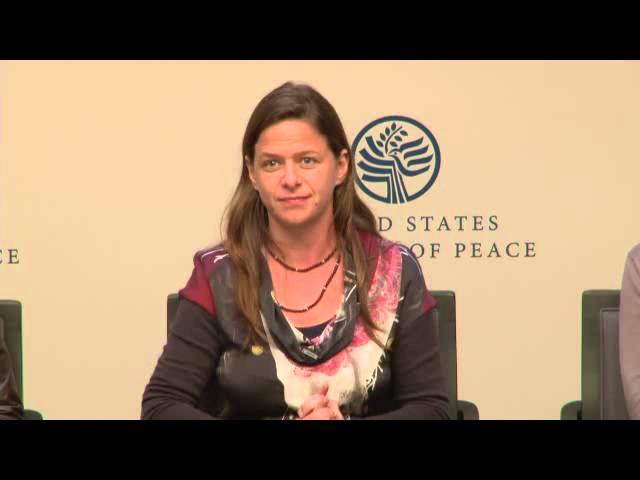
The Missing Peace Symposium: Keynote Address by Nobel Laureate Jody Williams on "Violence Against Women: The Continuum"
Sexual violence in conflict and post-conflict settings is increasingly recognized as a threat to international peace and security. Globally, state and non-state armed actors use sexual violence against women, men, and children to intimidate and terrorize populations, through forced displacement, destroying communities, and silencing of victims. When fighting ends, sexual violence often does not— undermining post-conflict reconstruction efforts and the transition to more stable, secure, and peaceful societies.
Despite the increased international attention to sexual violence as a weapon of war, including the adoption of UN Security Council resolutions, and important rulings in international criminal courts, initiatives to prevent or mitigate these violent acts continue to fall short. Existing international interventions may lack an integrated understanding of the causes for sexual violence and its implications for societies at large.
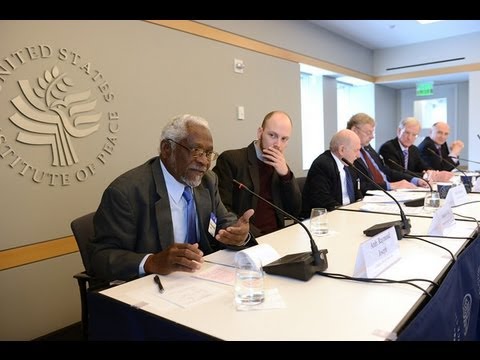
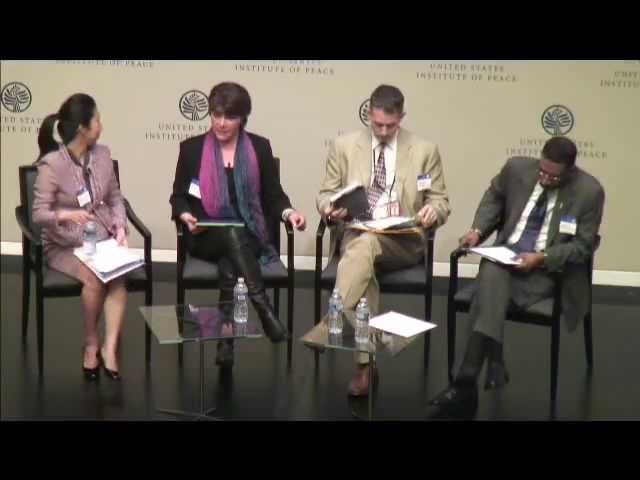
The United States Institute of Peace (USIP), the Human Rights Center at the University of California, Berkeley, the Peace Research Institute Oslo (PRIO), and the Stockholm International Peace Research Institute North America (SIPRI North America) convened a group of scholars, policymakers, practitioners, and military and civil society actors to examine the issue of sexual violence in conflict and post-conflict settings, identify gaps in knowledge and reporting, and explore how to increase the effectiveness of current responses to such violence.
More details
Jody Williams is the Chair, Nobel Women's Initiative & Co-chair, International Campaign to Stop Rape & Gender Violence in Conflict
In 1997, Jody Williams became the tenth woman to receive the Nobel Peace Prize. She was honored for her role as the founding coordinator (1991-1998) of the International Campaign to Ban Landmines (ICBL), co-recipient of the 1997 Nobel Peace Prize. She oversaw the growth of the ICBL from two NGOs in 1991 to a global network comprised of 1,300 organizations in 95 countries working to eliminate antipersonnel landmines. In January 2006, Williams established the Nobel Women's Initiative together with five of her sister Nobel Peace laureates Shirin Ebadi of Iran, Wangari Maathai of Kenya, Rigoberta Menchú Tum of Guatemala, and Betty Williams and Mairead Corrigan Maguire of Ireland. The Nobel women came together to use their access and influence to support the work of women around the world working for sustainable peace with justice and equality. In 2012, Nobel Peace Laureates Leymah Gbowee from Liberia and Tawakkol Karman from Yemen joined the Nobel Women's Initiative. In May 2012, the Nobel Women's Initiative and other NGOs established the International Campaign to Stop Rape & Gender Violence in Conflict. Her new memoir on life as a grassroots activist, My Name is Jody Williams: A Vermont Girl's Winding Path to the Nobel Peace Prize, will be released by the University of California Press in March 2013.
Williams holds a Master's Degree in International Relations from the Johns Hopkins School of Advanced International Studies, a Master's Degree in Teaching Spanish and ESL from the School for International Training, Vermont, and a Bachelor of Arts degree from the University of Vermont. Prior to her work with the ICBL, Williams worked for eleven years to raise awareness about U.S. policy toward Central America. She developed and directed humanitarian relief projects as the deputy director of the Los Angeles-based organization Medical Aid for El Salvador and was co-coordinator of the Nicaragua-Honduras Education Project, leading fact-finding delegations to the region. Williams continues to be recognized for her contributions to human rights and global security. She is the recipient of fifteen honorary degrees, among other recognitions. In 2004, Williams was named by Forbes Magazine as one of the 100 most powerful women in the world.
Sentinel Indexing in Progress
Metadata and chapters are available. Claim extraction for this episode is pending.
All video content is delivered via YouTube embedded players in accordance with the YouTube Terms of Service. Sentinel provides research tools that promote discovery and accountability across political media.