United States Institute of Peace
@unitedstatesinstituteofpeace·110K subscribers·2.2K videos
Whose Court Is the Ball In? Making Progress on Peace and Denuclearization With North Korea
Posted
August 4, 2021
Views
1,613
Likes
11
Comments
2
August 4, 2021
1,613
11
2
0.81%
Every word spoken in this episode is indexed. Type any phrase to jump straight to the moment it was said.
Type any word or phrase that may have been spoken. Click a result to seek the player to that exact moment.
Try a name, a topic, or a quoted line
 1:46:04Now Playing
Since late 2019, North Korea has rejected U.S. requests for engagement. Even after the Biden administration’s rollout of a “calibrated, practical” approach to diplomacy and its stated willingness to meet “anywhere anytime without preconditions,” the North Korean government has rebuffed U.S. offers of a meeting to brief its policy. Instead, Pyongyang is laser-focused on combatting the spread of COVID and has sought to deepen ties with Beijing to mitigate the pandemic, as well as the effects of global sanctions and a crippled economy.
North Korea’s unwillingness or hesitation to meet with the United States raises questions about North Korea’s motivations, fears and calculus — as well as whether Washington and Seoul’s best course of action is greater outreach, pressure or patience. On August 4, USIP and the Embassy of the Republic of Korea co-hosted a discussion on the current state of diplomacy with North Korea.
What factors are constraining the potential for engagement? What realistic steps can be taken to minimize those factors and increase the likelihood of productive diplomacy? Can South Korea or China play a helpful role in connecting the two sides? What are the risks of not engaging?
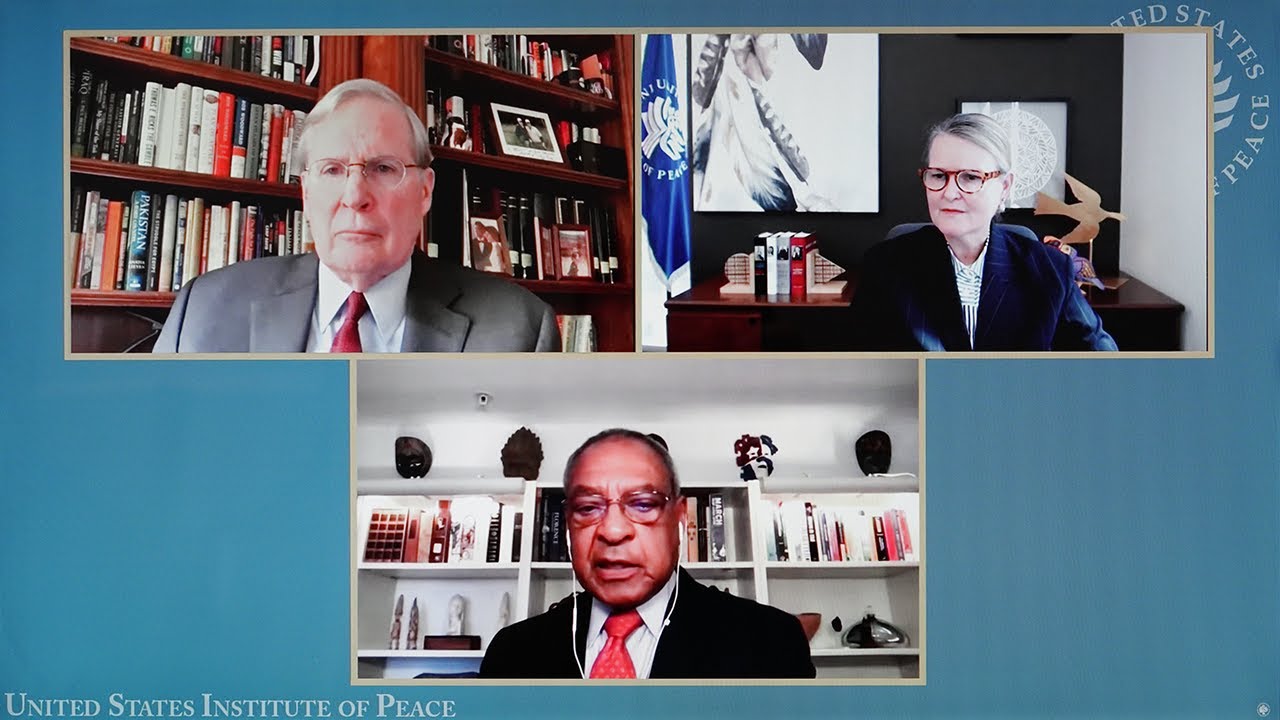
Speakers:
Ki-jung Kim
President, Institute of National Security Strategy
Joseph Yun
Senior Advisor, U.S. Institute of Peace
Gee Dong Lee
Senior Research Fellow, Institute of National Security Strategy
Moon-soo Yang
Vice President for Academic Affairs and Professor, University of North Korean Studies
Hee-Seung Na
Former President, Korea Railroad Research Institute
Kathleen Stephens
President and CEO, Korea Economic Institute of America
Markus Garlauskas
Non-Resident Senior Fellow, Atlantic Council
Frank Aum, moderator
Senior Expert, Northeast Asia, U.S. Institute of Peace
For more information about this event, please visit
Connect with us!
Subscribe to our YouTube channel
Newsletters
The United States Institute of Peace is a national, nonpartisan, independent institute, founded by Congress and dedicated to the proposition that a world without violent conflict is possible, practical, and essential for U.S. and global security. In conflict zones abroad, the Institute works with local partners to prevent, mitigate, and resolve violent conflict. To reduce future crises and the need for costly interventions, USIP works with governments and civil societies to help their countries solve their own problems peacefully. The Institute provides expertise, training, analysis, and support to those who are working to build a more peaceful, inclusive world.
Sentinel Indexing in Progress
Metadata and chapters are available. Claim extraction for this episode is pending.
All video content is delivered via YouTube embedded players in accordance with the YouTube Terms of Service. Sentinel provides research tools that promote discovery and accountability across political media.