Big Think
@bigthink·8.8M subscribers·10.1K videos
A Karate Chopping Rabbi | Niles Goldstein | Big Think
Posted
April 24, 2012
Views
219
Likes
2
Engagement
0.91%
April 24, 2012
219
2
0.91%
Every word spoken in this episode is indexed. Type any phrase to jump straight to the moment it was said.
Type any word or phrase that may have been spoken. Click a result to seek the player to that exact moment.
Try a name, a topic, or a quoted line
 4:14Now Playing
A Karate Chopping Rabbi
New videos DAILY
Join Big Think Edge for exclusive videos
----------------------------------------------------------------------------------
How martial arts enabled a spiritual leader to open up.
----------------------------------------------------------------------------------
Niles Goldstein:
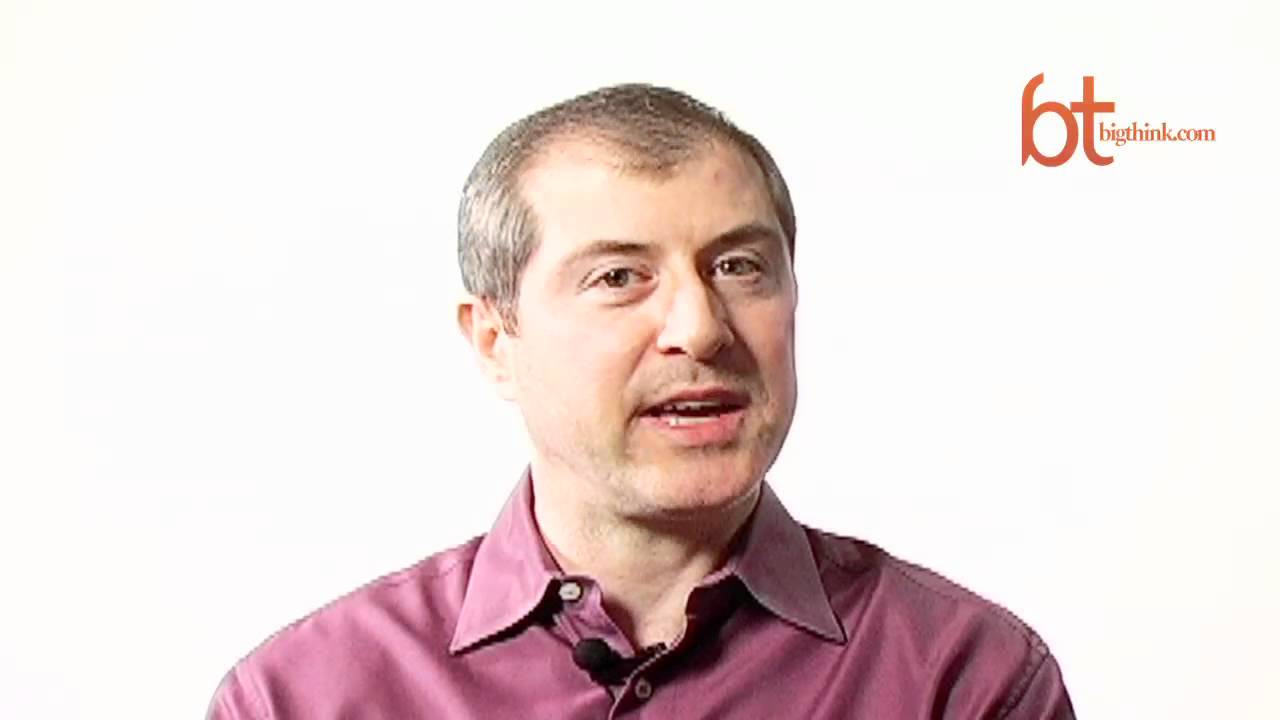
Niles Elliot Goldstein is Rabbi Emeritus of The New Shul, where he served as its spiritual leader from its founding in 1999 until 2009. Prior to The New Shul, Niles was a senior fellow at CLAL: The National Jewish Center for Learning and Leadership, a program officer at The Steinhardt Foundation, and the assistant rabbi at Temple Israel in New Rochelle. He is a member of the Central Conference of American Rabbis and the New York Board of Rabbis.
Niles is the author or editor of nine books, including the award-winning Gonzo Judaism: A Bold Path for Renewing an Ancient Faith, and his writing has appeared in many publications, including Newsweek, the Los Angeles Times, Newsday, The Forward, and Moment. He has been featured and interviewed in Time, The New York Times, The Wall Street Journal, The Washington Post, The Christian Science Monitor, The Jerusalem Report, The New York Observer, New York Magazine, The Jewish Week, and Beliefnet, as well as on domestic and international television and radio.
----------------------------------------------------------------------------------
TRANSCRIPT:
Question: How did martial arts teach you to become a rabbi?
Rabbi Niles Goldstein: What’s been really interesting for me in my 15 years of practice in the martial arts and my 15 years of being a Rabbi is the incredible number of similarities. I guess if you wanted to look at some of the core similarities, one would be the obvious, discipline and commitment. You know, in religious language we sometimes talk about devotion, but you can be devoted to other things as well. So, for me, I’ve been devoted to the martial arts and Karate specifically for pretty much the same time that I’ve been ordained. I would say that repetition is incredibly important in both, whether it’s organized religion and ritual, or it is in training, martial arts training.
I would say a more abstract idea that I think is probably is the most important is the idea of openness. The idea that paradoxically, the more open you become, which can sometimes make us feel uncomfortable, the more powerful you become. And it’s something that takes a long time to master in the martial arts, but I think as we go along in the human journey, it has great application as well. And I know from personal experience, as well as from preaching from the pulpit, that sometimes when you become most vulnerable, you paradoxically also reach your fullest potential.
On one level I’m talking about humility. A kind of openness, meaning you become an empty vessel and realize that there is a tremendous amount that you have to learn. So, it takes a while before you get your black belt, and so humility is just a kind of openness to, or receptivity to the wisdom of your instructors, or your teachers. But also there’s certain techniques in the martial arts that I can’t really demonstrate on a website where openness plays a key role. In essence where you almost use your adversary’s strength against him, or her. Aikido and Jujitsu probably are two of the martial arts that follow that principle the best.
Question: What are some qualities of a spiritual warrior?
Rabbi Niles Goldstein: Well, I think a lot of us think we know what a warrior is; a fighter, a soldier, someone who engages in combat. But a spiritual warrior, I just spoke recently at a military installation about my book and about how spirituality can actually be very much tied up in the notion of being a warrior. A spiritual warrior is someone who is able to do battle not just with forces outside of him or herself, but also with those things within us that can hold us back from achieving our greatest capacities and potentials. So, whether it means fighting our inner demons, whether it means grappling with those forces that are holding us back from evolving, or whether it is dealing with something in life that we really are having a hard time getting through, that’s where I think the spirit comes into play and that’s where I think we can become spiritual warriors.
I think also, when we develop some of those capacities of being a spiritual warrior, it allows us to deal with the sad but inevitable challenges that every human being has to face in life, almost every person. Whether it be the loss of a parent, or going through a breakup or divorce, losing a job. There are many and varied obstacles that we all have to face in life. And I think a spiritual warrior gets more arrows for the quiver, so to speak, in order to better handle those challenges.
Recorded on March 15, 2010
Sentinel Indexing in Progress
Metadata and chapters are available. Claim extraction for this episode is pending.
All video content is delivered via YouTube embedded players in accordance with the YouTube Terms of Service. Sentinel provides research tools that promote discovery and accountability across political media.