Big Think
@bigthink·8.8M subscribers·10.1K videos
How Haiti Can Rebuild | Laurent Dubois | Big Think
Posted
April 24, 2012
Views
387
Likes
4
Engagement
1.03%
April 24, 2012
387
4
1.03%
Every word spoken in this episode is indexed. Type any phrase to jump straight to the moment it was said.
Type any word or phrase that may have been spoken. Click a result to seek the player to that exact moment.
Try a name, a topic, or a quoted line
 5:10Now Playing
How Haiti Can Rebuild
New videos DAILY
Join Big Think Edge for exclusive videos
----------------------------------------------------------------------------------
The Haiti historian explains why real recovery from the disaster must begin at the grassroots level and addresses the controversial question of whether France should provide “reparations.”
----------------------------------------------------------------------------------
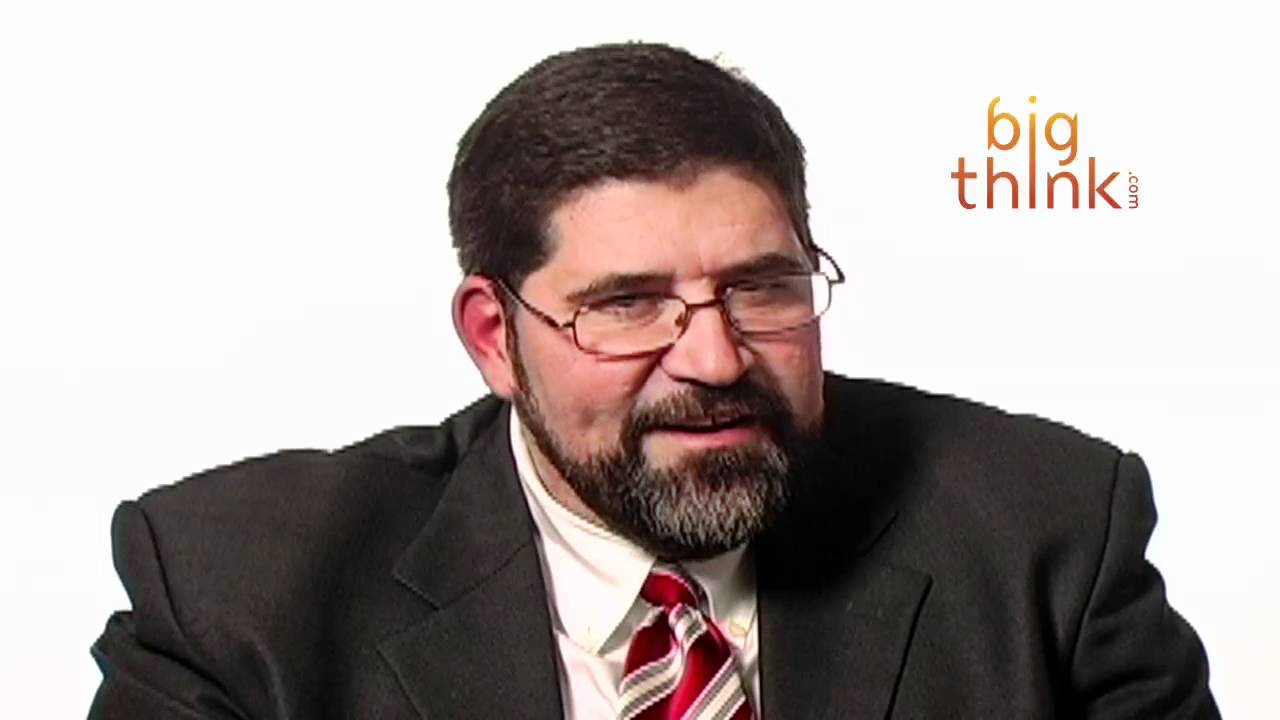
Laurent Dubois:
Laurent Dubois is Professor of French Studies and History at Duke University and a leading expert on Haitian history and culture. His books include Soccer Empire: The World Cup and the Future of France (University of California Press, forthcoming spring 2010), Slave Revolution in the Caribbean, 1789-1804: A Brief History With Documents (with John Garrigus; 2006), and Avengers of the New World: The Story of the Haitian Revolution (2004).
----------------------------------------------------------------------------------
TRANSCRIPT:
Question: What are the major obstacles Haiti faces in trying to rebuild after the earthquake?
rn
Laurent Dubois: The problem is in part there is just a major problem about the Haitian state. What is the Haitian state going to look like? Obviously, I mean, that’s been an issue that people have been dealing with for some time and even before the earthquake there was a substantial UN presence and NGO’s and so forth, so all of those kinds of issues that were there before the earthquake are only exacerbated by the major blow that the Haitian state has structurally received really to the core since many of its buildings have been destroyed and so forth. So there is going to be a real question about what the interlocutors are, how the Haitian state is going to interact with others. I mean the state, the institution, the people are still there, but how the infrastructure is going to work is a big question. I would say more broadly one really has to think about Haiti in a complicated way in the sense there are all kinds of forms of organization beyond the state. The state is actually very, in some ways, very limited in its reach within Haiti in terms of certainly in terms of schools, services and many other things. Haiti is an extremely privatized society and most things are done through private trade, so the question of whether the communities of action, you know, how does aid get to particular neighborhoods, it’s very clear already that there is a really different set of experiences between different neighborhoods in Haiti based on where they are and how they’re seen from the outside, so very, very important questions about who the interlocutors are for assistance and what that existence is particularly geared towards. You know, what is going to be done? What is the purpose of that assistance? All those are very big and open questions and in a sense the earthquake just raises the stakes and really perhaps opens up the possibility for a real rethinking of some of those things as well.
rn
Question: What changes must Haiti make to its government and social institutions in order to rebuild?
rn
Laurent Dubois: Well, in a way, I mean, although there has been ongoing problems in the last couple of years, I would say that before the earthquake there was in some ways some positive developments. Many people felt like things were going on a better track. It’s been a very, very difficult couple of decades in Haiti obviously. So in some ways maybe some of that can get recovered. I mean I think a lot of people… You know it’s such a massive tragedy and the loss of life is so tremendous as well as just the loss… you know the transformation of the city. It’s hard to think… In some ways it’s really hard to see forward right now, but obviously there may be an opportunity for people to think differently about the delivery of services, about how neighborhoods are constructed and also about how those neighborhoods are organized. I mean I think as always the best-case scenario will be if there is a real kind of collaboration with grassroots, with people in communities themselves who can kind of express and find their aspirations and voice their aspirations in the project of rebuilding so that the communities that they have are the kinds of communities they want to live in. Obviously there has been a problem with basic services in a lot of neighborhoods in ****.
Read the full transcript at
Sentinel Indexing in Progress
Metadata and chapters are available. Claim extraction for this episode is pending.
All video content is delivered via YouTube embedded players in accordance with the YouTube Terms of Service. Sentinel provides research tools that promote discovery and accountability across political media.