Big Think
@bigthink·8.8M subscribers·10.1K videos
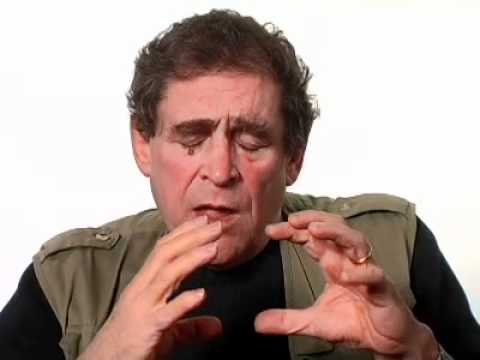
Alan Weisman on The World Without Us | Big Think
Posted
April 24, 2012
Views
15,003
Likes
192
Comments
20
Engagement
1.41%
April 24, 2012
15,003
192
20
1.41%
Every word spoken in this episode is indexed. Type any phrase to jump straight to the moment it was said.
Type any word or phrase that may have been spoken. Click a result to seek the player to that exact moment.
Try a name, a topic, or a quoted line
Episode Timeline
Every episode in order around the one you’re watching — click any card and the page flips straight to it.
 11:19Now Playing
Alan Weisman on The World Without Us
New videos DAILY
Join Big Think Edge for exclusive videos
----------------------------------------------------------------------------------
More and more, every story becomes an environmental story, Weisman says.
----------------------------------------------------------------------------------
Alan Weisman:
Alan Weisman's reports from around the world have appeared in Harper's, The New York Times Magazine, The Atlantic Monthly, The Los Angeles Times Magazine, Orion, Wilson Quarterly, Vanity Fair, Mother Jones, Discover, Audubon, Condé Nast Traveler, and in many anthologies, including Best American Science Writing 2006. His most recent book, The World Without Us, a bestseller translated into 30 languages, was named the Best Nonfiction Book of 2007 by both Time Magazine and Entertainment Weekly, the #1 Nonfiction Audiobook of 2007 by iTunes; a finalist for the National Book Critics Circle Award in Nonfiction, for the Orion Prize, and a Book Sense 2008 Honor Book.
His previous books include An Echo In My Blood; Gaviotas: A Village to Reinvent the World (10th anniversary edition available from Chelsea Green); and La Frontera: The United States Border With Mexico. He has also written the introduction for The World We Have by Thich Nhat Hanh, available this fall from Parallax Press. A senior producer for Homelands Productions, Weisman’s documentaries have aired on National Public Radio, Public Radio International, and American Public Media. Each spring, he leads an annual field program in international journalism at the University of Arizona, where he is Laureate Associate Professor in Journalism and Latin American Studies. He and his wife, sculptor Beckie Kravetz, live in western Massachusetts.
----------------------------------------------------------------------------------
TRANSCRIPT:
Alan Weisman: Well, I have been fortunate in my career to cover much of the earth. I have been form pole to pole though I do not solely write about the environment. More and more every story is environmental story. The environment underlies, politics it underlies, culture, it forms culture really, economics, I mean, everything that is going on in the world of that by the environment. So, as I have looked at rain forest coming down, I looked at ozone hole in Antarctica, I have been to places like Chernobyl; I have been to all kind of ecodisasters, I began looking for a way to bring this all together, so I could explain the readers, how it all connects, because you have to understand all of those things, all of those events are really symptoms of a bigger situation that we have, which is how we Homo sapiens impact the world and how much longer we are going to be able to keep doing what we are doing. The trouble is, is that, if you pull all that together in the book form and you need a book, because it’s you need that much detail, it’s going to be so daunting and so overwhelming that lot of readers are going to want to read that book. I mean there is a great stuff about the environment that only gets read by a few people who are already attuned to the environment, because everybody else says “Oh, that’s so depressing” or “It is just so scary,” this is not what I want to spend my time doing. So, I was looking for a way to find how without pulling any punches to write a page turner about the environment, and it occurred to be thought a suggestion of an edited at Discover, who had read the story that I had done for Harper’s, years early at Chernobyl, in which I described how the abandoned villages around Chernobyl were being over taken by their own landscape, hedges were like grown over walls and nature which is flooding in there, not realizing this is rather radioactive. Her question to me was, “What if that happened, everywhere?” Even though that was unlikely, I realize that very farfetched concept was a wonderful way to get people to read about the environment, because this would be a way of disarming that fear that we all have when we think about the environment crises, but are we all going to die? I just kill him off in the beginning. I just suggest that something has happened that has taken all of us away before we have a change to regain anymore have that kind of environment. Say, next week a Homo sapiens-specific virus picks us all off, AIDS becomes airborne suddenly, rather than past by fluids or some miss interpret genius has inserted something in there that pick off our DNA or sterilize us or we are raptured away, be it by Jesus or space aliens, but we’re gone and everything else remains intact, to what extend could it cover up all of our traces complete, how would it reinvade the spaces that we have been occupying, how would it deal with although stuff that we left behind,
Read the full transcript at
Sentinel Indexing in Progress
Metadata and chapters are available. Claim extraction for this episode is pending.
All video content is delivered via YouTube embedded players in accordance with the YouTube Terms of Service. Sentinel provides research tools that promote discovery and accountability across political media.