Big Think
@bigthink·8.8M subscribers·10.1K videos
Making the John Adams Mini-series | David McCullough | Big Think
Posted
April 24, 2012
Views
2,330
Likes
39
Comments
2
Engagement
1.76%
April 24, 2012
2,330
39
2
1.76%
Every word spoken in this episode is indexed. Type any phrase to jump straight to the moment it was said.
Type any word or phrase that may have been spoken. Click a result to seek the player to that exact moment.
Try a name, a topic, or a quoted line
Episode Timeline
Every episode in order around the one you’re watching — click any card and the page flips straight to it.
 3:49Now Playing
Making the John Adams Mini-series
New videos DAILY
Join Big Think Edge for exclusive videos
----------------------------------------------------------------------------------
McCullough knew he was in good hands with Tom Hanks.
----------------------------------------------------------------------------------
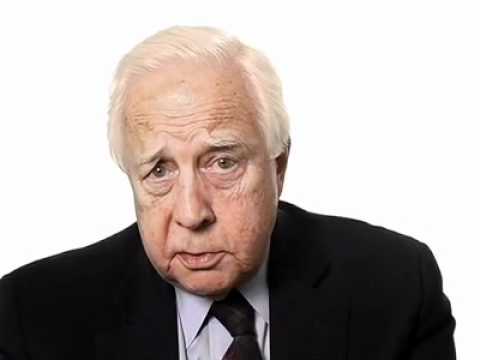
David McCullough:
David McCullough is called the "citizen chronicler" by Librarian of Congress James Billington. His books have led a renaissance of interest in American history--from learning about a flood in Pennsylvania that without warning devastated an entire community to discovering the private achievements and frailties of an uncelebrated president. His biography of Harry Truman won him a Pulitzer, as did his most recent biography of another president, John Adams.
Meeting Thornton Wilder at Yale as an undergraduate inspired McCullough to become a writer--his first love, in fact, had been art. While at college he also met his wife, Rosalee. He learned his craft working at Sports Illustrated, at the United States Information Agency, and at American Heritage. McCullough researched and wrote his first book in the precious hours away from his job with American Heritage; The Johnstown Flood came out in 1968. It was a story and region familiar to McCullough, who was born and raised in nearby Pittsburgh. The book was a success and he became a full-time author.
Since then, McCullough has given us six more books--The Great Bridge, The Path between the Seas, Mornings on Horseback, Brave Companions, Truman, and John Adams--earning him two Pulitzer Prizes, two National Book Awards, and two Francis Parkman Prizes from the American Society of Historians. His other honors include a Charles Frankel Prize, a National Book Foundation Distinguished Contribution to American Letters Award, and a New York Public Library’s Literary Lion Award.
----------------------------------------------------------------------------------
TRANSCRIPT:
David McCullough: Well I knew from the first time that I met Tom Hanks who produced the mini-series that it was going to be done right, because I could tell from his understanding of what I had written and from the other films that he had made or had been a performer in that he really cares about American history, and that he would do it right. I was then asked to come to meet with Kirk Ellis [phonetic] the screenwriter, and we began blocking things out, we are talking about scenes and things that could be perhaps left out things that absolutely had to be included and from that point on I was part of the process through the entire production and I never once felt that there weren’t sincerely interested in my point of view, my objections, my enthusiasm for what they were doing. I didn’t have my way with all decisions, nor did I expect to a movie is a different vehicle, a different medium from the book and they are not the same. What the author of a book really hopes and prays for is it the people doing it will interpret the book, the materials, the characters in the right way, and that’s happened here. I was asked by Tom Hanks again to go to the back log of the sets, the whole production facility it was set up outside of Richmond, Virginia to give a talk to all the people who are working on film, not just actors but people who are involved with scripts and props costumes the whole crew, and my message to them was you are only get have one chance to do this story, probably won't be done again, in the same way ever, and you have the chance to have more of an effect on how Americans feel, how what they know, what they understand, but how they feel, about that founding time, then has ever been done before, because the power of this medium, the power of film and of great acting and of magnificent cinematography is so infinitely beyond almost any other medium that we have and the numbers of people who will see it, that it could transform our national respect and understanding for where we began? How we began? And what are we all about? What do we believe? What is the bed rock faith that we call American, because this is where it started and these are the people who had articulated it and I felt all along that everybody working on that production really cared about it and I certainly found that both Laura and Paul had done the reading had thought about it, had put themselves into those other lives in a way that to me is a genius.
Sentinel Indexing in Progress
Metadata and chapters are available. Claim extraction for this episode is pending.
All video content is delivered via YouTube embedded players in accordance with the YouTube Terms of Service. Sentinel provides research tools that promote discovery and accountability across political media.