Big Think
@bigthink·8.8M subscribers·10.1K videos
Andrew Cohen on the Danger of Organized Religion | Big Think
Posted
April 24, 2012
Views
609
Likes
9
Engagement
1.48%
April 24, 2012
609
9
1.48%
Every word spoken in this episode is indexed. Type any phrase to jump straight to the moment it was said.
Type any word or phrase that may have been spoken. Click a result to seek the player to that exact moment.
Try a name, a topic, or a quoted line
See what was published immediately before and after this episode.
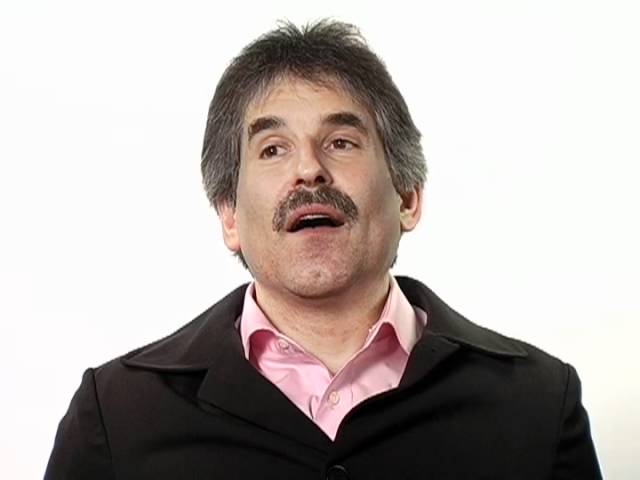 1:11Now Playing
Andrew Cohen on the Danger of Organized Religion
New videos DAILY
Join Big Think Edge for exclusive video lessons from top thinkers and doers
----------------------------------------------------------------------------------
What is the difference between a cult and a religion? Perhaps not much. There are a lot of questions in this world, and people start asking at a young age. When a baby with a rattle bangs it on the table, it learns that the rattle makes noise. The baby is fascinated by cause and effect. That’s why they like to pull your hair and feel the tension in the strands. It’s why they are always throwing things from their high chairs.
----------------------------------------------------------------------------------
MARIA KONNIKOVA:
Maria Konnikova is the New York Times bestselling author of
The Confidence Game (Viking/Penguin 2016) and Mastermind: How to Think Like Sherlock Holmes (Viking/Penguin, 2013). She is a contributing writer for The New Yorker, where she writes a regular column with a focus on psychology and culture, and her writing has appeared in The Atlantic, The New York Times, California Sunday, Pacific Standard, The New Republic, WIRED, and The Smithsonian, among numerous other publications. Maria is a recipient of the 2015 Harvard Medical School Media Fellowship, and is a Schachter Writing Fellow at Columbia University's Motivation Science Center. She formerly wrote the “Literally Psyched" column for Scientific American and the popular psychology blog “Artful Choice" for Big Think. She graduated magna cum laude from Harvard University, where she studied psychology, creative writing, and government, and received her Ph.D. in Psychology from Columbia University.
----------------------------------------------------------------------------------
TRANSCRIPT:
Maria Konnikova: I think humans really have a deep desire for meaning. And it's something that is really hardwired into us. So if you look at an infant who is just learning about the world, that infant needs to learn rules of cause and effect. What happens – you sometimes see babies and they keep dropping objects so you think it's so incredibly annoying. You say stop dropping that, you know, I just picked it up for you. They're learning about physics. They're actually really curious to see that every time they drop it it falls. That is a totally amazing and mesmerizing new concept if you think about it. So we start looking for cause and effect right away. That's how we make sense of the world. And as you grow older you're still looking for that cause and effect that same if I cry mommy comes back. Cause leads directly to effect. An event leave directly to what that event causes.
We are really uncomfortable when that's not the case. And the world is really, really messy. It's not all about the dropping a ball and it falls. The world really is all about uncertainty. It's ambiguous. Causes don't lead to effect, things just happen without any action on your part. Sometimes you take an action and nothing happens, even though you want it to happen. So there are lots of gaps in meaning because that meaning that we want to be there it's not there and we still search for it. And so we still want that meaning to be there. We want certainty. We want to resolve that ambiguity. And con artists that's what they do they resolve it for us. They give us the meaning.
That's why I think the same principles that underlie cons are the principles that organized religion follows because you have spontaneous organized religion in societies throughout the world. You see it throughout history over and over. Religion just keeps popping up because, once again, it also gives meaning and explains things and gives people a purpose. And that's what con artists do they sell meaning; they sell purpose.
There's a saying that's kind of out in the ether and there are lots of varieties of it but it goes something like this: “Religion emerged when the first scoundrel met the first fool.” And this has been attributed to Voltaire, to Mark Twain, to Carl Sagan, I mean it's been attributed to just about anyone who had a problem with organized religion.
And it seems to make a lot of sense because here you have someone who wants meaning, who wants some sort of depth to life. And then you have someone who sees that and says uh-huh that's an opportunity for me. I'm smart. I know that life is meaningless. I know that all this stuff doesn't mean anything. I know that there's no afterlife, there is no this, others know that, let me see what would make this person feel better. And if that person feels better you know what's going to happen? That person is going to give me money because he's going to be so grateful for feeling better that I'll be able to elicit donations...
For the full transcript, check out
Sentinel Indexing in Progress
Metadata and chapters are available. Claim extraction for this episode is pending.
All video content is delivered via YouTube embedded players in accordance with the YouTube Terms of Service. Sentinel provides research tools that promote discovery and accountability across political media.