Big Think
@bigthink·8.8M subscribers·10.1K videos
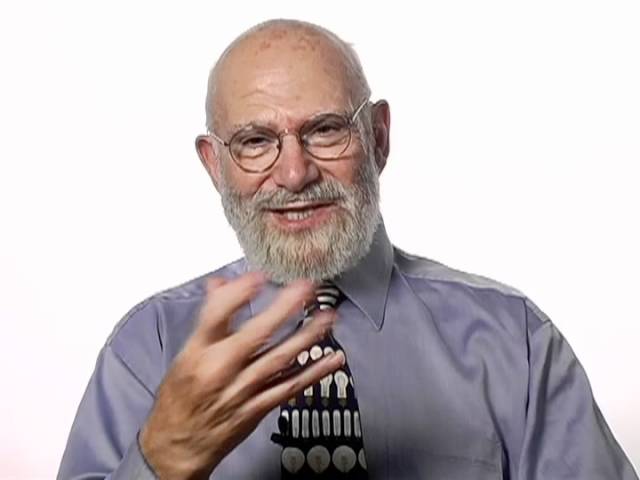
Oliver Sacks and how the iPod Changes Us | Big Think
Posted
April 24, 2012
Views
8,669
Likes
218
Comments
7
Engagement
2.60%
April 24, 2012
8,669
218
7
2.60%
Every word spoken in this episode is indexed. Type any phrase to jump straight to the moment it was said.
Type any word or phrase that may have been spoken. Click a result to seek the player to that exact moment.
Try a name, a topic, or a quoted line
See what was published immediately before and after this episode.
 2:46Now Playing
Oliver Sacks and how the iPod Changes Us
New videos DAILY
Join Big Think Edge for exclusive videos
----------------------------------------------------------------------------------
The benefits and dangers of iPod listening.
----------------------------------------------------------------------------------
Oliver Sacks:
Oliver Sacks is a psychiatrist and neurologist best known for his collections of case histories from the far borderlands of neurological experience, The Man Who Mistook His Wife for a Hat and An Anthropologist on Mars, in which he describes patients struggling to live with conditions ranging from Tourette's syndrome to autism, parkinsonism, musical hallucination, epilepsy, phantom limb syndrome, schizophrenia, retardation, and Alzheimer's disease.
In 1966, Dr. Sacks began working as a consulting neurologist for Beth Abraham Hospital in the Bronx, a chronic care hospital where he encountered an extraordinary group of patients, many of whom had spent decades in strange, frozen states, like human statues, unable to initiate movement. He recognized these patients as survivors of the great pandemic of sleepy sickness that had swept the world from 1916 to 1927, and treated them with a then-experimental drug, L-dopa, which enabled them to come back to life. They became the subjects of his book Awakenings, which later inspired a play by Harold Pinter and the Oscar-nominated feature film called Awakenings.
In July of 2007, Sacks was appointed Professor of Neurology and Psychiatry at Columbia University Medical Center, and he was also designated the university's first Columbia University Artist. Sacks Latest book Musicophilia: Tales of Music and the Brain (2007), was has been Revised and Expanded in a new edition that was released in September of 2008.
----------------------------------------------------------------------------------
TRANSCRIPT:
Oliver Sacks: The world has changed so much in the last 10 years.
This is very beautifully bought out in a Philip Roth novel, “Exit Ghost,” where Roth’s alter ego, who has been living in the country, comes back into New York City in 2004 and he finds that everyone has on iPods, is on cellphones, and that society as he knew it, the human interaction, has more or less disappeared.
Everyone is engrossed in these things which are almost analogous to hallucinations. They’re hearing music. They’re hearing voices. They’re talking.
Three things about iPods. Listen, first, I have an iPod myself. I have all Bach on my iPod. I have the equivalent of 157 CDs on my iPod. As a Bach lover, it’s a fantastic privilege to have all Bach in something the size of a matchbox.
However, I don’t listen to it in the street. I don’t listen to it when I’m driving the car. I don’t listen to it when I ride my bicycle, because I need my attention for reality.
I’m frightened at the degree of engrossment which people can have with iPods. And I think they should almost be forbidden to cyclists and pedestrians.
I also wonder whether to separate music from context. Music arose in a communal way. People would sing together, dance together. There would be concerts. There would be churches. There would be living performers.
I think music can become too abstract and too divorced from context if one only listens to an iPod.
It’s wonderful that iPods can give so much, but I’m also concerned that they may take people away from musical environments and contexts in which they should have music. I’m a little worried about the isolating and abstracting and also dangerously engrossing qualities of iPods.
Sentinel Indexing in Progress
Metadata and chapters are available. Claim extraction for this episode is pending.
All video content is delivered via YouTube embedded players in accordance with the YouTube Terms of Service. Sentinel provides research tools that promote discovery and accountability across political media.